
Blooming
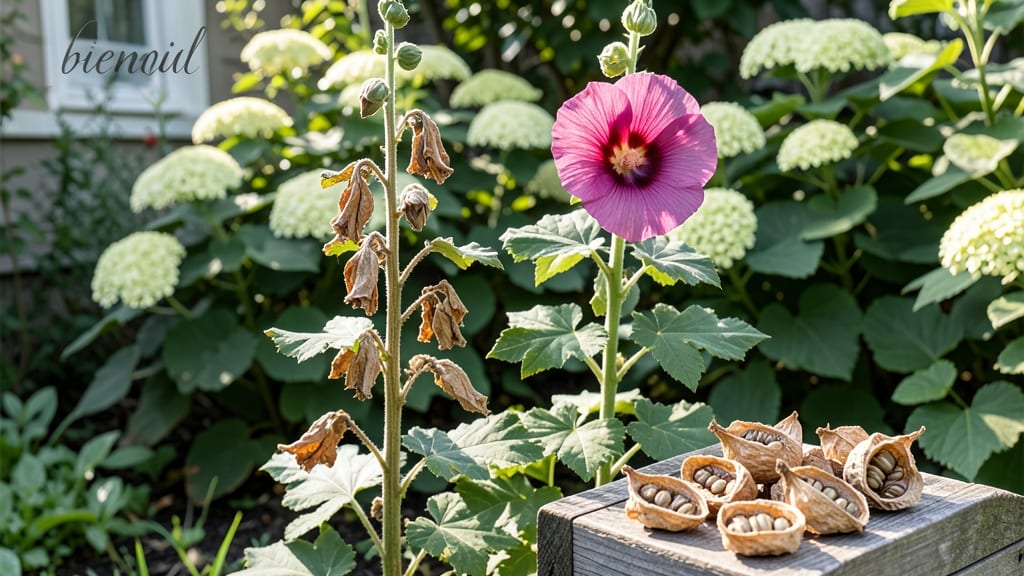
Hollyhocks don't bloom every year as perennials in most climates, but many varieties—especially biennials or short-lived perennials—can rebloom for 2-3 seasons with proper care. Cold-tolerant types may return annually in mild winters, while tender varieties often behave like annuals in colder zones.
Hollyhocks' blooming habits depend on their growth cycle and climate.
Many gardeners assume they're true perennials, but most varieties follow a biennial pattern: they focus on leaf growth their first year, then bloom and set seeds the second year before declining. 🌸 Even labeled perennials often fade after 2-3 years due to fungal diseases or poor winter survival.
The key to repeat blooms lies in deadheading spent flowers and providing consistent moisture—especially during their first growing season.
Your local climate plays a huge role: hardy varieties like Alcea rosea can survive winters in zones 3-8, while tender types need protection in colder regions. I've found that mulching heavily in fall and avoiding over-fertilizing helps extend their lifespan.
For true annual behavior, treat them like summer flowers—plant fresh seeds each spring for guaranteed blooms.
💡 In This Article
- Hollyhock Bloom Cycles: Perennial vs Biennial Growth Patterns
- Extending Hollyhock Blooms: Pruning, Deadheading, and Winter Care
Hollyhock bloom cycles: perennial vs biennial growth patterns
The confusion around hollyhocks blooming annually stems from their complex botanical lifecycle. Most varieties follow a biennial pattern, meaning they focus on developing strong roots and foliage during their first year, then produce flowers and seeds in their second year before dying back.
This two-year cycle is hardwired into their genetics—similar to how biennial vegetables like carrots or beets operate. Only a few true perennial types (like Alcea rosea varieties) may return for 3-5 years if conditions are ideal.
Climate zones dramatically alter this pattern. In USDA zones 3-8, hardy hollyhocks can survive winter dormancy and rebloom annually, though their vigor often declines after 2-3 years due to fungal diseases like rust or powdery mildew.
In colder zones (below 3), they behave like annuals—requiring fresh seeds each spring. The key difference lies in their root systems: biennials develop deep taproots for winter survival, while tender varieties lack this adaptation. 🌱
What most gardeners miss is how stress factors accelerate decline. Overcrowding, poor soil drainage, or inconsistent moisture forces hollyhocks to expend energy on survival rather than blooming. I've seen varieties labeled "perennial" fail after just one season in heavy clay soils unless amended with organic matter.
The solution? Start with well-draining soil and space plants 2-3 feet apart to improve air circulation and reduce disease pressure.
Even perennial hollyhocks have a built-in expiration date. After 3-5 years, their stems become woody and less productive due to a process called "senescence"—a natural aging mechanism where older tissues prioritize seed production over vegetative growth.
This is why many gardeners report hollyhocks "dying out" after a few seasons, even with good care. The exception? Some hybrid varieties have been bred to extend this cycle through disease resistance and improved root vigor.
Here's the science behind their decline: hollyhocks are self-pollinating, meaning they produce seeds easily. Once they've successfully set seed, their energy shifts from blooming to seed production, which weakens the plant over time.
This is why deadheading (removing spent flowers) is critical—it redirects energy back to foliage growth rather than seed development. In my own garden, I've found that cutting back 50% of the foliage after the first bloom cycle encourages a second flush of flowers in perennial types.