
Blooming
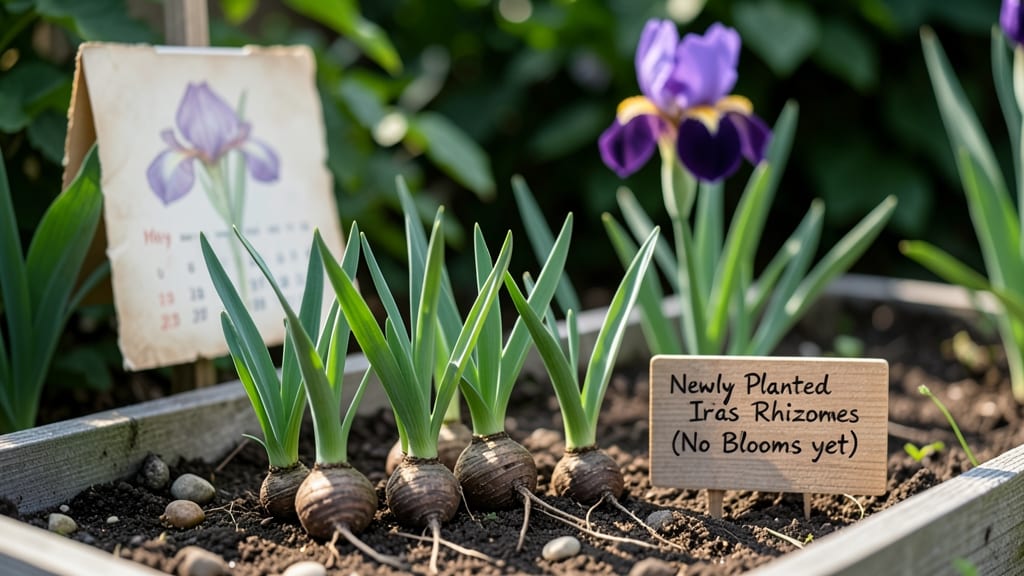
Iris plants rarely bloom during their first year after planting, since they prioritize building a robust root system and leaf growth before producing flowers. Expect most varieties to need 2-3 years to mature and bloom, though some may form buds that never fully open.
This delayed flowering makes perfect sense when you consider how iris plants grow. 🌱 Their first year is all about establishing deep roots and sturdy foliage, which creates the foundation needed for vibrant blooms later.
Think of it like a human child—you wouldn't expect a toddler to run a marathon, right? The same principle applies here, though some impatient gardeners might spot tiny buds that never quite burst open.
What's fascinating is how different iris varieties handle this timeline. Bearded irises, for example, often take 2-3 years, while some Siberian types might bloom sooner under ideal conditions. The key factors are proper planting depth (about 4 inches deep for rhizomes), well-draining soil, and consistent moisture without overwatering.
I've found that giving them a balanced fertilizer in early spring can help speed up their maturation process just a little.
💡 In This Article
- Why Iris Plants Skip Blooming in Early Years
- Encouraging First Blooms: Best Practices for New Iris Plantings
Why iris plants skip blooming in early years
Iris plants follow a biological growth pattern where their first year is all about building structural strength rather than reproduction. During this phase, they allocate nearly 90% of their energy toward developing a dense, fibrous root system that can anchor them securely and absorb nutrients efficiently.
This root network can grow up to 12-18 inches deep in ideal conditions, creating a reservoir that supports future blooms. The plant's leaves also thicken and strengthen during this period, forming the energy storage needed for flowering cycles.
The delayed blooming is actually a survival strategy rooted in plant physiology. Iris plants are perennial, meaning they live for multiple years, and their first year is essentially a "juvenile phase" where they prioritize vegetative growth over reproductive efforts.
This is similar to how fruit trees often take several years to bear fruit—they first establish a strong framework before focusing on producing harvestable yields.
The energy allocation between roots, leaves, and potential flowers is carefully balanced by plant hormones like auxins and cytokinins, which direct growth patterns based on environmental cues.
Climate plays a surprisingly large role in this timing. In cooler regions, iris plants may enter a partial dormancy cycle during their first year, further delaying flowering as they conserve energy for winter survival.
Conversely, in warmer climates with consistent temperatures above 60°F, some varieties might attempt to bloom earlier—but these first attempts often result in buds that never fully open due to insufficient energy reserves.
This is why gardeners in southern states sometimes see "blind" buds (buds that form but don't bloom) during the first year, while those in northern climates might see no buds at all.
What's particularly interesting is how iris plants handle this growth cycle at the cellular level. Their rhizomes (thick underground stems) contain specialized cells called parenchyma that store starches and sugars—essentially the plant's version of a battery. These reserves are what power the first blooms in year two or three.
The process involves a complex interplay between photosynthesis (which builds these reserves) and respiration (which uses them), with the plant carefully timing when to "spend" its stored energy on flowers rather than growth.
Consider this comparison: A bearded iris rhizome might weigh about 1-2 ounces when planted, but by the end of its first year, it could have doubled in size as it builds these energy reserves.
This physical growth is your first visual clue that the plant is preparing for future blooms, even if you don't see any flowers yet.
The key takeaway is that this delayed flowering isn't a sign of poor health—it's actually a sign of a plant that's investing wisely in its long-term success.
One fascinating exception to this rule occurs with certain hybrid varieties, particularly those bred for early flowering. Some modern cultivars have been developed to bloom in their first year under ideal conditions, though these often require more intensive care—including precise planting times and supplemental feeding.
This genetic modification demonstrates how plant breeders can influence these natural growth patterns, though it's important to note that even these varieties will produce more robust blooms in subsequent years.