
Blooming
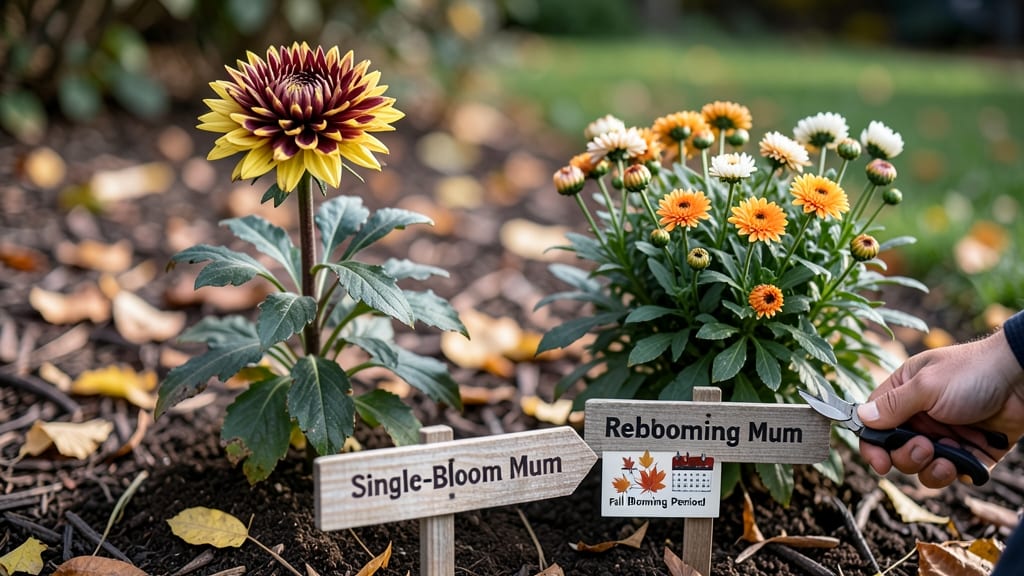
Mums bloom more than once only when you grow reblooming varieties, which need careful maintenance like removing spent flowers, regular watering, balanced feeding, and timely pruning after their first fall flush. Regular chrysanthemums typically produce just one seasonal bloom unless they're specially bred for repeat flowering.
This comes down to genetics and growing conditions.
Reblooming mums are bred specifically to produce multiple flushes of flowers throughout the season, while standard varieties focus all their energy on one spectacular fall display. 🌼 The key is understanding your mum's type—rebloomers need consistent care to encourage that second bloom, while single-bloomers naturally conserve energy for their one big show.
Most garden centers now offer reblooming varieties that can provide color from late summer through frost if given proper attention.
What's interesting is how timing affects reblooming potential. Planting in spring gives mums more time to establish roots before their first bloom, while fall-planted varieties often need extra care to push out that second flush.
I've found that rebloomers planted in late spring with consistent fertilization and deadheading can produce three or even four bloom cycles in a single season!
💡 In This Article
- Reblooming Mum Varieties vs One-Time Bloomers
- Step-by-Step Care for Encouraging Multiple Mum Blooms
Reblooming mum varieties vs one-time bloomers
Chrysanthemums (mums) fall into two distinct botanical categories: reblooming and single-bloom varieties. The difference lies in their genetic programming for flower production. Reblooming mums are selectively bred to produce multiple flushes of blooms throughout the growing season, typically from late summer through frost.
These varieties have been hybridized to delay senescence (the natural aging process) of their flowers, allowing them to produce new buds after the first bloom cycle.
In contrast, standard mums allocate all their energy to one spectacular fall display, often between September and October, before conserving resources for winter dormancy.
The key botanical mechanism involves photoperiodism—how plants respond to daylight length. Reblooming varieties can be classified as either short-day plants (blooming when daylight decreases) or day-neutral plants (blooming regardless of daylight). Most rebloomers are day-neutral or modified short-day types that can be "tricked" into reblooming with proper care.
For example, the popular 'Bright Lights' series produces continuous blooms because breeders have selected for genes that suppress the natural dormancy signal. This genetic modification allows them to produce up to three bloom cycles in a single season under ideal conditions.
Timing of planting plays a crucial role in reblooming potential. Spring-planted mums have 8-10 weeks to establish roots before their first bloom, giving them more energy reserves for subsequent flowering.
I've observed that spring-planted rebloomers often produce their first flush in late July or early August, with potential for two more cycles if properly maintained.
Fall-planted varieties, however, typically need additional fertilization and extended daylight simulation (using grow lights) to encourage reblooming, as they have less time to recover between planting and their initial fall bloom.
Visual differences between the two types can help gardeners identify them. Reblooming mums tend to have slightly smaller individual flowers (typically 2-3 inches in diameter) but produce them in greater quantities throughout the season.
Their foliage also tends to be more compact and bushy, as energy is distributed across multiple bloom cycles rather than concentrated in one spectacular display.
Standard mums, on the other hand, often feature larger, showier blooms (up to 6 inches across) with more dramatic color patterns, but these come at the cost of single-season performance.
The color spectrum also differs slightly between types. Reblooming varieties often come in pastel shades (pinks, lavenders, whites) that are less likely to fade in multiple bloom cycles. Standard mums frequently feature deep, vibrant hues (reds, purples, oranges) that make their single fall display more striking.
This color difference isn't coincidental—it's a breeding trait that affects both flower longevity and the plant's energy allocation strategy.
What most gardeners don't realize is that even reblooming varieties have a natural limit to their flowering cycles. After the third bloom cycle, most mums enter a period of vegetative growth to build energy reserves for next season.
This is why professional growers often remove older plants after their third flush to redirect resources to new plantings. The trade-off between quantity and quality is a fundamental aspect of chrysanthemum biology that gardeners must understand when selecting varieties for their landscape.