
Blooming
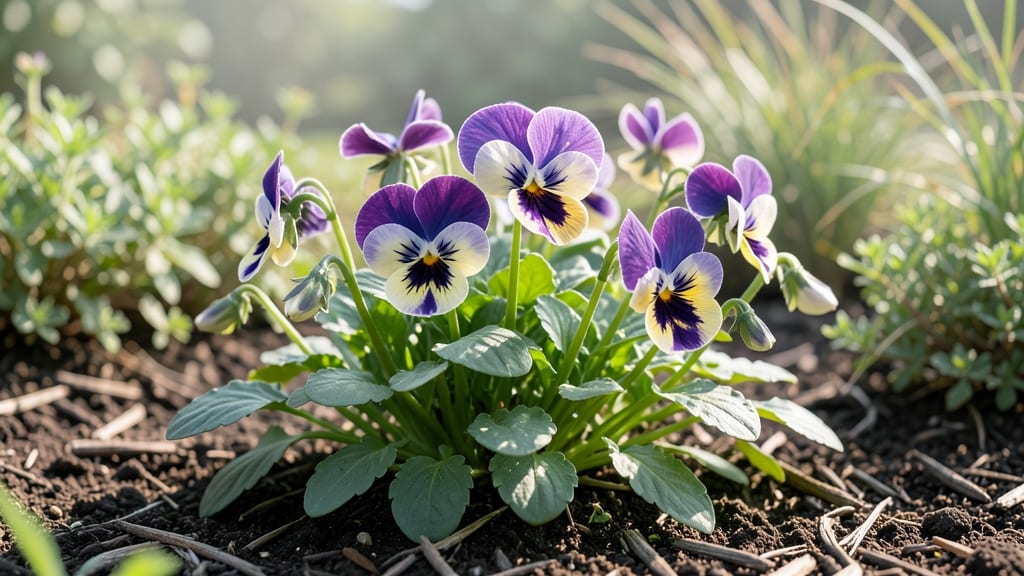
Pansies don't bloom all summer, since they wilt in temperatures above 75°F, often going dormant or sending up flower stalks too quickly. Most varieties perform best in spring and fall, though heat-resistant hybrids can sometimes bloom through early summer with extra care.
Pansies are cool-season flowers at heart, meaning they've evolved to thrive when days are shorter and temperatures are milder.
When summer heat arrives, their metabolic processes shift from producing vibrant blooms to conserving energy—think of it like a built-in survival mechanism. 🌿 The classic garden pansy (Viola × wittrockiana) is especially sensitive, while some newer hybrids might push their blooming season a few weeks longer if given afternoon shade and consistent moisture.
I've seen gardeners in Zone 7 extend pansy season by planting them in partial shade and watering deeply twice daily during heatwaves.
What many don't realize is that pansies often "bolt" in summer—sending up tall, leafless flower stalks—rather than simply wilting. This happens when the plant perceives the heat as a signal to reproduce quickly before dying.
The good news? With proper care, you can coax a second round of blooms in fall when temperatures drop again.
💡 In This Article
- Why Pansies Struggle in Summer Heat
- Extending Pansy Blooms: Heat Management Tips for Gardeners
Why pansies struggle in summer heat
Pansies are cool-season annuals, meaning their flowering mechanisms are hardwired to respond to specific temperature cues. When daytime temperatures consistently exceed 75°F, these plants trigger a survival response called thermodormancy.
This process involves the breakdown of key flowering hormones like florigen, which signals the plant to stop producing blooms and instead focus on seed production or dormancy.
The classic pansy (Viola × wittrockiana) has particularly sensitive genetics, with studies showing its optimal flowering range sits between 50-65°F during the day and 40-55°F at night.
The heat stress also affects pansy foliage through a process called transpiration shutdown. When temperatures climb above 80°F, the stomata (tiny pores on leaves) close to prevent water loss, which halts photosynthesis and nutrient transport.
This explains why pansies often develop yellowing leaves and wilted blooms during summer heatwaves. 🌡️ Even heat-tolerant hybrids like 'Matrix' or 'Majesty' series, which can handle up to 85°F, will struggle if nighttime temperatures don't drop below 60°F—a critical factor many gardeners overlook when planning summer displays.
What makes this particularly frustrating is how pansies respond to heat differently than other cool-season flowers. Unlike snapdragons or sweet alyssum, which may simply stop blooming, pansies often bolt—producing long, leafless stems with small flowers as they rush to reproduce before dying.
This happens because the high temperatures disrupt the plant's circadian rhythm, causing it to perceive summer as an ideal time for reproduction rather than growth. The result? Instead of the vibrant, colorful blooms you planted for, you get a sparse, unattractive display that lasts only a few weeks.
There's also a genetic component to heat tolerance among pansy varieties. The wild pansy (Viola tricolor) has naturally evolved to handle slightly warmer conditions than its cultivated cousins, which is why some gardeners turn to it for summer interest.
However, even these varieties will produce fewer blooms and smaller flowers when temperatures rise. The key difference lies in their root systems—wild pansies develop deeper roots that can access moisture in lower soil layers, giving them a slight edge in dry, hot conditions.
Humidity plays a surprising role too. In areas with high summer humidity (like the southeastern U.S.), pansies may suffer from fungal diseases like powdery mildew, which further stresses the plant.
The combination of heat and moisture creates the perfect storm for dormancy, as the plant diverts energy away from blooming to fight off pathogens. This is why gardeners in humid climates often see pansies decline more quickly than those in drier regions, where the heat alone triggers the shutdown response.
Understanding these mechanisms helps explain why pansies are rarely seen in peak summer displays. Their biology is perfectly adapted to spring and fall conditions, where cooler temperatures and longer daylight hours create ideal conditions for continuous blooming.
When summer arrives, the plant essentially pauses its flowering cycle until conditions become favorable again—usually in late summer or early fall when temperatures begin to drop.