
Blooming
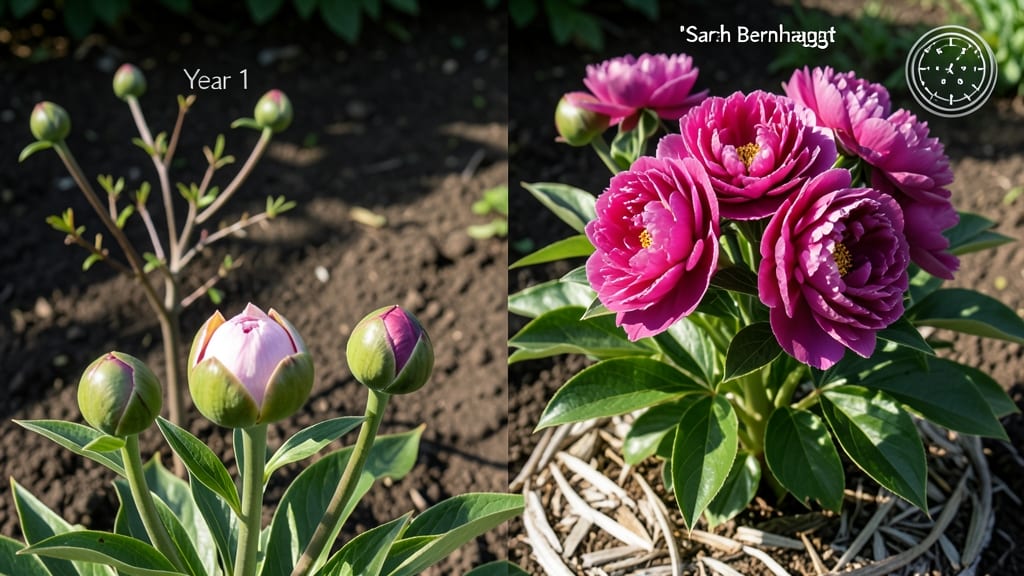
Peonies do not bloom every year—they require 5 to 7 years of establishment before producing their first flowers, then typically bloom annually for 2 to 3 weeks each spring, depending on climate and variety. Proper care extends their blooming lifespan for decades.
Peonies are famously patient plants, focusing their early years on building strong root systems rather than producing flowers. 🌸 Once they finally bloom, they usually reward you with vibrant displays for 2-3 weeks each spring—but only if they're happy.
The key factors are sunlight (at least 6 hours daily), well-draining soil, and proper winter protection in colder zones. I've seen some varieties bloom twice in a season if given perfect conditions, though this is rare and requires extra care.
What's interesting is how climate plays a role—peonies in warmer zones may bloom earlier and more reliably, while those in colder regions often need a period of dormancy to trigger flowering. The first bloom year is always the most exciting, but don't be discouraged if it takes a few years.
With the right conditions, your peonies can continue blooming beautifully for 50 years or more!
💡 In This Article
- Why Peonies Have a Delayed Blooming Cycle
- How to Maximize Peony Blooms Year After Year
Why peonies have a delayed blooming cycle
Peonies prioritize root development for the first 5-7 years because their energy goes into creating a robust underground network. During this phase, they produce thick, fleshy roots that store nutrients—a process called geophyte storage.
These roots can grow up to 3 feet deep and spread horizontally, forming a dense system that supports decades of blooming. 🌱 The plant's energy allocation shifts dramatically: in early years, 90% of resources go to roots, while only 10% support foliage and minimal flower buds.
The biological trigger for flowering comes when roots reach a critical mass—typically after 5-7 years—where they've stored enough carbohydrates (like starches) to fuel blooms. This delayed maturation is similar to how fruit trees need years to establish before bearing fruit.
Climate plays a crucial role: in USDA Zone 3-4, peonies often need an additional 1-2 years of cold dormancy before flowering compared to warmer zones like Zone 8. The cold period verifies the plant's readiness to bloom, acting like a biological "checkpoint."
Once established, peonies bloom annually because their root system can now support both foliage and flowers simultaneously. The blooming window—typically 2-3 weeks in spring—is triggered by a combination of day length (photoperiodism) and temperature fluctuations.
In cooler climates, blooms often appear in late May, while warmer regions may see earlier or even second flushes in late summer. The first blooms are usually the largest because the plant hasn't yet divided its energy between multiple stems.
What most gardeners don't realize is how soil quality affects this timeline. Peonies planted in clay-heavy soil may take 1-2 extra years to bloom because poor drainage stresses the roots, delaying their maturation. The ideal soil mix—60% loam, 30% sand, and 10% compost—allows roots to establish quickly.
Even after blooming begins, the plant continues growing roots annually, which is why some peonies can produce flowers for 50+ years without replanting.
Another fascinating factor is the plant's bud initiation process, which begins in late summer. During this time, the peony's foliage photosynthesizes extra energy that gets stored in the roots—this stored energy is what fuels next year's blooms.
If you prune back foliage too aggressively in fall, you're potentially reducing next year's flower potential. The balance between root storage and above-ground growth is what makes peonies such reliable long-term perennials.
Consider this comparison: A herbaceous peony (which dies back to the ground each winter) typically blooms earlier than a tree peony because its roots mature faster. Tree peonies often take 7-10 years to bloom because their woody stems require additional energy to develop.
This biological difference explains why some gardeners see their first tree peony bloom at age 10 while herbaceous varieties may flower at age 5.
The patience required with peonies pays off dramatically. Once they begin blooming, they'll often produce 10-20 stems per plant, each with 3-5 blooms, creating a dramatic spring display that lasts for weeks.
The key to understanding their delayed blooming is recognizing that every year of establishment is actually building a foundation for decades of reliable beauty. 🌸