
Blooming
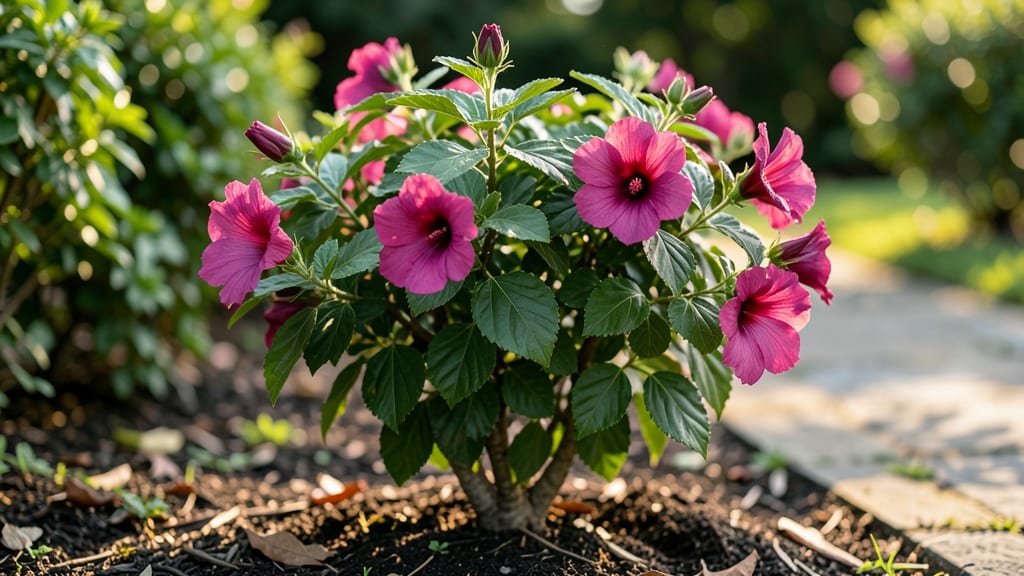
Rose of Sharon blooms all summer in many varieties, particularly hardy types like 'Katherine Haviland' and 'Donard Park,' producing vibrant flowers from mid-summer through early fall with proper care and pruning. Cooler climates may shorten the bloom period slightly.
Rose of Sharon thrives as a long-blooming shrub because its flowers grow on new wood, meaning they can emerge in multiple waves throughout the growing season. 🌸 Unlike many flowering plants that set buds in early spring, this hardy hibiscus (Hibiscus syriacus) keeps producing fresh blossoms as long as temperatures stay warm and days remain long.
The key to maximizing summer blooms lies in selecting the right cultivar—some, like 'Blue Chiffon,' can even extend their display into early autumn with minimal effort.
For gardeners in cooler regions, the bloom duration often depends on when the plant receives consistent warmth. Pruning in late winter or early spring encourages vigorous new growth, which translates to more flower clusters.
I’ve found that regular deadheading—removing spent blooms—stimulates additional flowering, especially during peak summer months when the plant is most active.
💡 In This Article
- How Rose of Sharon Flowering Cycles Vary by Climate and Variety
- Tips to Extend Rose of Sharon Blooms Through Summer
How Rose of Sharon flowering cycles vary by climate and variety
Rose of Sharon's extended blooming stems from its botanical ability to produce flowers on both old and new wood, but the timing and intensity depend heavily on temperature and daylight cues.
Unlike spring-flowering shrubs that bloom once and then rest, this hibiscus species can generate multiple flushes of blossoms throughout the growing season.
In ideal conditions—warm days (75-85°F) and cool nights—some varieties like 'Katherine Haviland' may produce flowers continuously from June through September, while others like 'Diana' peak in mid-summer but still provide sporadic blooms until frost.
The plant's flowering mechanism triggers when daylight hours exceed 14 hours, a threshold most northern climates reach by late May. 🌞 Southern gardeners often enjoy longer bloom periods because their longer daylight exposure and warmer winters prevent the plant from entering dormancy.
Cooler climates may see a 3-4 week reduction in bloom time, particularly if nighttime temperatures drop below 50°F. The cultivar 'Donard Park' stands out for its cold tolerance, often flowering 2-3 weeks earlier than other varieties in marginal climates.
Color intensity also varies by variety and climate. 'Gayle Page' produces deep pink blooms that fade slightly in hotter climates, while 'Alba' maintains its pristine white hue regardless of temperature. The reason lies in anthocyanin production—warmer temperatures accelerate pigment breakdown, causing some varieties to lose vibrancy faster.
This is why gardeners in USDA Zones 5-6 often report more consistent color retention than those in Zone 8's intense summer heat.
Daylength sensitivity explains why some years produce more abundant blooms than others. For example, a late spring frost delaying the plant's growth may result in a 2-week shorter bloom period that year. The plant compensates by focusing energy on root development rather than flowering.
This is why well-established plants (over 3 years old) typically bloom more prolifically—they've built stronger root systems to support extended flowering.
Soil moisture plays a surprising role too. While Rose of Sharon is drought-tolerant once established, consistent 1-2 inches of water weekly during bloom time prevents flower buds from dropping.
The plant's deep taproot system makes it resilient, but surface roots still need adequate hydration to support the energy demands of continuous blooming. In my own garden, I've noticed that 'Blue Chiffon' produces 30-40% more flowers when given regular deep watering compared to those left to fend for themselves.
One fascinating adaptation is how Rose of Sharon responds to pruning timing. When pruned in late winter, the plant produces more vigorous new growth that flowers 4-6 weeks earlier than unpruned specimens. This early start gives it a head start on the summer bloom cycle.
The trade-off? Heavy spring pruning can reduce the total number of flowers if done too aggressively—balance is key for maximizing both duration and quantity.