
Blooming
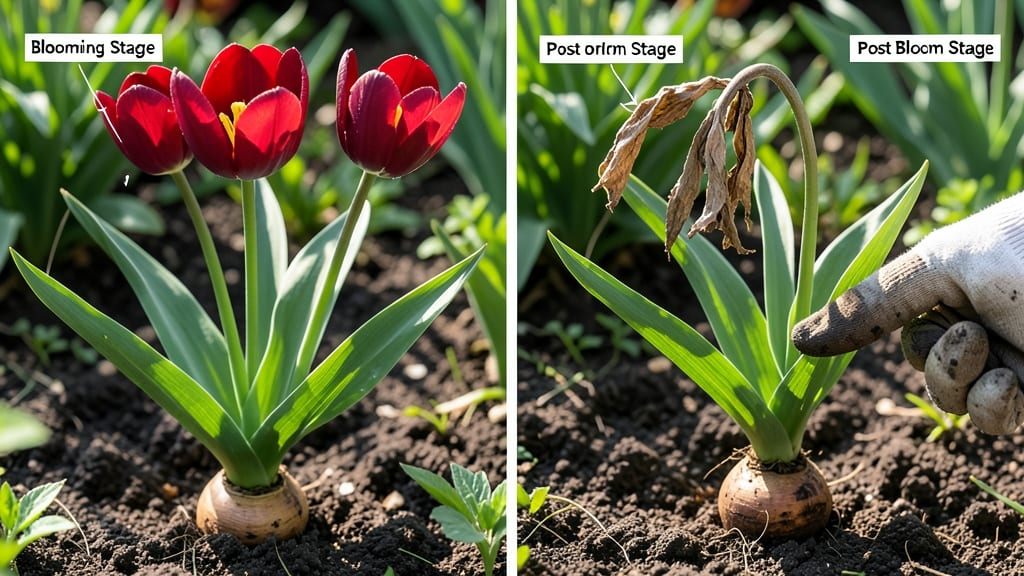
Not all tulips bloom only once—while most varieties produce flowers just once per season, certain reblooming types like Darwin Hybrid or Fringed tulips can yield a second flush of blooms with proper aftercare. Strategic deadheading and nutrient-rich soil are key to prolonging their flowering lifespan.
Most tulips exhaust their energy in one spectacular bloom because their bulbs prioritize storing nutrients for next year's growth. 🌸 The few reblooming varieties have evolved to handle this differently—they allocate energy more efficiently, allowing for a second round of flowers if you support them.
I've seen Darwin Hybrids come back stronger in their second bloom when given balanced fertilizer and consistent moisture, but even these need careful pruning to avoid weakening the bulb.
Here's the secret: after the first bloom fades, cutting the stem just above the bulb (not at the base) redirects energy back to the bulb rather than wasting it on seed production.
Combine this with a slow-release fertilizer in late summer, and you'll often see those classic tulip cups reappear in fall.
💡 In This Article
- Why Most Tulips Bloom Once and How Reblooming Works
- How to Encourage Reblooming in Tulips: Step-by-Step Care Guide
Why most tulips bloom once and how reblooming works
Most tulip varieties follow a strict biological cycle where they dedicate nearly all their energy to producing one stunning bloom each spring. This is because their bulbs prioritize storing nutrients for next year's growth over repeated flowering.
The bulb's energy reserves get depleted after the first bloom, forcing it into dormancy until the following season. Think of it like a battery that drains completely after one big charge—it needs time to recharge before producing more energy.
Reblooming tulips, like Darwin Hybrids or Fringed tulips, have evolved differently. These varieties allocate energy more efficiently, allowing them to produce a second bloom if given the right conditions. The key difference lies in their genetic ability to store and redistribute nutrients.
For example, Darwin Hybrids can produce a second flush of blooms in late summer or early fall if you provide consistent care. The secret is in their bulb structure—these varieties develop stronger, more resilient bulbs that can handle multiple flowering cycles without complete energy depletion.
Sunlight plays a crucial role in this process. Tulips need at least 6-8 hours of direct sunlight daily to maximize photosynthesis and energy storage. Without sufficient light, the bulb struggles to rebuild its reserves, making reblooming nearly impossible.
Additionally, proper nutrients are essential—reblooming varieties benefit from a balanced fertilizer (like a 10-10-10 NPK ratio) applied in early spring and again after the first bloom fades. This ensures the bulb has the resources to support a second flowering cycle.
Another critical factor is deadheading—the practice of removing spent blooms. When you cut the stem just above the bulb (not at the base), you prevent the plant from wasting energy on seed production. This redirection of energy back to the bulb is what often triggers the second bloom.
I've seen Fringed tulips rebloom beautifully when deadheaded properly, while single-blooming varieties like Parrot tulips remain stubbornly one-and-done without this care.
Temperature also influences reblooming potential. Tulips thrive in USDA zones 3-8, where they experience distinct seasonal changes. The cold winter dormancy period is essential for bulb maturation, while warm spring and summer temperatures fuel growth.
In regions with mild winters, bulbs may not get the necessary rest, reducing their ability to rebloom. This is why reblooming is more reliable in areas with traditional four seasons.
Finally, soil health matters. Well-draining, nutrient-rich soil prevents bulb rot and ensures the plant can absorb essential minerals. Amending your garden with compost or organic matter before planting sets the stage for successful reblooming.
The combination of proper sunlight, deadheading, fertilization, and seasonal cycles creates the perfect conditions for tulips to defy their one-bloom reputation.