
Blooming
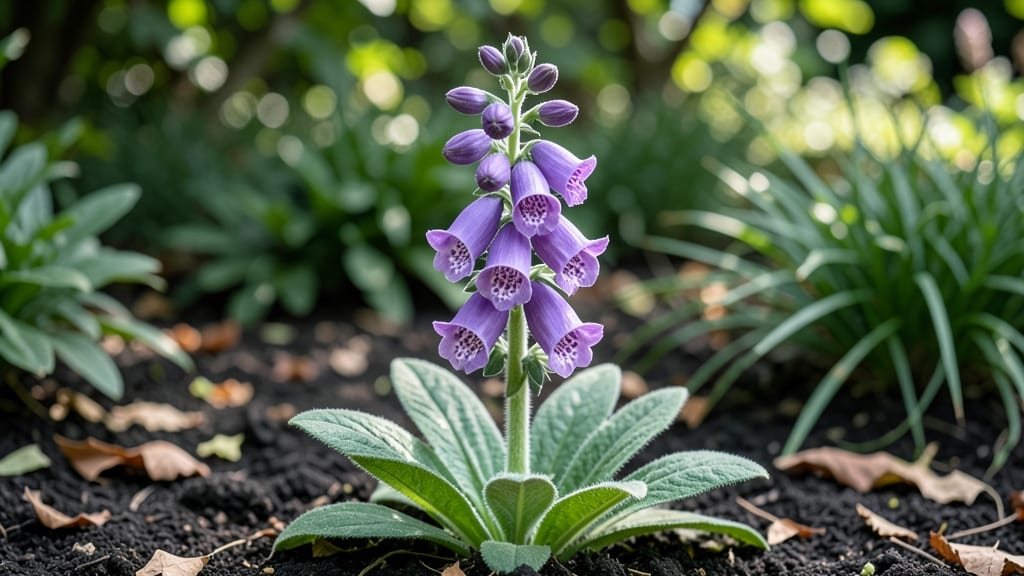
Foxglove does not bloom all summer—its flowers typically appear once in late spring to early summer, lasting 4-6 weeks before fading. Some varieties may produce sporadic second flushes under ideal conditions, but consistent reblooming is rare and requires careful cultivation.
Foxglove's single-season bloom isn't just a quirk—it's a survival strategy. 🌸 The plant channels most of its energy into producing seeds during its primary bloom, leaving little for prolonged flowering.
Varieties like Digitalis purpurea (common foxglove) focus on this one spectacular show, while Digitalis grandiflora might occasionally reward you with a smaller second wave if given perfect conditions: rich, well-draining soil and consistent moisture.
Think of it as nature's way of saying "go big or go home" with its floral displays.
What's fascinating is how environmental factors play into this. Too much heat or drought during the growing season can completely shut down blooming potential, while cool, consistent temperatures (around 60-70°F) actually encourage those rare second flushes.
I've seen gardeners in cooler climates report occasional late-summer blooms—proof that foxglove will stretch its performance when conditions align just right.
💡 In This Article
- Foxglove’s Natural Blooming Cycle Explained
- How to Encourage Extra Foxglove Blooms (If Possible)
Foxglove’s natural blooming cycle explained
Foxglove's single-season bloom stems from its evolutionary priorities. This biennial plant (meaning it completes its life cycle in two years) allocates nearly all its energy to seed production during its first flowering year. The dramatic 4-6 week bloom period in late spring/early summer isn't just showy—it's strategic.
Each flower contains thousands of seeds, and foxglove prioritizes reproduction over prolonged display. This is why you'll rarely see foxglove plants with both flowers and new foliage simultaneously—they're all-in on one life stage at a time.
The blooming window is tightly regulated by photoperiodism—the plant's response to daylight length. Foxglove begins flowering when days reach 14-16 hours of light, typically in May-June in temperate zones. After this peak, the plant enters a post-bloom phase where it focuses on seed maturation rather than new flower production.
Interestingly, foxglove's native European habitats often experience cool summer temperatures (60-70°F), which naturally limit its growing season. In warmer climates, this can actually shorten the bloom period further.
Soil fertility plays a crucial role too. Foxglove thrives in well-draining, slightly alkaline soil (pH 6.5-7.5) with moderate phosphorus levels. When nutrients are abundant, the plant produces more robust blooms but still follows the same single-season pattern.
The key is understanding that foxglove's energy budget is fixed—it won't extend its bloom season unless you're willing to compromise on seed production, which is essential for its survival cycle.
What most gardeners don't realize is that foxglove's leaves contain toxic cardiac glycosides that actually inhibit new growth during flowering. This chemical defense mechanism ensures the plant doesn't waste energy on both flowers and foliage simultaneously.
The trade-off is what gives foxglove its stunning but temporary floral displays—nature's way of saying "watch me now, because I won't do this again for two years."
There are subtle variations between species. Digitalis grandiflora (yellow foxglove) sometimes shows more resilience in reblooming attempts, while Digitalis purpurea (purple foxglove) is more strictly one-and-done. The difference comes down to genetic adaptations—yellow foxglove evolved in slightly drier conditions where stretching resources makes survival more likely.
This is why you might spot occasional late-summer blooms on yellow varieties under perfect conditions.
Temperature swings are the biggest bloom-killer. Foxglove flowers are particularly sensitive to heatwaves above 85°F—they'll quickly wilt and drop. The plant's native European climate taught it to bloom when temperatures are cool but stable, not when summer heat arrives.
This is why gardeners in hotter zones often see foxglove's bloom period compressed to just 3-4 weeks rather than the full window.