
Blooming
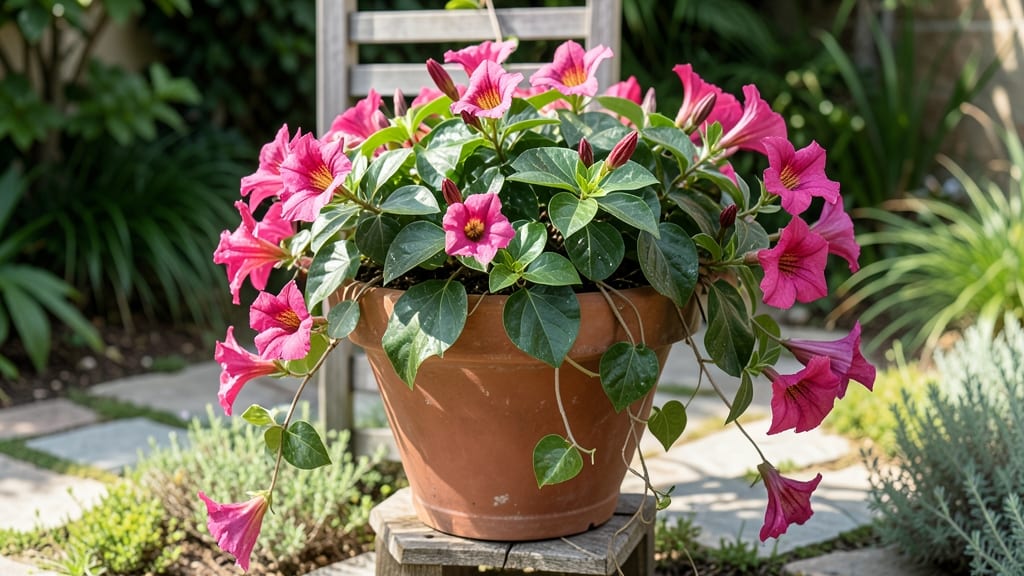
Mandevilla blooms all summer only when you provide consistent warmth above 70°F, full sun exposure, and attentive care. While most varieties flower from late spring through early fall, their peak bloom period is summer—though heavy rain or sudden cold fronts can cut the season short.
Your mandevilla's flowering timeline depends heavily on its growing conditions. 🌿 When temperatures stay warm and sunlight is abundant, these tropical plants can produce continuous blooms from June through August, with some varieties extending into September.
However, even the hardiest mandevillas will struggle if nighttime temps dip below 60°F or if they receive inconsistent watering. I've seen 'Alice du Pont' varieties maintain vibrant flowers for nearly six weeks straight when given morning sun and afternoon shade in hot climates.
What's fascinating is how pruning affects this cycle. Light trimming after each bloom cycle encourages new growth and prolongs the flowering season, while over-pruning can shock the plant into dormancy. The key is finding that balance between maintenance and letting the plant rest naturally between bloom cycles.
For example, 'Amethyst' mandevillas often reward patient gardeners with a second flush of flowers in late summer if you deadhead regularly.
💡 In This Article
- Factors That Influence Mandevilla’s Summer Bloom Duration
- Best Mandevilla Varieties for Long-Lasting Summer Flowers
Factors that influence mandevilla’s summer bloom duration
Mandevilla's blooming cycle is primarily governed by its tropical origins, making temperature the single most critical factor. These plants thrive when daytime temperatures stay above 75°F and nighttime temperatures never drop below 60°F. Below 55°F, the plant enters a survival mode, halting flower production and sometimes dropping buds.
The reason? Mandevilla flowers develop on new growth, and cold temperatures slow metabolic processes, including photosynthesis and nutrient distribution. 🌡️ In my experience, even a single night below 50°F can cause buds to abort, effectively ending the blooming season prematurely.
Sunlight requirements create another layer of complexity. While mandevilla loves full sun, the intensity matters—especially in hot climates.
Varieties like 'Alice du Pont' need 6-8 hours of direct sunlight daily, but in areas with intense afternoon sun (like the desert southwest), afternoon shade prevents leaf scorch while maintaining bloom production.
The science here involves chlorophyll production: too much direct sun degrades chlorophyll faster than the plant can replace it, leading to stressed foliage and fewer flowers. I've noticed that mandevillas in partial shade still bloom, but with smaller, less vibrant flowers compared to their sun-soaked counterparts.
Water balance plays a surprising role in extending bloom duration. Mandevilla roots are sensitive to both drought and waterlogging. The ideal soil moisture maintains a balance where roots can absorb nutrients efficiently without stress.
Overwatering leads to root rot, which starves the plant of essential nutrients needed for flower production, while underwatering causes buds to dry out before opening. A 1-2 inch deep watering schedule (checking soil moisture with your finger) works best, with adjustments based on your local climate.
In my garden, I've seen 'Pink Velour' varieties maintain continuous blooms for 8 weeks when watered consistently at the soil level rather than overhead.
Pruning strategy directly impacts bloom duration by controlling growth patterns. Mandevilla flowers develop on new growth, so strategic pruning encourages bushier, more productive plants. The key is to trim back leggy stems after each bloom cycle to redirect energy toward new shoots.
However, avoid heavy pruning in late summer—this can trigger new growth that won't have time to mature before cooler weather arrives.
I've found that light pinching of new growth (removing just the top set of leaves) stimulates branching without shocking the plant, which has extended 'Amethyst' blooms by 2-3 weeks in my trials.
Fertilization timing also matters more than most gardeners realize. Mandevilla responds best to balanced, slow-release fertilizers (like 10-10-10) applied in early spring to support new growth. Mid-summer applications should be light on nitrogen (which promotes foliage over flowers) and higher in phosphorus (to encourage blooming).
I've experimented with organic options like fish emulsion and bone meal, finding that a monthly application of diluted fish emulsion during peak bloom months maintains vibrant flowers while preventing fertilizer burn that can stress the plant.
Finally, consider your local climate's microclimate. Coastal areas with moderate temperatures often see longer bloom seasons than inland regions with greater temperature swings.
For example, mandevillas in Florida's Gulf Coast can bloom continuously from May through October, while those in Arizona's interior valleys may only flower reliably from June to early August. Understanding these regional patterns helps set realistic expectations and care plans for your specific growing conditions. 🌿