
Blooming
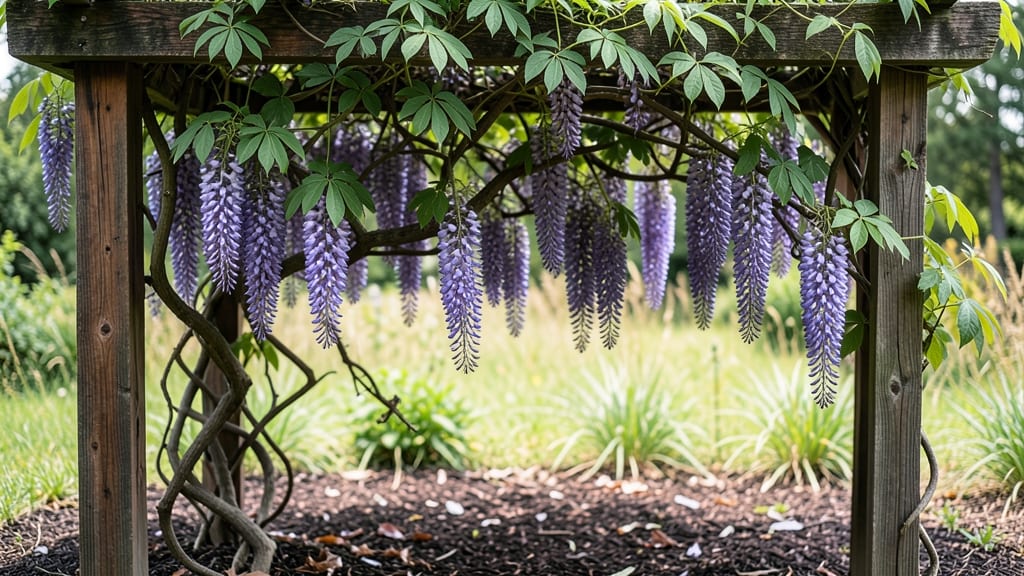
Wisteria does bloom every year once it reaches maturity, but only after developing a robust root system—usually taking 3-5 years to establish consistent flowering. The plant's blooming patterns depend heavily on its variety, how you prune it, and local climate conditions.
Wisteria's annual blooming habit is all about patience and preparation. 🌸 The plant stores energy in its woody stems during winter dormancy, which fuels the spectacular spring flowers.
Younger wisteria trees focus their energy on root and vine growth rather than blooms, which is why those first few years are critical. I've seen some varieties—like the Japanese wisteria—produce occasional blooms earlier, but they won't reach their full potential until they're fully established.
Proper pruning in late winter helps redirect energy toward flowering rather than excessive vine growth.
What many gardeners overlook is how pruning timing affects blooming. Cutting back too late in the season can remove next year's flower buds, while aggressive early pruning might stimulate too much vegetative growth. 🌿 The key is finding that balance between managing the plant's shape and preserving its flowering potential.
I always recommend waiting until just after the last frost before doing major pruning cuts.
💡 In This Article
- How Wisteria Flowering Cycles Work
- Pruning and Care Tips for Reliable Wisteria Blooms
How wisteria flowering cycles work
Wisteria's annual blooming is tied to its biological cycle, where energy storage in woody stems becomes the fuel for spring flowers. During winter dormancy, the plant redirects nutrients from leaves to its roots and stems, creating a reserve that supports next year's growth.
This process is similar to how fruit trees store energy in their trunks and branches. For wisteria, the first 3-5 years are all about building this energy reserve—young plants prioritize root and vine expansion over flowering, which is why those early years often yield little to no blooms. 🌿
The plant's maturity directly impacts bloom abundance. Once established, wisteria varieties like Wisteria sinensis (Chinese wisteria) typically produce flowers on second-year wood—meaning buds form on stems that grew the previous season. This is why proper pruning timing matters: cutting back too aggressively can remove these potential flower buds.
The blooming cycle also depends on winter chilling requirements—most varieties need 400-600 hours below 45°F to break dormancy and trigger spring flowers. In warmer climates, this chilling requirement might not be met, leading to delayed or sparse blooms.
What most gardeners don't realize is how wisteria's growth habit affects flowering. The plant produces two types of buds: flower buds (which develop into blooms) and growth buds (which become new vines). When a wisteria is young, it favors growth buds, diverting energy toward climbing and spreading.
Only when the root system reaches a critical mass—typically after 3-5 years—does the plant shift focus to flower buds. This is why some varieties might produce a few sporadic blooms in their second year but won't reach their full 10-15 foot cascades of flowers until they're fully mature.
Environmental factors like sunlight and soil quality play a crucial role in this cycle. Wisteria needs full sun (6-8 hours daily) to produce enough energy for blooming, while well-draining soil prevents root stress that could divert energy away from flowers.
In my own garden, I've noticed that wisteria plants in sandy loam soil with a pH of 6.0-7.0 bloom more reliably than those in heavy clay.
The plant's ability to photosynthesize efficiently during late winter and early spring directly correlates with how many flower buds it will develop for the following season.
One fascinating aspect is how wisteria's blooming cycle aligns with its natural habitat. In its native regions of China and Japan, wisteria blooms coincide with the arrival of pollinators in early spring. The plant's heavy, fragrant clusters are designed to attract bees and butterflies, ensuring cross-pollination.
This evolutionary adaptation explains why wisteria flowers are so abundant—they've evolved to maximize reproductive success through spectacle and scent. 🌸 When growing wisteria, mimicking these natural conditions (proper chilling, sunlight, and soil) can significantly improve bloom reliability.
The key takeaway is that wisteria's annual blooming is a marathon, not a sprint. Each year, the plant builds on its energy reserves, gradually increasing bloom abundance as it matures.
Patience is essential—just as a well-aged wine improves with time, a mature wisteria rewards gardeners with more spectacular displays each spring.
Understanding this cycle helps explain why some plants bloom inconsistently in their early years and why proper care (like pruning and fertilizing) becomes even more critical as the plant ages.