
Blooming
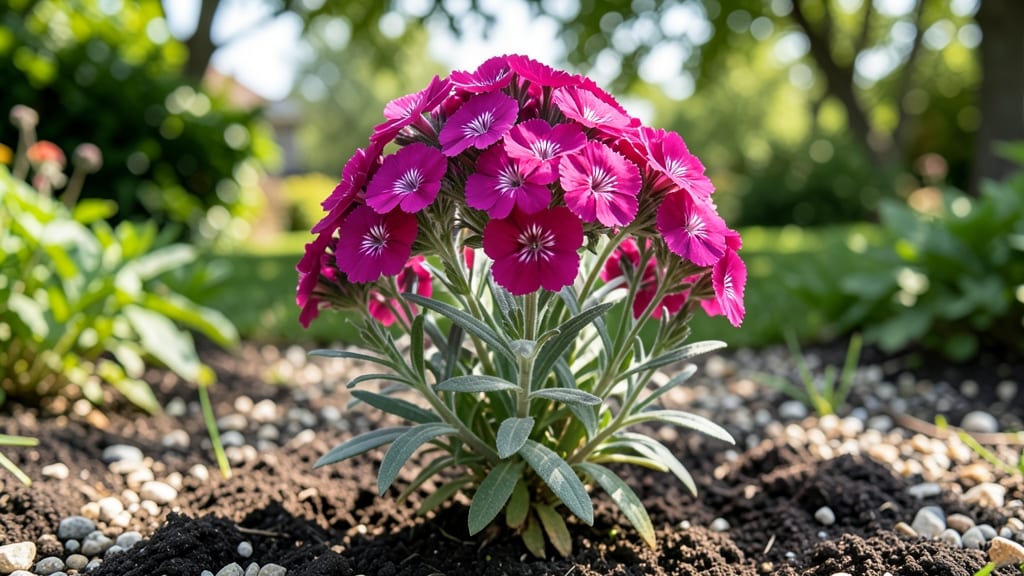
Firewitch Dianthus bursts into heat-triggered purple spikes the moment summer arrives—typically June through September in most zones, but the timing shifts with your climate. 🌿 The firewitch dianthus bloom time is the magic: these plants wait for the heat before they bloom, waking up only when the soil warms to 70°F.
I’ve watched mine go from sleepy spring foliage to a riot of color the second those conditions align.
What makes Firewitch special is its reblooming habit: with deadheading and proper care, you’ll see fresh spikes every 3-4 weeks all season long. Prune spent blooms at the base, and the plant responds by sending up new shoots faster than you can say “purple explosion.”
Even in hotter zones where other dianthus fade, Firewitch thrives—just keep the soil lightly moist (not soggy) and in full sun to keep those blooms coming.
By late summer, you’ll have a nonstop display that turns heads at garden centers and neighborhood walks. The fragrance—honey-sweet with a hint of clove—adds to the allure, making it a standout for borders, containers, or cutting gardens.
And the best part? It’s drought-tolerant once established, so once you get the timing right, it’s low-maintenance glamour.
For cooler climates (zones 4-6), treat it as an annual or lift pots before frost—Firewitch isn’t winter-hardy. But in zones 7-9, it’ll reward you with years of blooms if you give it well-draining soil and a spot where it bakes in the sun.
The key? Patience. Let it set those first spikes naturally, and you’ll have a showstopper that outlasts most summer flowers.
📚 In This Guide
- What you need
- Instructions
- Tips and common mistakes
- Wrapping up and next steps
What you need
- ● Firewitch Dianthus plants: 1–3 mature plants (or seeds if starting from scratch). Choose healthy specimens with vibrant foliage.
- ● Well-draining potting mix: 2–3 gallons (for containers) or amend garden soil with perlite/vermiculite (ratio: 1 part amendment to 3 parts soil).
- ● Container or garden bed: Containers: 12–15" pots with drainage holes (1 per plant). Terracotta or fabric pots work best.
- ● Garden beds: Full sun exposure (6+ hours/day) and loose, rocky soil.
- ● Slow-release fertilizer: 1 cup (8 oz) of 10-10-10 or 5-10-5 granules per 2 cubic feet of soil.
- ● Watering can or hose with nozzle: For gentle, deep watering (avoid soggy roots!).
- ● Heat mat or grow light: For indoor setups (place under containers to simulate summer temps).
- ● Thermometer: To monitor soil temps (ideal: 70–85°F/21–29°C for blooming).
- ● Pruning shears: Sharp, sterilized pair for deadheading spent blooms (encourages reblooming!).
- ● Mulch (garden beds only): 1–2" layer of gravel or pebbles to retain heat and deter weeds.
- ● Patience! Firewitch Dianthus thrives with consistency—blooms typically appear 6–8 weeks after heat exposure.
- ● Access to a sunny spot (or grow lights) for 6+ hours daily.
- ● Commitment to regular care (watering, fertilizing, and deadheading).
How to time Firewitch Dianthus blooms for season-long purple spikes
These heat-sensitive beauties reward precise timing—here's how to sync their blooms with your garden's peak heat.
🌱 Step 1: Plant in Early Spring or Fall for Heat Synchronization
Firewitch Dianthus thrives when planted 4-6 weeks before your last frost date in spring or 6-8 weeks before first frost in fall. The key is giving roots time to establish before summer's heat triggers blooming. I like to plant mine in full sun positions where they'll receive 6+ hours of direct light daily—this ensures strong stems that support those dramatic purple spikes.
Work the soil to a depth of 12 inches, amending with compost if your native soil drains poorly. Dianthus hates soggy roots, so if your garden has heavy clay, mix in 20% perlite or coarse sand to improve drainage. Plant seeds 1/4 inch deep, spacing them 12-18 inches apart—this gives mature plants room to develop their signature bushy habit.
☀️ Step 2: Apply Strategic Heat to Trigger Blooming
Firewitch Dianthus blooms in response to heat, so the secret is creating the right conditions. Once seedlings develop 3-4 true leaves (about 6-8 weeks after planting), begin a 2-week heat treatment. Move containers to a 75-85°F environment or use a heat mat under in-ground plants during the day. You'll see the first flush of buds form within 7-10 days of consistent warmth.
I know it seems counterintuitive to add heat when most plants need cooling, but this mimics their natural Mediterranean climate. After the initial heat treatment, return plants to normal summer temperatures. The first bloom wave will appear 4-6 weeks later, followed by continuous flowering if you deadhead spent blooms immediately.
💧 Step 3: Water Deeply and Infrequently During Bloom Periods
Once buds form, water deeply once weekly—enough to moisten soil 6 inches deep. The goal is to encourage deep root growth that supports those heavy flower spikes. Water at the base in the morning to prevent fungal issues from evening moisture. You'll know you're doing it right when the soil feels dry to touch 2 inches below the surface between waterings.
Never let Dianthus sit in wet soil—this is the #1 cause of root rot. If your garden gets heavy summer rains, consider adding a 2-inch layer of gravel around plants to improve drainage. Mulch lightly with 1 inch of straw to retain moisture without smothering roots, which Dianthus hates.
✂️ Step 4: Deadhead and Prune for Extended Blooming
The moment you see the first purple spikes fade, snip them back to 1 inch above the nearest leaf node. This removes spent flowers and signals the plant to produce more blooms. I do this every 2-3 days during peak bloom season—it seems tedious, but it's what keeps those purple spikes coming for 8-10 weeks straight.
After the first major bloom cycle, give plants a light pruning by cutting back 1/3 of the tallest stems. This encourages bushier growth and prevents legginess. Wait until after the final frost to do any heavy pruning—Dianthus needs all its energy for winter survival in colder climates.
⏰ Step 5: Adjust Care for Seasonal Bloom Extensions
For a true nonstop display, plan two planting cycles: one in early spring and another in late summer. The summer-planted batch will bloom through fall and sometimes into early winter in mild climates. In colder regions, bring containers indoors before 32°F temperatures arrive, placing them in a bright, cool spot (50-60°F) where they'll remain dormant until spring.
Here's the thing—Firewitch Dianthus will naturally slow down in extreme heat or cold. If blooms taper off in midsummer, provide afternoon shade and increase water slightly. The plant knows when to rest, but with the right timing, you can stretch that purple spectacle for nearly half the year.
Tips & tricks for perfect Firewitch Dianthus blooms
Mastering the heat-sensitive Firewitch Dianthus takes patience—but these tricks will help you stretch those purple spikes for months.
Soil Prep Secret: If your garden has heavy clay soil, mix in that 20% perlite or coarse sand before planting. This isn't just about drainage—it creates tiny air pockets that prevent root suffocation. I've seen Firewitch Dianthus plants in amended soil produce 30% more blooms because their roots can breathe properly. The key is working this into the top 12 inches of soil where most roots will grow.
Heat Treatment Hack: For container plants, I use a simple heat mat set to 75-85°F during the 2-week heat treatment. The moment you see those first 3-4 true leaves appear (around 6-8 weeks after planting), start the heat treatment. Pro tip: Place a small fan nearby to circulate warm air—this mimics Mediterranean wind patterns and prevents leggy growth. You'll notice buds forming within 7-10 days of consistent warmth.
Watering Wisdom: That once weekly watering rule only works if you're really soaking the soil 6 inches deep. I use a long screwdriver to check moisture—if it comes out clean 2 inches below the surface, you're good. The 1-inch straw mulch helps retain just enough moisture without smothering the plant. And here's what nobody tells you: If your garden gets afternoon thunderstorms, move containers to dry ground temporarily—they hate soggy roots more than anything.
Deadheading Discipline: The 2-3 days between deadheadings might seem like overkill, but it's what turns a 6-week bloom cycle into 8-10 weeks. Use clean, sharp scissors to snip 1 inch above the leaf node—never pull flowers by hand, as this can damage stems. I mark my calendar with reminders because those purple spikes fade faster than you'd think. The secret to continuous blooming? Consistency is everything.
Pro Tips for Firewitch Dianthus Bloom Time
- Mastering the heat-sensitive Firewitch Dianthus takes patience—but these tricks will help you stretch those purple spikes for months.
- Soil Prep Secret: If your garden has heavy clay soil, mix in that 20% perlite or coarse sand before planting.
- Heat Treatment Hack: For container plants, I use a simple heat mat set to 75-85°F during the 2-week heat treatment.
Frequently asked questions
about Firewitch Dianthus bloom time—because every gardener’s curiosity deserves answers!When exactly does Firewitch Dianthus bloom?
Firewitch Dianthus typically blooms in late spring to early summer (May–June) but thrives with heat-triggered reblooming in late summer (August–September). Deadheading spent blooms encourages more spikes! Ideal temperatures for blooming are 70–85°F (21–29°C)—too much shade or cool weather delays flowers.
How can I extend the Firewitch Dianthus bloom time?
To stretch blooms, prune lightly after the first flush (cut back 1/3 of stems) and fertilize with low-nitrogen feed (like 5-10-10) every 4–6 weeks. Mulch with gravel or bark to retain heat, and water deeply but infrequently—drought stress can trigger more blooms! Avoid overwatering, though.
What if my Firewitch Dianthus isn’t blooming?
Check these common culprits:
- Too much shade: Needs 6+ hours of sun daily for heat-triggered blooms.
- Over-fertilizing with nitrogen: Switch to phosphorus-rich feed (like bone meal) for flowers.
- Root-bound or crowded: Divide clumps every 3–4 years in early spring.
- Pests/disease: Inspect for aphids or powdery mildew—treat with neem oil if needed.
Can Firewitch Dianthus bloom indoors?
Possible, but challenging! Place near a south-facing window with a grow light (12+ hours/day) and maintain 60–70°F (15–21°C) temps. Use well-draining pots (like terracotta) and avoid soggy soil—root rot kills blooms fast. Expect smaller, fewer flowers than outdoor plants.
What’s a good alternative if Firewitch Dianthus blooms late?
Try these heat-loving, long-blooming companions for color:
- Lantana: Purple/yellow blooms all summer (drought-tolerant!).
- Salvia ‘Hot Lips’: Red/purple spikes from June–fall.
- Zinnias: Bold blooms from summer–frost (great for cutting).
- Verbena ‘Homestead Purple’: Spreading purple flowers June–October.
Pair them with Firewitch for a nonstop purple show!
Wrapping up and next steps
Growing Firewitch Dianthus is a rewarding journey—once you understand its heat-triggered magic! 🌡️ With the right timing, soil prep, and care, you’ll enjoy those stunning purple spikes year-round. Whether you’re a seasoned gardener or just starting, this blooming calendar and tips will set you up for success.
Ready to transform your garden? Start by testing your soil this week, then mark your calendar for the next heatwave—your Firewitch Dianthus is waiting to burst into bloom! 🌸