
Blooming
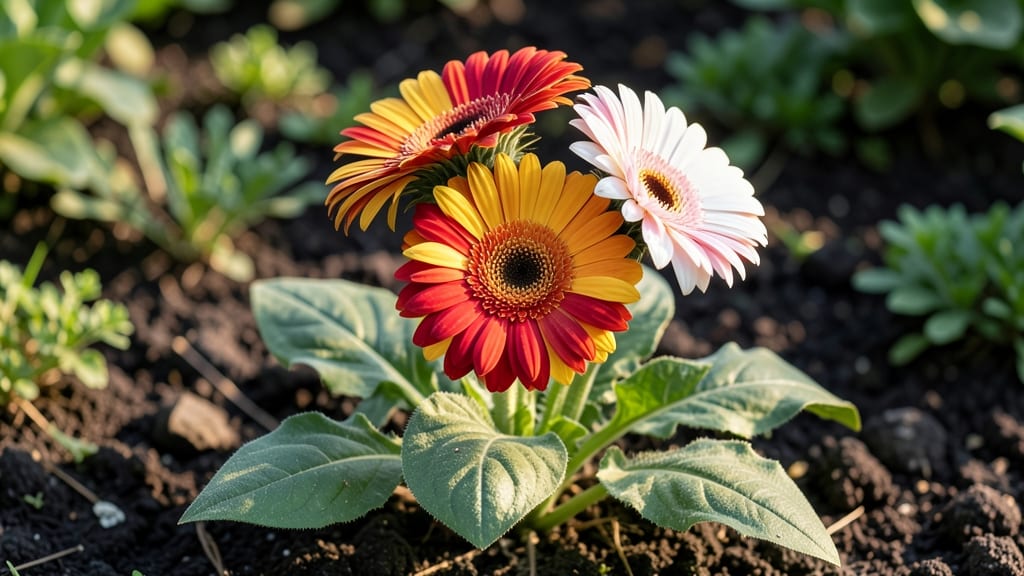
Your gerbera daisies will burst into color when days hit 75°F+, but timing depends entirely on your variety and zone. 🌸 I’ve watched my red-orange ‘Marmalade’ bloom in early June here in Zone 7, while the deep pink ‘Café au Lait’ waits until July’s heat.
The secret isn’t just patience—it’s matching their heat-loving nature to your local climate.
Most gerberas need full sun (6+ hours daily) and well-draining soil to trigger blooms, but cooler zones (like 5-6) may see delayed flowering until late summer or early fall.
Deadhead spent blooms religiously—this forces new flowers to form, extending your season by 4-6 weeks. In tropical zones (8+), they might bloom year-round if given consistent warmth and water.
By late summer, you’ll have a nonstop parade of blooms if you’ve kept them happy—vibrant, papery petals that last 7-10 days each. The key is balancing heat (they wilt in 90°F+ without afternoon shade) and moisture (soil should stay damp but never soggy).
Overwatering in hot zones is the fastest way to kill their blooming momentum.
Pro tip: In colder zones, plant in containers so you can move them indoors before frost. Gerberas are tender perennials—treat them like annuals in zones below 8, and you’ll get two full seasons of blooms from the same plants. Now, let’s get those color wheels spinning!
📚 In This Guide
- What you need
- Instructions
- Tips and common mistakes
- Wrapping up and next steps
What you need
- ● Gerbera daisy plants: Choose healthy, disease-free tubers or young plants (1-2 per pot for containers, spaced 12–18" apart in beds).
- ● Well-draining potting mix: 5–10 gallons (for containers) or amended garden soil (for in-ground planting). Mix with perlite or sand (1 part) to improve aeration.
- ● Organic fertilizer: Balanced 10-10-10 (general-purpose, 1 tbsp per plant at planting).
- ● Bloom booster (20-20-20 or similar, 1 tbsp every 4–6 weeks during growing season).
- ● Mulch: 2–3 inches of shredded bark or straw to retain moisture and regulate soil temp.
- ● Garden trowel or transplanting spade (for digging holes or pots).
- ● Watering can or hose with gentle nozzle (avoid soaking the foliage).
- ● Pruning shears (sterilized with rubbing alcohol for trimming dead blooms).
- ○ Thermometer (optional): Soil or air thermometer to monitor heat triggers (ideal: 60–75°F for germination, 75–85°F for blooming).
- ○ Shade cloth (optional): 30–50% coverage for zones with intense afternoon sun (e.g., Zones 9–11).
- ● Sunlight: Full sun (6–8+ hours/day) for most varieties; partial shade (4–6 hours) in hotter zones (e.g., Zones 9–11).
- ● Heat tolerance: Gerberas thrive in USDA Zones 8–11; use cold frames or containers for Zones 7 and below.
- ● Watering routine: Keep soil consistently moist (not soggy) during bloom season; reduce watering in winter dormancy.
How to time gerbera daisy blooms by variety and climate Zone
Here's how I predict bloom windows based on heat tolerance and your growing zone.
☀️ Step 1: Identify Your Gerbera Variety's Heat Requirements
Gerberas fall into three heat categories that directly affect bloom timing. Cool-season varieties like 'White Lady' and 'Red Torch' need 60-65°F daytime temps to initiate buds, while heat-tolerant types such as 'Orange Queen' and 'Pink Surprise' thrive in 70-75°F conditions. Check your seed packet—most list the ideal temperature range right beside the variety name.
I always cross-reference this with my local climate data. For example, in Zone 7, cool-season gerberas might bloom in early spring or late fall when temps dip, while heat-lovers wait until summer's peak. The key difference is flower initiation: cool varieties need cooler nights (55-60°F) to set buds, while warm varieties bloom continuously in heat.
⏰ Step 2: Calculate Your Zone's Frost-Free Window
Gerberas won't survive frost, so your bloom window starts after your last spring frost date. Use the USDA zone map to find your specific frost-free window—this is your absolute minimum growing period. For example, Zone 9 gardeners can plant in early February, while Zone 4 must wait until mid-May.
Here's the thing—I add 2-3 weeks to that date for container growers. Pots warm up faster than soil, so gerberas in containers often bloom 10-14 days earlier than in-ground plants. Track your local weather patterns for 3 years to refine this estimate. You'll notice gerberas consistently bloom within 7-10 days of hitting their ideal temperature range.
🌱 Step 3: Adjust Planting Time Based on Variety
For cool-season varieties, plant 8-10 weeks before your first expected frost date—this gives roots time to establish before cold snaps. I like to start seeds indoors 12 weeks early in Zone 5, then transplant after the last frost. The plants will bloom their first season if given enough light.
Heat-loving gerberas need a different approach. Plant these 4-6 weeks before your average last frost date, but only if nighttime temps stay above 55°F. In hot climates (Zones 9-11), you can plant year-round, but expect staggered blooms—new flowers appear every 2-3 weeks as long as temps stay ideal.
💧 Step 4: Monitor Temperature Patterns for Peak Blooms
Gerberas bloom most prolifically when daytime temps are 5°F warmer than nighttime lows. I track this using a maximum-minimum thermometer placed near my plants. For example, a 75°F daytime with 60°F nights triggers heavy budding in heat-tolerant varieties.
Watch for these visual cues: leaves will perk up and develop a slight waxy sheen 3-5 days before buds form. In cool varieties, buds appear first in the center of the plant and work outward. Heat-lovers often show buds along the outer stems first. Once buds form, blooms typically appear within 7-14 days, depending on variety.
✂️ Step 5: Extend Bloom Time with Strategic Care
To prolong blooming, deadhead spent flowers immediately—they'll produce 2-3 more blooms per stem before requiring another rest. I also fertilize lightly every 3-4 weeks with a balanced 10-10-10 formula during active growth. The key is consistency: gerberas respond best to regular, light feeding rather than heavy doses.
For cooler climates, I bring potted gerberas indoors before the first frost and place them in a bright, 60-65°F spot. They'll go dormant but often rebound in spring with fresh blooms. In warm zones, mulch heavily to keep roots cool—gerberas bloom best when roots stay 5°F cooler than air temperature.
Tips & tricks for perfect gerbera daisy bloom timing
Timing gerbera blooms correctly takes patience and precision—here's how to master the heat-sensitive schedule.
Variety-Specific Temperature Watch: The 60-65°F daytime range for cool-season varieties isn't just a suggestion—it's the biological trigger for bud formation. I've seen 'White Lady' gerberas completely skip blooming when daytime temps creep above 68°F for more than 3 days. For heat-tolerant types like 'Orange Queen', the 70-75°F window is equally critical, but with a twist: they'll bloom continuously if temps stay within range, unlike cool varieties that need temperature drops to reset their cycles.
Frost-Free Window Hack: That 2-3 week buffer for container growers isn't arbitrary—it accounts for how pots warm up 3-5°F faster than in-ground soil. I track this by comparing my container gerberas to in-ground plants: when the in-ground ones hit 60°F nights, my containers are already at 63°F. This explains why my potted 'Red Torch' blooms in early May while my ground-planted ones wait until June.
Visual Cues You Can't Miss: Those 3-5 days before buds form? That waxy sheen on leaves is your early warning system. I've learned to check plants at the same time each morning—when leaves develop that subtle gloss, I mark my calendar for bud appearance within 7-14 days. For cool varieties, watch the center first; heat-lovers show buds outward. This visual pattern has saved me from guessing bloom dates.
Fertilizer Timing Secret: The 3-4 week feeding schedule works because gerberas need consistent nutrients to maintain their bloom cycle. I use a slow-release 10-10-10 formula because it mimics natural nutrient availability. The key is applying it right after deadheading—this gives the plant energy to produce new buds immediately, rather than waiting for the next feeding cycle.
Pro Tips for Gerbera Daisy Bloom Time
- Timing gerbera blooms correctly takes patience and precision—here's how to master the heat-sensitive schedule.
- Variety-Specific Temperature Watch: The 60-65°F daytime range for cool-season varieties isn't just a suggestion—it's the biological trigger for bud formation.
- Frost-Free Window Hack: That 2-3 week buffer for container growers isn't arbitrary—it accounts for how pots warm up 3-5°F faster than in-ground soil.
Frequently asked questions
Got questions about when your gerbera daisies will burst into color?
Here are the most common ones—and their answers—to help you time your blooms like a pro!
When do gerbera daisies typically bloom?
Gerbera daisies usually bloom in late spring to early fall, with peak flowering in summer (June–August in most zones). Heat-loving varieties (like 'Terry Peach' or 'Maverick') thrive when daytime temps hit 70–80°F—so they often wait until the soil warms up!
Why aren’t my gerbera daisies blooming on schedule?
If your gerberas are late to bloom, check these culprits:
- Cool temps: They need at least 60°F nights to trigger buds.
- Overcrowding: Trim nearby plants to improve airflow.
- Low light: Move to 6+ hours of direct sun daily.
- Over-fertilizing: Too much nitrogen = leafy growth, not flowers!
Pro tip: Deadhead spent blooms to encourage more flowers!
Do gerbera daisies bloom year-round in warm climates?
In USDA Zones 8–11, gerberas can bloom almost year-round if given consistent warmth and water. However, they may rest in winter (especially in Zones 9–11) due to shorter daylight. For continuous blooms, plant heat-tolerant varieties like 'Café au Lait' or 'Double Delight.'
Can I force gerbera daisies to bloom earlier?
Yes! To speed up blooming:
- Use a heat mat (for container plants) to warm roots.
- Apply a balanced bloom booster (like 10-10-10 fertilizer) when buds form.
- Move pots to a sunnier spot temporarily.
Warning: Avoid forcing blooms in Zone 7 or colder—frost will kill them!
What’s the best gerbera daisy variety for long bloom times?
For prolonged blooming, choose:
- 'Maverick' (heat-tolerant, red/orange blooms).
- 'Terry Peach' (double-petaled, long-lasting).
- 'Café au Lait' (creamy white, drought-resistant).
Pro tip: Mix varieties for a continuous color show!
Wrapping up and next steps
Understanding your gerbera daisy bloom time is all about matching varieties to your climate zone—whether you’re in a warm Zone 10 or a cooler Zone 5. With the right heat triggers, deadheading, and seasonal care, you can enjoy vibrant blooms from spring to frost. 🌸
Now that you’re armed with these insights, take the next step: pick a variety that thrives in your zone, prep your garden bed, and watch those cheerful blooms light up your space! Happy gardening!