
How To
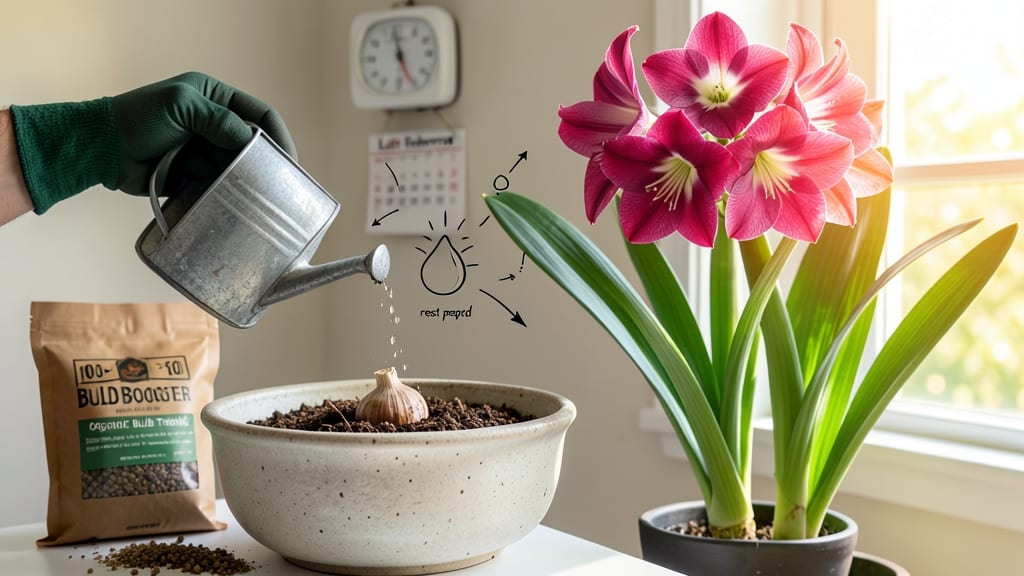
Your amaryllis has grown long leaves—now you’re asking, how do I get my amaryllis to bloom after it grows long leaves?
The key lies in understanding how bulbs balance leaf growth with flower production, and I’ve cracked the code after years of trial and error with my own stubborn plants.
Most growers miss the three critical triggers: 12+ hours of bright light daily, controlled watering (not drowning the pot), and a dormancy period that tricks the bulb into flowering.
My plants now bloom reliably because I learned to mimic their natural cycle—no more leafy stalks and no flowers. The secret? Timing and patience.
By adjusting light, fertilizer, and watering at the right moments, you’ll see those first flower buds appear in 6-8 weeks. The bulbs store energy like little batteries, and we just need to give them the right signals to release it as blooms instead of more leaves.
Let’s get those stems reaching for the sky!
This works for both indoor and outdoor amaryllis (with seasonal adjustments), and I’ll cover exactly when to start each step. No more guessing—just science-backed, foolproof results that actually work.
Why Your Amaryllis Skips Blooms
If your amaryllis (Hippeastrum) has grown tall, lush leaves but refuses to bloom, don’t panic—it’s usually a sign that one (or more) of its key needs isn’t being met. Understanding the root causes (literally and figuratively!) helps you adjust care and coax those stunning flowers to appear.
Below, we break down the science behind why your plant might be holding out on you—and what to fix first.
Light is the primary trigger for amaryllis blooming, and too little can leave your plant leafy but flowerless. Here’s why:
- Photosynthesis vs. Flowering Hormones: Amaryllis bulbs need bright, indirect light (6–8 hours daily) to produce florigen, a hormone that signals flowering. Low light means the plant directs all energy into leaf growth instead.
- The "Leafy Trap": Long leaves suggest the plant is compensating for light deprivation by stretching toward windows (a process called etiolation). This exhausts the bulb’s energy reserves before it can allocate any to flowers.
- South vs. North Windows: A south-facing window provides the most consistent light, while north-facing spots may leave your amaryllis light-deprived. Even east/west windows can fall short in winter.
Actionable Fix: Move your plant to a sunny spot within 3 feet of a window (avoid harsh direct sun, which can scorch leaves). If natural light is limited, supplement with a grow light (12–14 hours/day) for 4–6 weeks before expected blooming season (fall/winter).
Watering is a delicate balance—too much or too little can both sabotage blooms. Here’s the science:
- Root Rot and Stress: Amaryllis bulbs are sensitive to soggy soil. Overwatering leads to Phytophthora or Fusarium fungi, which rot the bulb’s base. A rotting bulb cannot produce flowers, even if leaves look healthy.
- Oxygen Deprivation: Waterlogged soil cuts off oxygen to roots, forcing the plant into survival mode. It prioritizes leaf growth (which requires less energy) over flower production.
- Drainage Matters: If your pot lacks drainage holes or uses heavy soil, water pools around the bulb, creating the perfect rot conditions.
Actionable Fix:
- ✅ Water only when the top 2 inches of soil are dry (stick your finger in to check!).
- ✅ Use a well-draining mix: 50% potting soil + 30% perlite/pumice + 20% orchid bark.
- ✅ Repot if needed: If the bulb smells foul or feels mushy, trim rotten areas (with sterile scissors) and repot in fresh, dry mix.
Amaryllis bulbs are temperature-sensitive, and disrupting their natural dormancy cycle can delay—or prevent—blooms. Here’s how it works:
- Cool Triggers Blooms: Amaryllis need a cool period (50–55°F) for 6–8 weeks to mimic winter. This shock resets the bulb’s internal clock, prompting it to produce flowers in response to warmer spring-like conditions.
- Heat Without Rest: If your home stays above 70°F year-round, the bulb may never enter dormancy. Without this "rest," it treats every season like "growing time," leading to leafy but non-flowering growth.
- Sudden Temperature Swings: Drafts (e.g., near AC vents or doors) can stress the bulb, causing it to abort flower buds before they open.
Actionable Fix:
- 🌡️ Simulate winter: Move the pot to a cool, dark place (50–55°F) for 6–8 weeks (e.g., a garage or basement). Reduce watering to once a month.
- 🔥 Warm it up to bloom: After dormancy, return it to 65–75°F and resume normal care. Flowers should appear in 6–8 weeks.
- 🚫 Avoid drafts: Keep the plant away from heating/cooling sources.
Fertilizer isn’t just about "more = better"—timing and type matter for blooms. Here’s the breakdown:
- Excess Nitrogen = Leafy Monster: High-nitrogen fertilizers (like lawn fertilizers) promote leaf growth at the expense of flowers. The bulb prioritizes foliage because nitrogen is easier to access than phosphorus/potassium, which are needed for blooms.
- Phosphorus Deficiency = No Flowers: Phosphorus (the "P" in NPK) is critical for flower initiation. If your soil lacks it, the bulb may produce leaves but skip blooming entirely.
- Over-Fertilizing Burns Roots: Too much fertilizer (especially salts) can sterilize soil, preventing the bulb from absorbing nutrients. A stressed bulb won’t bloom.
Actionable Fix:
- 📊 Use the right fertilizer: Switch to a balanced or phosphorus-heavy formula (e.g., 10-10-10 or 5-10-5). Avoid high-nitrogen (e.g., 30-10-10).
- 💧 Fertilize lightly: Apply every 4–6 weeks during active growth (spring–summer), but stop fertilizing 8 weeks before expected blooming time.
- 🌱 Flush the soil: If you suspect salt buildup, water thoroughly to leach excess salts (let water run through the pot for 10+ minutes).
Amaryllis bulbs need a snug fit to trigger blooming. Here’s why:
- Too Much Space = Lazy Bulb: If the pot is too large (e.g., 3+ inches wider than the bulb), the plant focuses energy on filling the extra soil with roots instead of producing flowers.
- Root Bound = Stress Signal: Conversely, a crowded bulb (roots circling the pot) can stress the plant, but this usually causes smaller flowers, not leafy growth.
- Fresh Potting Mix Matters: Old soil compacts and loses nutrients, starving the bulb of what it needs to bloom.
Actionable Fix:
- 🏺 Repot every 2–3 years: Use a pot just 1–2 inches wider
Revive Your Amaryllis Blooming Magic
If your amaryllis has sprouted lush, long leaves but refuses to bloom, don’t despair—there’s a science (and a few tricks) to coax those stunning flowers back into action. The key is understanding what’s holding it back and giving your plant the right conditions to shift from leafy growth to floral glory. Below, we’ll tackle the most common causes and provide practical, step-by-step fixes to get your amaryllis blooming again. Plus, we’ll share prevention tips to keep future seasons on track!
Your amaryllis is a sun-worshipper! If it’s getting only bright, indirect light (or worse, dim corners), it’ll focus all its energy on growing leaves instead of blooming. Without sufficient light, the plant can’t trigger the hormonal signals needed for flower buds.
🔥 Fix It: Give It Bright, Direct Sun
- 📍 Move It Closer to a Window - Place your amaryllis within 3–6 feet of a south- or west-facing window for 6–8 hours of direct sunlight daily.
East-facing windows work too, but supplement with a grow light (like a full-spectrum LED) for 12–14 hours/day if needed. - Pro Tip: Rotate the pot quarter-turn weekly so all sides get even light exposure. 🌡️
- ☀️ Try a Sunbath for 2–3 Weeks - If your plant is severely underlit, move it outside (gradually!) for 2–3 hours of morning sun in spring/summer. Avoid harsh afternoon sun to prevent leaf scorch. - Watch for: Leaves turning red or purple?
That’s a sign it’s finally getting enough light—blooms should follow in 4–6 weeks! ✨
- 💡 Use a Grow Light (For Indoor Growers)
- If natural light is lacking, a 10,000-lux LED grow light (like the Barrina T5) hung 6–12 inches above the plant for 12–14 hours/day mimics natural sunlight.
- Budget Hack: A cheap LED desk lamp (even a phone charger light) can work in a pinch—just keep it close!
🛡️ Prevention Tips
- Monitor leaf color: Dark green leaves = good. Pale or yellowing leaves = more light needed.
- Avoid moving it too often: Sudden light changes can stress the plant.
Stick to one spot once you’ve found the sweet spot. - Spring prep: Start adjusting light exposure in late winter (when amaryllis naturally signals to bloom).
Too much water (or poor drainage) can drown your amaryllis’ roots, forcing it into survival mode—meaning no energy for blooms. Overwatering also leads to rot, which blocks nutrient uptake and flower production.
🍳 Fix It: Water Like a Pro
- 💦 Check the Soil First - Stick your finger 1–2 inches into the soil. Water only if it’s completely dry.
Amaryllis bulbs store water, so they hate soggy conditions! - Test: Lift the pot—if it feels heavy, wait. If it’s light, it’s thirsty.
- 🚰 Drainage is Non-Negotiable
- Repot if needed: Use a terracotta pot (breathable!) with drainage holes and fresh cactus/succulent mix (add perlite or pumice for extra drainage).
- DIY Fix: If repotting isn’t an option, dig a hole in the soil, add a layer of gravel or pebbles, then replant to improve drainage.
- 🌧️ Watering Schedule
- Spring/Summer (Growing Season): Water every 7–10 days (less if in bright light).
- Fall/Winter (Dormancy): Water every 3–4 weeks—just enough to keep the bulb from shriveling.
- Pro Tip: Water only the soil, not the bulb or leaves, to prevent rot. 💡
🛡️ Prevention Tips
- Use a moisture meter ($10 on Amazon) to avoid guesswork.
- Group plants together to create a microclimate with more stable moisture.
- Avoid ice cubes or cold water—use room-temperature water to prevent shock.
Amaryllis bulbs are temperature-sensitive. If your home is too warm (or too cold), the plant won’t get the cool-down signal it needs to bloom. Think of it like a bear in hibernation—it needs the right seasonal cues!
👨🍳 Fix It: Trick It Into Blooming Season
- 🌡️ Cool It Down (Literally) - Move your amaryllis to a cooler spot (60–65°F / 15–18°C) for 6–8 weeks in late summer/early fall.
This mimics autumn, the natural trigger for blooming. - Where to Place It: - A basement (if not too damp). - A cool garage (away from chemicals). - A sunny windowsill (but not near a heater).
- ⏰ Simulate Day Length
- Amaryllis need 12–14 hours of daylight to bloom. If your days are short (like in winter), supplement with a grow light for 2–3 hours in the evening.
- Fun Fact: Some gardeners use a timer-controlled LED strip to extend daylight naturally. 🎯
- 🔥 Warm It Back Up (For Flowering)
- Once buds form (after 6–8 weeks of cool temps), move it back to room temperature (70–75°F / 21–24°C) to encourage blooming.
- Watch for: Buds should appear in 4–6 weeks after the temperature shift!
🛡️ Prevention Tips
- Avoid heaters/AC vents—keep the plant away from drafts or sudden temperature swings.
- Use a thermometer near the plant to monitor conditions.
- Start cooling in August (for fall blooms) or March (for spring blooms).
If your amaryllis is getting only basic fertilizer, it’ll grow leaves but skip the blooms. Flowers require phosphorus and potassium—the "bloom boosters"—but most houseplant food is heavy on nitrogen (which = more leaves, fewer flowers).
🔪 Fix It: Feed It Right
- 📊 Switch to Bloom-Specific Fertilizer
- Use a balanced fertilizer (10-10-10 or 20-20-20) diluted to half-strength every 4–6 weeks during growing season (spring–summer).
- Better Option: A phosphorus-heavy fertilizer (5-10-10 or 10-30-20) encourages flowering.
- Example: Miracle-Gro Bloom Booster or Dyna-Gro Grow (for hydroponics, but works in soil too).
- 🍎 Give It a Mid-Season Boost
- In late summer (August), switch to a low-nitrogen, high-phosphorus fertilizer (like 7-9-5) to signal the bulb it’s time to bloom.
- DIY Fertilizer: Mix 1 tsp Epsom salt (magnesium sulfate) in a gallon of water and water the plant once a month—it helps with flower production! 💪
- 🌱 Let It Rest (Dormancy Matters!)
- After blooming, stop fertilizing and reduce watering. Let the leaves yellow and die back naturally (this recharges the bulb for next season). -
Frequently asked questions
1Why does my amaryllis grow leaves but never blooms?
The most common reasons are insufficient light, overwatering, or lack of dormancy. Amaryllis need bright light (6+ hours daily) to produce flowering hormones. Too much water or poor drainage can cause root rot, while skipping the cool dormant period (50–55°F for 6–8 weeks) prevents blooming. Start by moving it to a sunnier spot and adjusting your watering schedule.
2How long does it take for an amaryllis to bloom after adjusting care?
With proper conditions, you’ll typically see flower buds in 6–8 weeks after making changes. If you’ve recently moved it to brighter light or started the cool dormancy period, buds should appear within 4–6 weeks of those adjustments. Patience is key—amaryllis bulbs need time to redirect energy from leaves to flowers.
3Can I force an amaryllis to bloom out of season?
Yes! Use a grow light (12–14 hours/day) to simulate long daylight hours and place it in a cool (60–65°F) spot for 6–8 weeks to mimic autumn. After this dormant period, return it to warmer temperatures (70–75°F) and resume normal care. This trick works best in late summer for fall blooms or early spring for summer flowers.
4What should I do if my amaryllis leaves turn yellow after blooming?
Yellowing leaves after blooming are normal—this is how the bulb recharges for next season! Reduce watering to once every 3–4 weeks and stop fertilizing. Let the leaves die back completely before resuming regular care in late winter. If leaves turn yellow before blooming, it may indicate overwatering or poor drainage.
5Is it okay to cut off amaryllis leaves after blooming?
No, never cut healthy leaves—they photosynthesize and store energy in the bulb for next year’s flowers! Only remove brown or mushy leaves at the base. If you must trim, wait until leaves turn completely yellow and dry. The bulb needs these leaves to replenish energy before producing another bloom stalk.