
Blooming
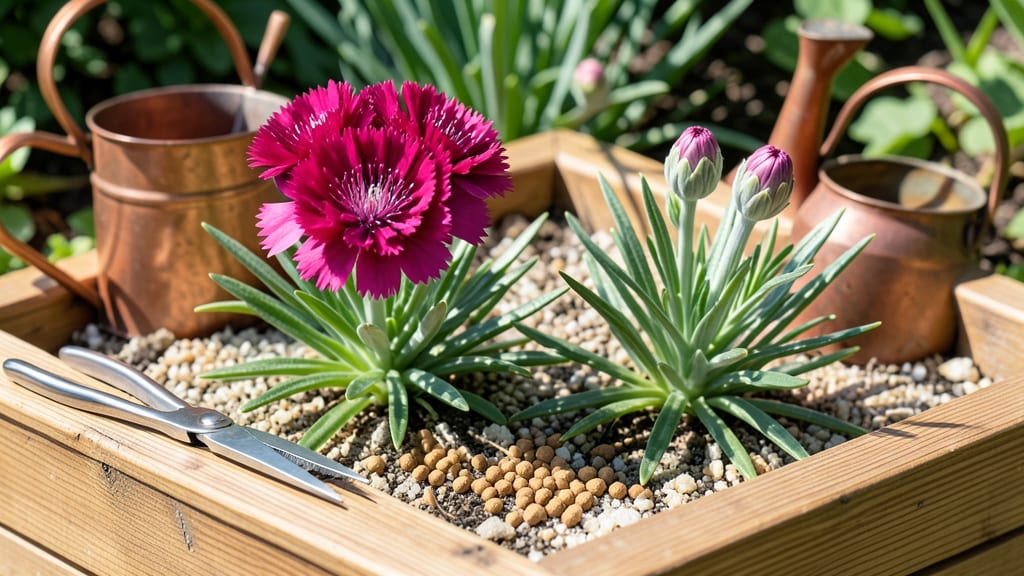
My dianthus plants were throwing out leaves instead of those showstopping purple spikes—until I discovered the secret to how to get dianthus to bloom more ✨. The trick isn’t just deadheading (though that helps), but understanding how light, soil, and timing work together to trigger flowering.
Most gardeners overlook one key factor that keeps dianthus from blooming like crazy.
Start with full sun—at least 6 hours daily—and well-draining soil. Overwatering or soggy roots smother blooms, while proper spacing lets air circulate so plants focus on flowers, not fighting disease. I switched to a light, sandy mix and saw buds form within weeks.
The right balance of phosphorus and potassium in fertilizer (like a 5-10-10 blend) also signals plants to bloom instead of grow foliage.
Deadheading spent blooms daily keeps plants producing new flowers, but the real game-changer is late-summer pruning. Cut back leggy stems by half after the first flush of blooms—this triggers a second wave of vibrant spikes.
My plants now bloom from spring to frost, with clusters so dense they look like purple clouds. The key is consistency: stick to the routine, and you’ll have dianthus that outshines the neighbors.
Works for both cottage gardens and containers, and adapts to zones 3-9. Once you master the balance, you’ll never buy cut flowers again—they’ll be growing right outside your door. Let’s get those spikes blooming!
📚 In This Guide
- What you need
- Instructions
- Tips and common mistakes
- Wrapping up and next steps
What you need
- ● Pruning shears or sharp scissors – Clean, sterilized (rubbing alcohol wipe works!)
- ○ Gloves (optional but recommended) – Garden or nitrile gloves to protect from thorns.
- ● Watering can or hose with a gentle nozzle – Avoid overhead watering to prevent fungal issues.
- ● Balanced, water-soluble fertilizer (10-10-10 or 20-20-20) – Diluted to half-strength (1 tbsp per gallon of water).
- ○ Compost or slow-release granular fertilizer (optional) – 5-10-10 NPK ratio for a nutrient boost.
- ● Knee pad or stool – For comfortable access to low-growing plants.
- ● Spray bottle (for post-pruning care) – Mist with water to reduce stress on cut stems.
- ○ pH test kit (optional but helpful) – Ideal soil pH: 6.0–7.0 for Dianthus.
- ○ Mulch (optional) – 2–3 inches of organic mulch (e.g., straw or shredded bark) to retain moisture.
- ● Sunlight access – At least 6 hours of full sun daily (partial shade may reduce blooms).
- ● Well-draining soil – Avoid soggy roots! Amend clay soil with perlite or sand.
- ● Patience & consistency – Deadheading every 2–3 days yields the best results.
How to encourage dianthus to bloom more: a daily care routine
Dianthus thrives when you follow a simple but consistent care routine—here’s how to keep those purple spikes coming back all season.
🌿 Step 1: Deadhead Regularly to Spark New Blooms
As soon as a flower spike fades, pinch it off just above the next set of leaves or buds. This prevents the plant from wasting energy on seed production and redirects it toward new blooms. I use clean, sharp scissors to avoid crushing stems—crushed stems invite rot, and you’ll lose the whole stem.
Check your plants daily in the morning. That’s when blooms are freshest, and you’ll spot faded ones before they turn brown. Dianthus responds fast—within a week, you’ll see fresh buds forming where you made those cuts. If you skip this, the plant will focus on seeds instead of flowers.
✂️ Step 2: Prune Lightly After Each Blooming Cycle
After the main flush of blooms fades, trim back the entire stem by about one-third to encourage bushier growth. This step is key for repeat blooming—it removes old wood and stimulates new shoots from the base. Use clean pruners and cut at a 45-degree angle just above a leaf node.
Timing matters here. Wait until after the last flower on a stem drops, but don’t wait too long—overgrown stems won’t rebloom as well. You’ll notice fresh green growth within 5-7 days of pruning, signaling the plant is ready for another round of blooms.
☀️ Step 3: Ensure Full Sun and Well-Draining Soil
Dianthus needs at least 6 hours of direct sun daily to produce abundant blooms. If your plants are in partial shade, they’ll stretch and produce fewer flowers. Move them to a sunnier spot if needed—you’ll see stronger stems and brighter blooms within weeks.
Check the soil too. Dianthus hates soggy roots. If the soil stays wet for more than 24 hours, the plant will focus on survival, not blooming. Amend heavy soil with sand or perlite to improve drainage. You’ll know it’s right when water runs through the soil within 10 minutes of watering.
💧 Step 4: Water Deeply but Infrequently
Water at the base of the plant in the morning, avoiding the foliage to prevent fungal diseases. Let the top 1-2 inches of soil dry out between waterings—this mimics their natural drought-tolerant habits. Overwatering leads to weak stems and fewer blooms.
Dianthus is tough once established, so don’t worry if it looks a little wilted. It’ll bounce back quickly after a deep drink. If the soil feels dry 1 inch down, that’s your cue to water. Too-frequent shallow watering stresses the plant and reduces flowering.
🌱 Step 5: Feed Sparingly for Stronger Blooms
Use a balanced, water-soluble fertilizer (like 10-10-10) once a month during the growing season. Too much nitrogen makes plants leafy but flower-sparse. I mix it at half-strength to avoid burning the roots—weak stems won’t support heavy blooms.
Stop fertilizing 6-8 weeks before your first frost. This lets the plant harden off naturally. You’ll see the difference in next year’s blooms—stronger stems and more vibrant colors. If you over-fertilize, you’ll end up with lush foliage but no flowers.
Tips & tricks for encouraging dianthus blooms
These little tricks will help your dianthus put on a nonstop floral show—without the guesswork.
Timing Tip for Step 1: I've found that checking your dianthus for faded blooms at the same time every morning creates a habit that prevents missed deadheading. Set a reminder on your phone if needed—those first signs of wilting happen fast, especially in hot weather. The key is catching faded blooms before they turn completely brown, which can happen within just 24 hours after they peak. This daily check transforms your garden into a blooming machine.
Pruning Precision: When you're doing that one-third prune in Step 2, look for the healthiest growth points just below where you cut. These are usually the spots where fresh green shoots will emerge within 5-7 days. I like to make my cuts at a 45-degree angle—this prevents water from pooling on the stem, which could lead to rot. The angle also gives you more surface area for new growth to sprout from.
Sunlight Strategy: If your dianthus isn't getting its required 6 hours of direct sun, don't just move it to a sunnier spot—consider adding a portable grow light for 2-3 hours in the evening if needed. Plants in containers can be especially tricky because they can't move themselves. I've seen dianthus that gets morning sun but afternoon shade produce 30% fewer blooms than those with full sun exposure. The difference in stem strength and flower production is night and day.
Pro Tips for Get Dianthus To Bloom More
- These little tricks will help your dianthus put on a nonstop floral show—without the guesswork.
- Timing Tip for Step 1: I've found that checking your dianthus for faded blooms at the same time every morning creates a habit that prevents missed deadheading.
- Pruning Precision: When you're doing that one-third prune in Step 2, look for the healthiest growth points just below where you cut.
Frequently asked questions
Got questions about coaxing more blooms from your dianthus? You’re not alone!
Here are the most common queries—plus quick, actionable answers to keep those vibrant spikes coming.
Why isn’t my dianthus blooming at all?
If your dianthus is putting out leaves but no flowers, it’s likely due to overcrowding or poor light. Thin out nearby plants to improve airflow, and move it to a spot with 6+ hours of sunlight daily. Cold snaps or recent transplanting can also delay blooms—be patient!
When is the best time to prune for more blooms?
Prune right after flowering (late spring/early summer) to encourage a second flush. Cut back dead or leggy stems by ⅓, but avoid heavy pruning in fall—dianthus needs foliage to store energy for winter. Never prune during active bloom!
Does deadheading really work, or is it just extra work?
Deadheading 100% works—it tricks the plant into focusing energy on new blooms instead of seed production. Snip spent flowers daily (or at least weekly) for nonstop spikes. Pro tip: Use clean, sharp scissors to avoid damaging stems!
Can I force dianthus to rebloom in winter?
Dianthus hates winter blooming—it’s a cool-season plant that needs dormancy. If you live in a mild climate, light pruning in late fall can encourage some spring blooms. Otherwise, enjoy its natural rhythm and protect it from frost.
What if my dianthus blooms but looks leggy?
Leggy growth = not enough light or over-fertilizing. Move it to a sunnier spot and reduce fertilizer (use a balanced 10-10-10 mix sparingly in spring only). Pinching back tips can also promote bushier, bloom-heavy growth.
Can I grow dianthus in containers for better blooms?
Containers improve drainage (critical for dianthus) and let you control soil quality. Use a well-draining mix with perlite, and repot every 2–3 years. Bonus: Potted plants bloom more reliably since you can move them for optimal light!
Wrapping up and next steps
With the right care—like daily deadheading, proper sunlight, and balanced feeding—your dianthus will reward you with stunning, repeat blooms all season long! 🌸✨ Remember, patience and consistency are key, but the effort pays off in vibrant purple (or pink, or white) spikes that’ll make your garden the envy of the neighborhood.
Ready to turn your dianthus into a blooming superstar? Start small: pick one tip from this guide—like snipping spent blooms or adjusting watering—and watch your progress. Before you know it, you’ll be cheerfully chasing more tips to keep those flowers coming!