
Blooming
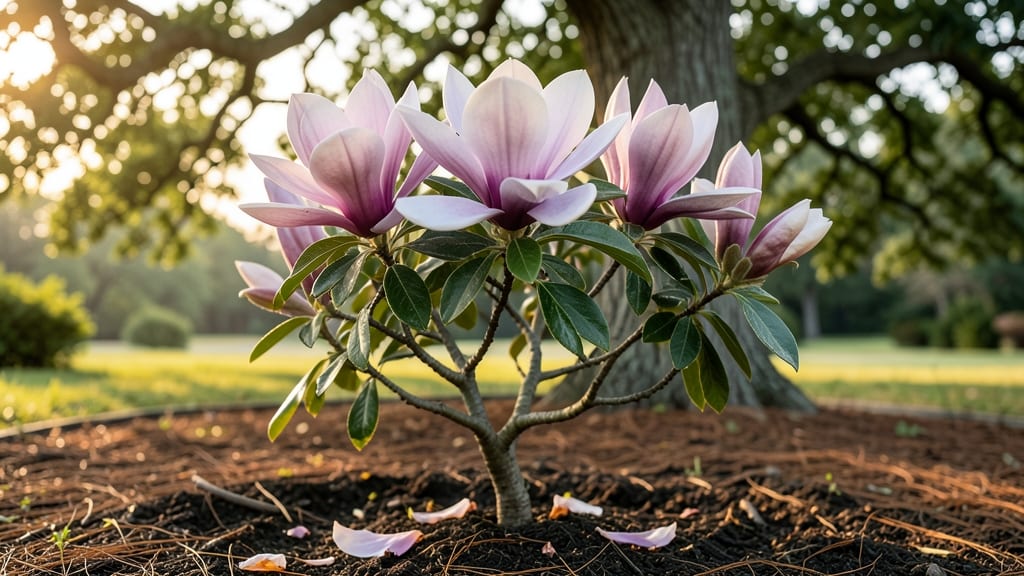
The magnolia tree bloom time depends entirely on where you live and which variety you’ve planted—because a Southern magnolia 🌸 and a Northern one don’t follow the same calendar.
If you’ve ever wondered why your neighbor’s magnolia bursts into fragrant blooms while yours sits bare, the answer lies in climate—and variety. Southern magnolias like Magnolia grandiflora often bloom in late spring, while Northern types such as Magnolia stellata may wait until early summer.
This isn’t just about luck—it’s about chilling hours, heat triggers, and even how your tree was planted. Some varieties need 600+ hours of cold to set buds, while others thrive in milder winters.
In USDA Zone 6a, for example, timing can shift by weeks depending on whether your tree is evergreen or deciduous.
Below, I’ll break down how to predict your magnolia’s bloom window, spot the signs of delayed blooming, and even tweak its schedule with simple care tricks. No more guessing—just timely, stunning blooms every season.
Southern vs. northern Magnolia bloom time: key differences explained
Magnolias are nature’s grand showstoppers, but their bloom times vary dramatically depending on where you live and which variety you grow. Southern magnolias like Magnolia grandiflora (Southern magnolia) burst into bloom in late spring to early summer, while northern varieties such as Magnolia stellata (star magnolia) often wait until mid-to-late spring.
These differences stem from climate triggers like chilling hours and heat requirements, which I’ll break down for you.
The key factor separating these bloom windows is chilling hours—the number of hours below 45°F (7°C) a plant needs to break dormancy. Southern magnolias typically require fewer chilling hours (around 200–400 hours), allowing them to bloom as soon as the warmth of spring arrives.
In contrast, northern magnolias often need 600–1,000+ chilling hours, delaying their blooms until summer’s heat signals safety to open flowers.
Regional bloom seasons also play a huge role. In USDA Zones 7–10 (the South), Magnolia grandiflora blooms from April to June, while in Zones 4–6 (the North), Magnolia × soulangeana (saucer magnolia) typically blooms in May to early June. Even within the same zone, microclimates—like urban heat islands or coastal breezes—can shift bloom times by weeks.
| Variety | Bloom Season | Chilling Hours Needed | Heat Requirements | USDA Zones |
|---|---|---|---|---|
| Magnolia grandiflora (Southern magnolia) | Late spring to early summer (April–June) | 200–400 hours | Moderate (blooms with 60°F+ soil temps) | 7–10 |
| Magnolia stellata (Star magnolia) | Mid-to-late spring (May–June) | 600–800 hours | High (needs consistent warmth after chilling) | 4–8 |
| Magnolia × soulangeana (Saucer magnolia) | Early to mid-spring (April–May) | 400–600 hours | Moderate (blooms with 55°F+ air temps) | 5–9 |
| Magnolia virginiana (Sweetbay magnolia) | Late spring to summer (May–July) | 100–300 hours | Low (tolerates humid heat) | 5–10 |
| Magnolia kobus (Kobus magnolia) | Mid-spring (April–May) | 700–900 hours | High (needs stable warmth) | 4–8 |
Evergreen magnolias, like Magnolia grandiflora, often bloom later in the season because their leaves stay year-round, which can delay the plant’s response to warming temperatures. In contrast, deciduous varieties like Magnolia stellata shed their leaves in winter, allowing them to break dormancy faster once chilling hours are met.
This is why you’ll see northern deciduous magnolias bloom in April or May, while southern evergreens wait until June or July.
Another critical factor is heat tolerance. Southern magnolias thrive in humid, hot climates and may even rebloom lightly in fall if conditions are ideal. Northern varieties, however, often struggle with extreme heat and may drop buds if temperatures spike too early.
For example, Magnolia × soulangeana in Zone 7 might bloom in April, but in Zone 9, the same tree could wait until June due to delayed chilling.
If you’re in a transition zone (like Zone 6 or 8), your magnolia’s bloom time can be unpredictable. To improve reliability, choose varieties bred for your zone—like Magnolia ‘Elizabeth’ (a Zone 5–9 hybrid) or Magnolia ‘Ann’ (a Zone 4–8 evergreen).
These hybrids are engineered to balance chilling and heat needs, making them far
How to predict your Magnolia’s bloom time based on variety and location
Predicting your magnolia’s bloom time starts with understanding its USDA hardiness zone and chilling hour requirements. Most magnolias need 300-1,000 hours below 45°F (7°C) to trigger blooms.
For example, Southern magnolias (Magnolia grandiflora) thrive in zones 7-10 and bloom in late spring, while Northern varieties (Magnolia stellata) in zones 4-8 often wait until early summer after adequate cold exposure.
Your magnolia’s location also plays a critical role.
Coastal areas with milder winters may see earlier blooms, while inland regions with colder snaps delay flowering. Deciduous magnolias (like Magnolia × soulangeana) typically bloom before leaves emerge, while evergreen varieties (like Magnolia grandiflora) bloom mid-to-late spring, often overlapping with new foliage growth.
| Magnolia Variety | USDA Zones | Chilling Hours | Bloom Time | Notes |
|---|---|---|---|---|
| Southern Magnolia (M. grandiflora) | 7-10 | 300-500 hrs | Late spring (May-June) | Evergreen; fragrant blooms |
| Star Magnolia (M. stellata) | 4-8 | 800-1,000 hrs | Early summer (June) | Deciduous; early bloomer |
| Saucer Magnolia (M. × soulangeana) | 4-9 | 500-800 hrs | Late winter (March) | Deciduous; dramatic flowers |
| Sweetbay Magnolia (M. virginiana) | 5-9 | 400-600 hrs | Early summer (May-June) | Semi-evergreen; fragrant |
To set realistic expectations, check your local last frost date and cross-reference it with your magnolia’s chilling hour needs.
For instance, a Star Magnolia (Magnolia stellata) in Zone 6 needs 800+ hours below 45°F, so it may bloom later than a Saucer Magnolia (Magnolia × soulangeana) in Zone 7**, which requires fewer chilling hours.
Use your USDA zone map to confirm your location’s coldest winter temperatures.
Evergreen magnolias, like Southern Magnolias (Magnolia grandiflora), often bloom later in spring because they prioritize foliage growth over flowers. In contrast, deciduous varieties (e.g., Magnolia stellata) bloom earlier, sometimes in late winter, when they’ve met their chilling hour requirements.
Pay attention to whether your magnolia is evergreen or deciduous—this alone can shift bloom timing by 2-4 weeks.
If your magnolia isn’t blooming when expected, consider microclimates in your yard. A south-facing wall or urban heat island effect can create 10-15°F warmer conditions, accelerating bloom time. Conversely, a shady, north-facing spot may delay flowering. Use a home weather station or local climate data to refine your predictions.
For gardeners in transition zones (e.g., Zone 6b-7a), where winters are borderline for some varieties, opt for cold-hardy hybrids** like ‘Jane’ Magnolia (Magnolia × loebneri), which blooms reliably in early summer despite fewer chilling hours.
Always verify a variety’s minimum zone rating before planting to avoid disappointment.