
Blooming
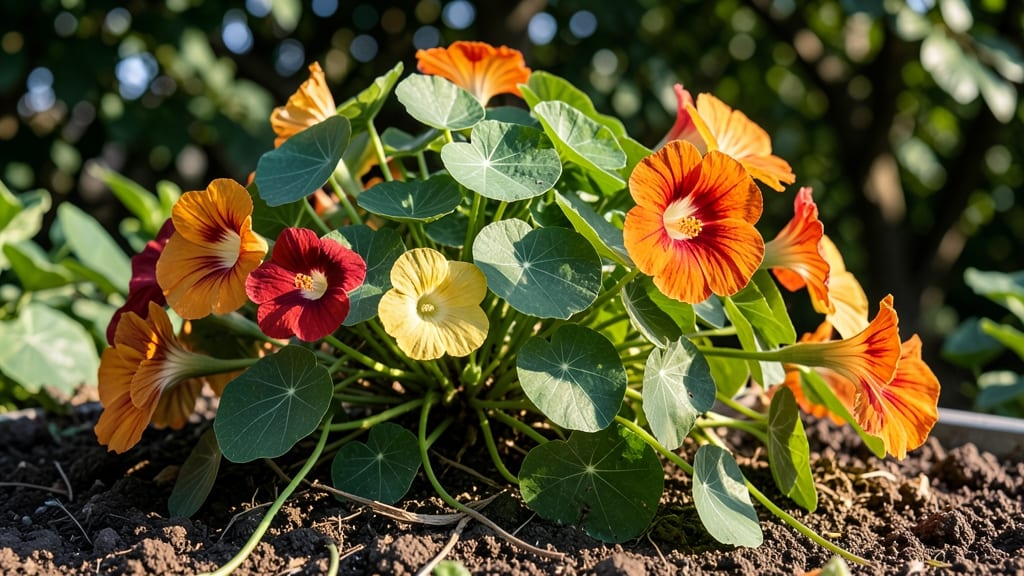
Your nasturtiums bloom in early summer all the way through fall 🌸, but timing depends on variety, climate, and how you plant them.
If you’ve ever wondered why your nasturtiums refuse to bloom—or when to expect those vibrant, edible flowers—timing is everything. Nasturtium bloom periods vary wildly by variety, climate, and growing conditions, yet most gardeners overlook this crucial detail.
In cooler climates like USDA Zone 6a, expect blooms to start around June if planted in spring, while warmer regions can see flowers as early as May. Varieties like Alaska bloom fast, while Empress of India takes longer to show off its striking orange and red flowers.
Below, I’ll break down how to predict bloom time for your garden, adjust for your climate, and keep those flowers coming all season long—no guesswork required.
Nasturtium bloom time by variety: fast-bloomers vs. late starters
Nasturtiums are famous for their quick flowering, but not all varieties bloom at the same time. Some varieties like Alaska Series burst into color just 6-8 weeks after planting, while others like Empress of India take 10-12 weeks to reach peak bloom.
Understanding these differences helps you plan your garden for continuous color and edible harvests.
Most nasturtiums are annuals, meaning they complete their life cycle in one season, but their bloom times vary dramatically. Trailing varieties often bloom later than bush types, which can be frustrating if you're eager for those bright orange and yellow flowers.
Let’s break down the bloom timelines for popular varieties and how to coax earlier blooms from your plants.
| Variety | Bloom Time | Height | Key Feature |
|---|---|---|---|
| Alaska Series | 6-8 weeks | 6-12 inches | Fastest bloomer, cold-hardy |
| Jewel Mix | 7-9 weeks | 12-18 inches | Compact, multi-colored |
| Empress of India | 10-12 weeks | 18-24 inches | Large, showy blooms |
| Peach Melba | 8-10 weeks | 12-15 inches | Trailing, peach-colored |
| Dwarf Jewel Mix | 7-9 weeks | 6-10 inches | Perfect for containers |
If you're growing nasturtiums for their edible flowers and leaves, timing matters even more. The Alaska Series is my go-to for early harvests because it blooms so quickly, giving me fresh garnishes for salads by late May or early June in most climates.
Meanwhile, the Empress of India rewards patience with stunning 3-inch blooms that last longer once they open.
To encourage faster blooming, start seeds indoors 4-6 weeks before your last frost date. This head start can shave 2-3 weeks off bloom time, especially for slower varieties. I always use biodegradable pots to avoid disturbing roots during transplanting, which can delay flowering by another week or more.
Light also plays a critical role. Nasturtiums thrive in full sun (6+ hours daily), but they’ll still bloom in partial shade—just later. If your garden gets less than 4 hours of sun, consider growing them in containers and moving them to a sunny spot during peak daylight hours.
This simple trick can jumpstart blooms by 1-2 weeks.
Over-fertilizing is a common mistake that delays blooms. Nasturtiums prefer lean, well-draining soil and too much nitrogen encourages lush foliage at the expense of flowers. Instead, use a balanced fertilizer (5-10-10) sparingly—just once in early spring—and skip fertilizing altogether in late summer to push plants into flowering mode.
Deadheading spent blooms is another pro tip to extend the season. By pinching off faded flowers, you encourage the plant to produce new blooms continuously until frost.
I deadhead my nasturtiums every 2-3 days during peak bloom, and my plants keep producing flowers well into October in my zone 6 garden.
For perennial nasturtiums (like Tropaeolum majus varieties), bloom times can vary even more. These types often bloom in late spring to early summer and may produce a second flush in fall if given ideal conditions. In warmer climates (zones 8-10), they can even bloom year-round with minimal care.
If you're planting nasturtiums as a cover crop or living mulch, focus on fast-blooming varieties like Alaska Series or Jewel Mix. Their quick growth and early blooms help suppress weeds while adding beauty to your garden beds.
Just remember: the sooner they bloom, the sooner you’ll get those peppery, edible flowers for your kitchen! 🌸
How climate zones affect nasturtium flowering: cold vs. warm regions
Climate plays a huge role in when your nasturtiums will bloom. In cooler zones (3-6), frost-sensitive varieties like Alaska may wait until late May or June, while warmer zones (8-10) can enjoy continuous blooms from April through October.
The key difference? Temperature triggers—cold regions need warmth to break dormancy, while hot climates may struggle with midday heat stress.
Your USDA zone determines not just bloom timing but also which varieties thrive. In Zone 3, hardy types like Dwarf Gem bloom earlier (late June) because they tolerate cooler soils.
Meanwhile, in Zone 10, heat-loving varieties such as Empress of India may start flowering as early as March but require afternoon shade to prevent wilting.
| Climate Zone | Typical Bloom Window | Best Varieties | Key Adjustments |
|---|---|---|---|
| Zones 3-5 (Cold) | Late June - September | Alaska, Dwarf Gem, Peppermint | Start seeds indoors in March; use black plastic mulch to warm soil. |
| Zones 6-7 (Temperate) | May - October | Jewel Mix, Alaska, Empress | Sow after last frost; succession plant every 2 weeks for continuous blooms. |
| Zones 8-10 (Warm) | March - November | Empress of India, Alaska, Black Velvet | Provide afternoon shade; water deeply during dry spells to prevent bolting. |
In cold climates, the biggest challenge is soil temperature. Nasturtium seeds need soil at least 50°F (10°C) to germinate. I’ve found that using black plastic mulch raises soil temps by 5-10°F, letting me plant 2-3 weeks earlier than the last frost date.
For Zone 4, this means starting seeds in late April instead of May.
Conversely, hot climates like Zone 9-10 require different strategies. Varieties like Empress of India bloom continuously but may struggle in 100°F+ heat. My trick? Plant them near trees or trellises to create dappled shade during peak afternoon sun. This extends blooming by 4-6 weeks compared to full-sun plantings.
Another critical factor is day length. Nasturtiums in northern latitudes (Zones 3-5) respond to longer daylight hours in summer, triggering rapid blooming. In southern zones, shorter winter days can delay flowering until spring warmth arrives.
To combat this, I prune back spent blooms in late winter to encourage new growth as days lengthen.
For gardeners in transition zones (6-7), the secret is succession planting. By sowing new seeds every 2 weeks from May through July, I’ve achieved non-stop blooms** from June to frost. This works because each batch gets a head start on warmth before the next wave of heat arrives.