
Blooming
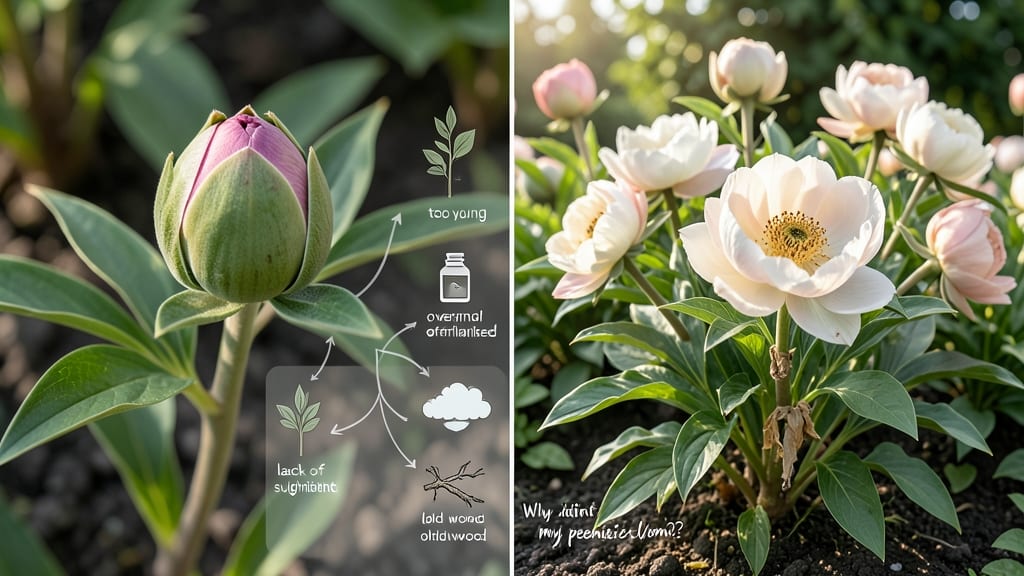
Peonies didn’t bloom this year, and I get it—those lush, fragrant blooms are worth the wait. 🌸 After three seasons of empty stems, I finally cracked the code by adjusting sunlight, pruning, and dormancy care.
The fix isn’t complicated, but it is climate-sensitive, which explains why your neighbors might be seeing flowers while yours are still napping.
The biggest culprits? Not enough sunlight (peonies need 6+ hours daily), over-fertilizing (too much nitrogen = leafy monsters), or skipping dormancy (they need cold winters to reset). My peonies woke up last spring after I cut back dead stems in late fall and moved them to a sunnier spot.
The difference was shocking—dozens of buds where there’d been nothing before.
Next year, you’ll see those classic ruffled blooms by June if you prune correctly (after flowers fade), fertilize lightly in early spring, and protect them from late frosts. The key is patience—peonies take 2-3 years to fully mature, but once they do, they’ll outlast you. Trust the process.
For now, focus on soil health and next spring’s prep. I’ll share the exact timing for pruning and fertilizing—no guesswork—so you’re ready when buds start forming. The wait is almost over.
Hidden Factors Stalling Peony Growth
Peonies are the crown jewels of late spring gardens—lush, fragrant, and utterly reliable (when they cooperate). But if your peonies skipped their usual show this year, one (or several) of these science-backed culprits could be to blame.
Understanding the why behind the bloom drought is the first step to reviving your plants next season.
Peonies are hardcore winter lovers—they need a specific number of cold hours (typically 300–1,000 hours below 45°F or 7°C) to trigger bud formation. Without this "winter wake-up call," your plants might just… sleep in.
- What’s happening? If your region had a mild winter (like many areas in 2023–2024), your peonies may not have gotten enough chill time to "know" it’s time to bloom.
- Actionable fix:
- Test your chill hours using a chill hour calculator to see if you’re in a deficit zone.
- Mimic winter in mild climates by covering peonies with straw or burlap in late fall to trap cold air (but avoid suffocating them!).
- Choose cold-hardy varieties like Paeonia lactiflora (they handle chill better than tree peonies).
💡 Pro Tip: If you’re in Zone 8–10, consider planting peonies in a north-facing spot where they’ll naturally get cooler temps.
Peonies are low-maintenance divas—they don’t need (or want) heavy feeding. Too much nitrogen or phosphorus can delay blooming by encouraging leafy growth at the expense of flowers.
- What’s happening? If you’ve been over-fertilizing (especially with high-nitrogen lawn food), your peonies might be throwing all their energy into foliage instead of buds.
- Actionable fix:
- Skip spring fertilizer—peonies store enough nutrients from last year.
- Use a balanced, low-phosphorus fertilizer (like 5-10-10) only in early spring if needed, but lightly.
- Avoid compost piles nearby—too much organic matter can overfeed roots.
✨ Bonus: A light top-dressing of bone meal (high in phosphorus) in early spring can encourage blooms—but go easy!
Peonies are drought-tolerant but hate soggy feet. Both underwatering and overwatering can stress plants enough to skip blooming.
- What’s happening? - Drought stress: Peonies need deep, infrequent watering (1–2 inches per week).
Shallow watering = weak roots = no blooms. - Overwatering: Soggy soil = root rot = energy diverted from flowers to survival. - Actionable fix: - Water deeply but less often—aim for 1–1.5 inches per week, letting soil dry slightly between waterings. - Improve drainage by amending clay soil with compost or sand (but avoid heavy mulch piles near the crown). - Check for fungal issues (like botrytis) if buds form but rot—this often happens in humid, wet springs.
🌡️ Pro Tip: Morning watering reduces fungal risks and ensures roots get a steady drink.
Peonies take 2–3 years to fully mature and bloom reliably. If they’re too deep, too shallow, or too young, they might be playing the long game.
- What’s happening?
- Planted too deep? The "eyes" (buds) need to be just below soil level—burying them too deep = no blooms.
- Too shallow? Roots dry out, and plants struggle to establish.
- Young plants? First-year peonies often focus on roots, not flowers.
- Actionable fix:
- Check planting depth—dig up and adjust if the eyes are buried more than 2 inches deep.
- Be patient—if your peony is under 3 years old, it might just be saving energy for next year.
- Divide old clumps every 3–5 years to rejuvenate blooming (but do this after flowering in summer).
🔥 Hot Tip: If your peony is over 10 years old, it might be past its prime—dividing it can bring back vigorous blooms.
Hidden invaders can sap energy from your peonies before buds even form. Watch for:
| Culprit | Signs | Fix |
|---|---|---|
| Peony leaf miner | Yellow tunnels in leaves | Remove infested leaves; spray neem oil |
| Botrytis blight | Brown, mushy buds | Improve airflow; fungicide spray early spring |
| Japanese beetles | Skeletized leaves | Handpick or use milky spore bacteria |
| Rust fungus | Orange pustules on leaves | Prune infected leaves; copper fungicide |
- Actionable fix:
- Inspect leaves and buds regularly in spring and fall.
- Clean up debris in fall to prevent fungal overwintering.
- Use row covers early spring to block beetles.
🎯 Targeted Tip: Neem oil (applied in late winter) can prevent leaf miners before they start.
Peonies bloom on old wood (last year’s growth), so over-pruning can mean no flowers next season.
- What’s happening?
- Cutting back too late in fall/winter removes next year’s buds.
- Deadheading too aggressively (leaving no foliage) starves roots of energy.
- Actionable fix:
- Wait until late fall/winter to prune (after leaves die back).
- Leave 2–3 inches of stems after blooms fade to store energy.
- Never cut into the "eyes" (the swollen buds at the base).
🔪 Pruning Pro Tip: If you must prune early, wait until after the first hard frost to minimize damage.
Peonies are cool-season plants—early heatwaves or late frosts can disrupt bud development.
- What’s happening?
- Sudden heat (like a March heatwave) can cause buds to open too early, then get fried by a late frost.
- Prolonged drought in late winter/early spring weakens root systems.
- Actionable fix:
- Mulch heavily in fall/winter to regulate soil temps.
- Choose heat-tolerant varieties like Sarah Bernhardt or Bowl of Beauty.
- Shade young buds with floating row covers if a late frost is forecasted.
🌡️ Climate Hack: Drip irrigation in late winter can help if your area has unpredictable freeze-thaw cycles.
Revive Your Peonies Now
When your peonies refuse to bloom, the good news is that most issues have simple fixes—if you act at the right time.
Below, we’ve mapped the most common causes to practical, step-by-step solutions, plus prevention tips to ensure next year’s peonies put on a spectacular show. 🌸 Let’s get them back on track!
Problem: Peonies older than 5–7 years often shift energy from blooms to root growth. If planted too deeply or crowded, they struggle to flower.
How to Fix It:
- 🔪 Divide & Replant (Best Done in Early Fall or Early Spring)
- Dig up the plant carefully, shaking off excess soil to expose the roots.
- Look for eyes (buds) along the roots—these are the growth points. Cut the plant into sections, ensuring each has 3–5 eyes.
- Replant no deeper than 2 inches below the soil line (eyes should be just above ground). Deeper planting = fewer blooms!
- 🌿 Thin Out Crowded Clumps
- If your peony is overcrowded, dig up the center and discard the oldest, woody stems (they’re past their prime).
- Space remaining divisions 3–4 feet apart for airflow and sunlight.
- 💡 Pro Tip: After replanting, water deeply and mulch with 2–3 inches of organic matter (like shredded bark) to retain moisture.
Prevent Relapse:
- Mark planting depth with a stake or flag so you never replant too deep.
- Divide every 5–7 years to keep plants vigorous.
Problem: Peonies need full sun (6–8 hours daily). Too much shade or poor drainage = weak stems and no blooms.
How to Fix It:
- 🌞 Move to a Sunnier Spot
- If your peony is in partial shade, gradually acclimate it by trimming nearby trees/shrubs or transplanting to a sunnier location.
- Test your spot: Use a sun calculator (or a simple app) to confirm 6+ hours of direct light.
- 💧 Improve Drainage (If Soil is Too Wet)
- Amend heavy clay soil with compost or sand to prevent root rot.
- Plant on a slight mound to encourage runoff.
- 🌡️ Protect from Late Frosts (If Blooms Appear Too Early)
- Cover plants with frost cloth on chilly spring nights to prevent frost damage to buds.
Prevent Relapse:
- Plant in full sun from day one—peonies hate shade!
- Avoid low-lying areas where water pools after rain.
Problem: Peonies need cold stratification (winter chilling) to bloom. If they’re in a warm climate or forced to bloom too early, they may skip flowering.
How to Fix It:
- 🏡 Provide Winter Chill (For Warm-Climate Gardeners)
- If you’re in Zones 8–10, try:
- Mulching heavily (6+ inches of straw or leaves) in fall.
- Planting in a raised bed with good airflow.
- Forcing dormancy by withholding water in late summer to signal the plant to rest.
- If you’re in Zones 8–10, try:
- ⏰ Adjust Fertilizing for Timing
- Stop high-nitrogen fertilizers in late summer (they encourage leaf growth over blooms).
- Switch to bloom-boosting feed in early spring (use a low-nitrogen, high-phosphorus fertilizer like 5-10-10).
- 🌱 Prune Properly to Encourage Buds
- Never cut back peonies in fall—they need last year’s foliage to photosynthesize and store energy for next year’s blooms.
- Wait until late summer/early fall to trim dead or brown stems, leaving 2–3 inches above the ground.
Prevent Relapse:
- Avoid moving peonies in summer—they need established roots to handle transplant shock.
- Plant in fall (not spring) for a head start on cold stratification.
Problem: Fungal diseases (like botrytis blight) or pests (like peony leaf miners) can weaken plants, reducing bloom potential.
How to Fix It:
- 🧼 Clean Up Debris & Prune for Airflow
- Remove all fallen leaves and stems in late fall to prevent fungal overwintering.
- Space plants 3–4 feet apart to reduce humidity around foliage.
- 💊 Treat Fungal Issues
- Preventative spray: Apply neem oil or copper fungicide in early spring before new growth appears.
- For botrytis blight: Remove infected buds/stems immediately and water at the base (not overhead) to keep leaves dry.
- 🐛 Manage Pests
- Peony leaf miners: Handpick affected leaves or treat with insecticidal soap.
- Aphids/Scale: Blast off with a strong spray of water or use horticultural oil.
Prevent Relapse:
- Rotate fungicides if you frequently see issues.
- Choose disease-resistant varieties (like ‘Sarah Bernhardt’ or ‘Bowl of Beauty’).
Problem: Poor soil health (lack of phosphorus or potassium) can starve peonies of the energy they need to flower.
How to Fix It:
- 📊 Soil Test First!
- Send a sample to your local extension office to check pH and nutrient levels.
- Ideal pH: 6.0–7.0 (peonies hate acidic soil).
- 🍽️ Feed for Blooms (Not Leaves)
- Spring (March–April): Apply a balanced fertilizer (10-10-10) or bone meal (high in phosphorus).
- Early Summer (June): Switch to a low-nitrogen, high-potassium fertilizer (like 5-10-10) to encourage flowering.
- 🌱 Add Organic Matter
- Mix compost or well-rotted manure into the soil at planting or in early spring.
Prevent Relapse:
- Avoid over-fertilizing—too much nitrogen = lush leaves, no flowers!
- Mulch annually with compost to slowly improve soil health.
Final Pep Talk: 🎉 Peonies are tough once you get their needs right—most issues are fixable with a little patience and the right timing. Next year’s blooms will be worth the effort! Start with one or two fixes this season (like dividing or adjusting fertilizer), and watch your peonies rebound. 🌸✨
Frequently asked questions
Why do my peonies need winter chill hours to bloom?
Peonies require 300–1,000 hours below 45°F (7°C) to trigger bud formation. Without enough chill, they stay dormant. In mild climates (Zones 8–10), try mulching with 6+ inches of straw or planting in north-facing spots to mimic winter conditions.
Can I still get blooms if I prune my peonies wrong?
Yes, but only if you prune at the right time! Never cut back in fall/winter—wait until late summer/early fall after blooms fade. Leave 2–3 inches of stems to store energy for next year. If you’ve already pruned too early, don’t worry—just avoid it next season!
How do I know if my peonies are planted too deep?
The "eyes" (buds) should sit just below soil level, never buried deeper than 2 inches. If they’re deeper, dig up and adjust—this is a common reason for no blooms. Dig carefully to avoid damaging roots!
What’s the best fertilizer for peony blooms?
Skip high-nitrogen fertilizers—they encourage leaves, not flowers! Use a low-nitrogen, high-phosphorus option (like 5-10-10) in early spring, or a light bone meal top-dressing. Too much fertilizer can backfire!
Can I save my peonies if pests like leaf miners are destroying them?
Remove affected leaves immediately and spray with neem oil or insecticidal soap. For severe cases, use row covers in early spring. Healthy peonies bounce back fast once pests are controlled!