
Blooming
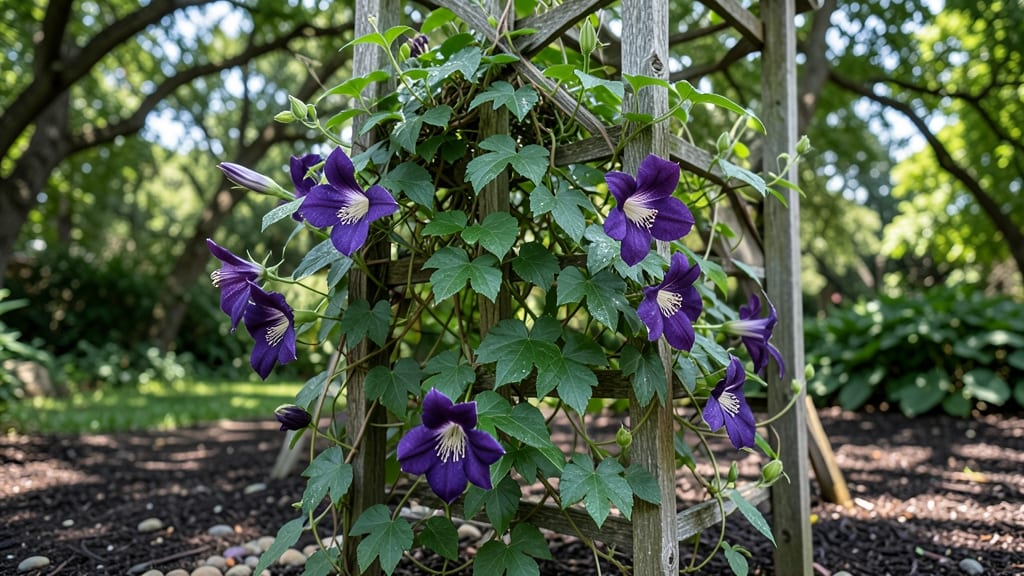
Summer’s endless parade of color starts with the right vines. 🌸 These vines that bloom all summer turn fences, trellises, and pergolas into living tapestries—no deadheading required.
I’ve watched bougainvillea’s papery magenta blooms stretch from June to frost, while clematis ‘Jackmanii’ climbs my arbor in deep purple waves that never quit. The secret lies in their growth habits: some cling like morning glories, others sprawl like sweet peas, and a few even climb with tiny tendrils.
Sunlight needs vary—bougainvillea craves full sun, while clematis thrives with morning light and afternoon shade—but all deliver nonstop blooms with minimal fuss. Pair them with annuals like nasturtiums for extra pop, and suddenly your garden stays vibrant when other plants fade.
You’ll end up with vertical drama that transforms bare walls into lush backdrops. The key? Choose vines that match your space—fast growers for quick coverage, or slower climbers for delicate drapes. My morning glory ‘Heavenly Blue’ even blooms in partial shade, proving beauty doesn’t need perfection.
Works for any garden style—cottage, modern, or wild. Here’s how to pick the perfect climbers for your space.
📚 In This Guide
- What you need
- Instructions
- Tips and common mistakes
- Wrapping up and next steps
What you need
- ● Vine Plants: Choose from these low-maintenance, repeat-blooming varieties (1–3 plants per section): Clematis (e.g., 'Jackmanii,' 'Niobe') – 3–5 ft. tall
- ● Honeysuckle (e.g., 'Golden Showers') – 10–20 ft. tall
- ● Passionflower (e.g., 'Maypop') – 10–30 ft. tall
- ● Morning Glory (annual, fast-growing) – Seeds or starter plants
- ● Support Structures: Trellis (6–10 ft. tall, metal or wooden)
- ● Arbor or pergola (for larger vines, 8–12 ft. wide)
- ● String or twine (for temporary support, 1/4-inch diameter)
- ● Soil & Fertilizer: Well-draining potting mix (for containers, 1–2 bags)
- ● Balanced fertilizer (10-10-10, 1 lb. per plant)
- ○ Compost or organic matter (optional, improves soil)
- ● Gardening Tools: Trowel or hand shovel (for planting)
- ● Gloves (gardening or work gloves)
- ● Pruners (sharp, sterilized)
- ● Watering can or hose (with adjustable nozzle)
- ○ Optional (But Helpful!): Mulch (2–3 inches, to retain moisture)
- ● Slow-release plant food (for extra nutrients)
- ● Peat moss or coconut coir (for containers)
- ● Plant ties (soft fabric, for securing vines)
- ● Sunlight: 6+ hours/day (most vines thrive in full sun)
- ● Water Access: Consistent moisture (especially for new plants)
- ● Space: Vertical room (trellises, walls, or fences)
- ● Patience: Some vines take 1–2 seasons to fully establish
How to select and plant vines that bloom nonstop all summer
Skip the deadheading drama—these vines keep flowering like clockwork with minimal effort.
🌱 Step 1: Choose the Right Vines for Your Climate
Pick vines that naturally bloom continuously without needing constant pruning. My top picks are morning glory (annual, thrives in zones 2-11), clematis (perennial, zones 3-9), and passionflower (perennial, zones 5-11). These handle heat and humidity while producing flowers from early summer to frost.
Check your USDA hardiness zone—some vines like cobaea scandens (cup-and-saucer vine) only survive in zones 9-11. Plant annuals like black-eyed Susan vine if you want guaranteed blooms every year without winter worries. I always verify sunlight needs: morning glory loves full sun, while clematis tolerates partial shade.
☀️ Step 2: Plant in the Perfect Spot
Most blooming vines need 6+ hours of direct sun daily, but clematis prefers morning sun and afternoon shade to prevent leaf scorch. I plant mine near a south-facing fence or trellis where they get consistent light without afternoon heat stress.
Dig a hole twice as wide as the root ball but only as deep as the container it came in. Mix in compost to enrich the soil—these vines are heavy feeders. Space plants 3-6 feet apart depending on the variety (passionflower spreads wider than morning glory). Water deeply right after planting to settle the roots.
💧 Step 3: Water and Feed for Continuous Blooms
Water deeply 2-3 times per week until established, then reduce to once weekly once roots spread. You'll know it's enough when the top 2 inches of soil feel dry—not bone-dry, not soggy. Overwatering causes root rot, while underwatering stresses plants into dropping buds.
Feed with a balanced 10-10-10 fertilizer every 4-6 weeks starting in early spring. For clematis specifically, I switch to a phosphate-heavy formula (like 5-10-5) in late spring to encourage more blooms. Mulch with 2-3 inches of shredded bark to retain moisture and regulate soil temperature.
✂️ Step 4: Prune Strategically (Not Deadheading!)
Skip the deadheading—these vines self-clean! Instead, prune leggy growth in early spring to encourage bushier, more productive plants. For clematis, I cut back one-third of the oldest stems each year to promote new flowering shoots. Morning glory doesn't need pruning unless it climbs where you don't want it.
If a vine grows too aggressive, trim back 12-18 inches in late summer to redirect energy into next year's blooms. Never cut into old wood—always prune just above a leaf node where new growth can emerge. I use clean, sharp pruners dipped in rubbing alcohol between cuts to prevent disease spread.
🪴 Step 5: Support and Protect for Year-Round Health
Install a trellis, arbor, or sturdy fence before planting—vines need something to climb within 2-3 weeks of sprouting. I use powder-coated metal trellises that won't rust, positioned 4-6 feet tall for most varieties. Secure the base with u-shaped stakes to prevent toppling in wind.
Watch for pests like aphids or spider mites—they love new growth. Spray with neem oil at the first sign of webbing or sticky residue. In colder zones, wrap clematis stems with burlap in late fall to protect from freezing winds. Annuals like morning glory reseed easily, so I let them self-sow for next year's free blooms.
Tips & tricks for perfect year-round blooming vines
These simple strategies will help your vines thrive with minimal effort and maximum color.
Climate Matching: When selecting vines, prioritize ones suited to your USDA zone—morning glory thrives in zones 2-11, while clematis needs zones 3-9. I once planted passionflower in zone 4 and lost it to winter—don't make my mistake! Check the labels at your nursery for exact zone recommendations before purchasing. For cooler climates, opt for annual varieties like black-eyed Susan vine that reseed easily.
Sunlight Strategy: Position your trellis or fence to capture morning sun and afternoon shade for clematis varieties, which prevents leaf scorch. Morning glory can handle full sun all day, but watch for wilting in extreme afternoon heat. I rotate my trellis slightly each season to follow the sun's arc—this subtle adjustment makes a noticeable difference in bloom quantity.
Pruning Precision: For clematis, always prune one-third of the oldest stems in early spring—this forces new growth that produces more flowers. When trimming back aggressive vines in late summer, cut just above a leaf node where new shoots will emerge. I mark these nodes with a pencil before pruning to ensure clean cuts. Never cut into old wood, as it won't regrow.
Pest Prevention: Keep an eye out for aphids and spider mites, which thrive on new growth. At the first sign of webbing or sticky residue, spray with neem oil—it's organic, effective, and won't harm beneficial insects. I apply neem oil preventatively every 4-6 weeks during peak growing season, especially after heavy rains which wash away natural defenses.
Pro Tips for Vines That Bloom All Summer
- These simple strategies will help your vines thrive with minimal effort and maximum color.
- Climate Matching: When selecting vines, prioritize ones suited to your USDA zone—morning glory thrives in zones 2-11, while clematis needs zones 3-9.
- Sunlight Strategy: Position your trellis or fence to capture morning sun and afternoon shade for clematis varieties, which prevents leaf scorch.
Frequently asked questions
Got questions about keeping your garden in bloom all summer long?
Here are answers to the most common queries about vines that bloom all summer—no deadheading required!
Which vines bloom continuously without needing deadheading?
Look for self-cleaning varieties like morning glories, cypress vine, and passionflower. These drop spent blooms naturally, while honeysuckle and cobaea scandens (cup-and-saucer vine) also thrive with minimal effort. Avoid petunia vines—they need frequent trimming!
How fast do these vines grow, and when will I see flowers?
Most fast-growing vines (like morning glories or sweet peas) sprout flowers in 6-8 weeks from seed. Others, such as wisteria or jasmine, take 1-2 seasons to mature but reward you with season-long blooms. Check seed packets for specific timelines!
Can I grow these vines in containers or small spaces?
Compact varieties
like dwarf morning glories or basket honeysuckle thrive in 5-gallon pots with trellises. For larger vines (e.g., passionflower), use large containers (15+ gallons) and prune aggressively. Just ensure drainage and sunlight match their needs!
Will these vines attract bees or pests?
Most summer-blooming vines are bee magnets (great for pollinators!), but some (like morning glories) may draw Japanese beetles. Use neem oil or row covers if pests become an issue. Avoid vines treated with systemic pesticides—they can harm pollinators!
Are any of these vines frost-hardy for year-round blooms?
No vine blooms year-round in frost, but perennials like honeysuckle or clematis return yearly and bloom early spring to fall. For tropical vines (e.g., b bougainvillea), bring pots indoors or mulch heavily in Zone 8+. Most annuals (like morning glories) die back in frost but self-seed for next year!
Pro Tip: Extend blooms by fertilizing lightly with low-nitrogen, high-phosphorus fertilizer (like 5-10-5) every 4-6 weeks. Over-fertilizing can lead to leafy growth over flowers—so go easy!
Wrapping up and next steps
Transforming your garden into a vibrant, low-maintenance paradise is easier than you think! With vines that bloom all summer, you get nonstop color—no deadheading required—while adding texture, shade, and life to any space.
Whether you’re wrapping a trellis, climbing a fence, or spilling over a container, these hardy plants deliver beauty without the fuss.
Ready to dive in? Start small—pick one vine, test its growing conditions, and let it inspire your next project. Before you know it, your garden will be a lush, blooming oasis that keeps giving all season long! 🌿✨