
Blooming
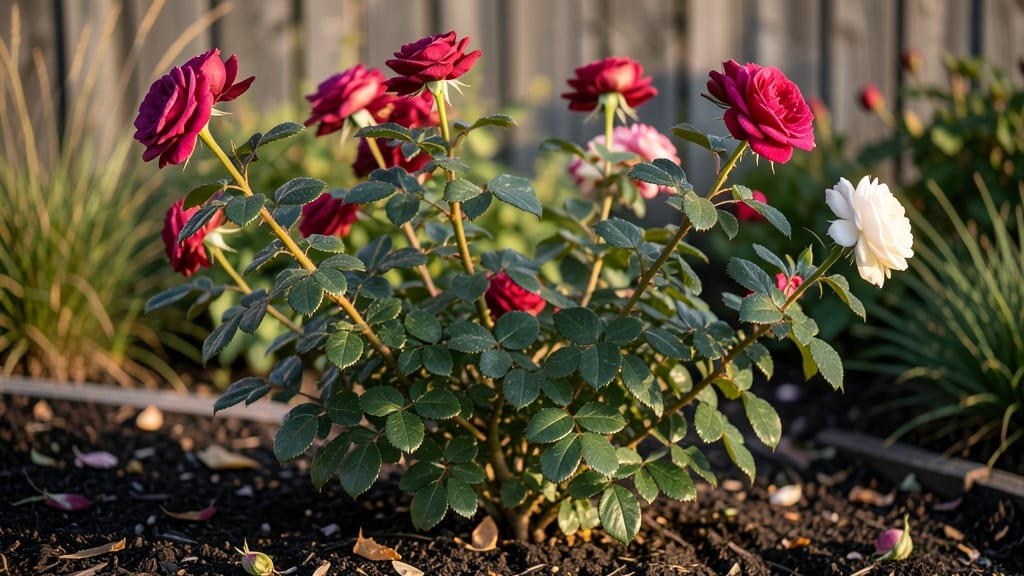
Michigan roses bloom from late May through October, with hardy varieties like 'Dr. Huey' and 'Knock Out' starting as early as May and continuing through frost. Spring and fall blooms vary by rose type and climate zone.
Michigan's cool climate and four distinct seasons create a unique growing window for roses, where timing depends on the variety. 🌸 Cold-hardy roses like 'Dr. Huey' can push blooms as early as late April in southern Michigan, while northern areas might wait until early June.
The key difference lies in repeat-blooming shrubs versus once-blooming hybrid teas—shrubs like 'Knock Out' deliver continuous flowers until frost, while hybrid teas may produce just one flush of blooms before needing a rest period.
This seasonal dance makes Michigan a perfect playground for gardeners who love roses, as long as you choose the right varieties for your specific zone.
What's interesting is how late-season care can extend blooms well into November. Proper pruning in late winter, combined with protective mulching, helps roses resist early frosts and even push a second round of buds in mild falls.
I've seen 'Exploration' series roses in northern Michigan still flowering in late October with just a little extra protection—proving that with the right approach, Michigan's rose season can be surprisingly long.
💡 In This Article
- Michigan Rose Blooming Seasons by Variety Type
- Extending Michigan Rose Blooms: Pruning and Care Tips
Michigan rose blooming seasons by variety type
Michigan's climate—spanning USDA Zones 4b to 6a—creates dramatic differences in bloom timing. In Zone 5 (northern Lower Peninsula), roses like 'Dr. Huey' (a Zone 3-9 hybrid) often begin blooming in late May, while Zone 6 (southern Michigan) can see early blooms as soon as mid-May.
The Exploration series, bred for cold hardiness, can even push buds in April in sheltered microclimates, though frost risk remains high until late May. 🌸
Repeat-blooming shrubs like 'Knock Out' roses (Zone 4-9) dominate Michigan gardens because they produce continuous flowers from June through October, reblooming after each flush.
In contrast, hybrid teas—like 'Double Delight'—typically bloom just once per season (late June to early July), requiring careful pruning to encourage a second, smaller flush in fall.
The difference comes down to genetics: shrubs have more lateral buds that develop throughout the season, while hybrid teas focus energy on one dramatic bloom cycle.
Cold-hardy varieties like the 'John Cabot' shrub rose (Zone 4-9) and 'The Fairy' climber (Zone 3-9) are engineered to withstand Michigan winters by entering dormancy earlier and regrowing vigorously in spring.
Their secret lies in supernumerary buds—extra flower buds that form along stems, allowing them to recover from winter damage while still producing blooms. This adaptability explains why these varieties often outperform traditional roses in Michigan's -20°F to -10°F winters.
For gardeners in northern Michigan (Zone 4b), timing is everything. Early bloomers like 'Dr. Huey' may suffer frost damage if buds appear before May 15, while late-season varieties like 'Earth Song' (Zone 4-9) can extend blooms until mid-November with proper care.
The 100-day rule applies here: roses need 100 frost-free days to complete their growth cycle, which Michigan's shorter growing season forces gardeners to prioritize cold-resistant varieties over tropical ones.
Color also plays a subtle role in bloom timing. Darker roses (like 'Black Baccara') often bloom 1-2 weeks later than lighter varieties because their pigments require more sunlight to develop.
This is why gardeners in Zone 5 might see 'Iceberg' roses (white) blooming in early June while 'Double Delight' (deep pink) appears in late June. The science behind this involves anthocyanin production, which is temperature-sensitive and delays in cooler northern climates.
One unexpected factor is how soil temperature affects bloom timing. Roses planted in sandy soil (common in northern Michigan) warms up faster in spring, potentially triggering earlier blooms by 1-2 weeks compared to clay-heavy soils.
This is why gardeners in Zone 6 might see roses blooming in mid-May while just 20 miles north in Zone 5, the same variety waits until late May. The difference comes down to 3-5°F warmer soil temperatures in southern areas.
For those chasing fall blooms, varieties like 'Belinda's Dream' (Zone 4-9) can produce flowers until late October if given afternoon shade and consistent watering. The key is maintaining 60-70°F soil temperatures through September, which extends the growing season by 2-3 weeks.
This is why gardeners in Zone 6 often see roses blooming in November—the longer daylight hours and slower cooling rates create a second bloom window. 🌿