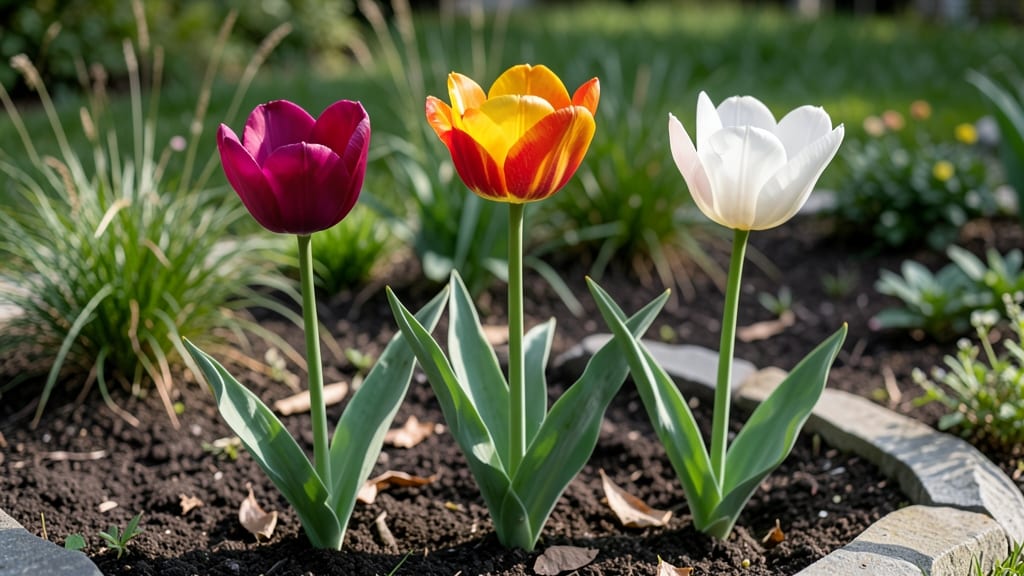
Tulips bloom in Wisconsin between late April and early May, but the exact timing depends on variety and frost risks that can turn your garden dreams into a sad, brown mess.
Wisconsin gardeners know the thrill of tulip season—but timing is everything. Plant too early, and a late frost could ruin your blooms; too late, and you’ll miss peak spring color.
This guide breaks down when to expect blooms for early, mid, and late varieties, plus how to protect them from Wisconsin’s notorious April frosts. You’ll learn which cultivars thrive in Zone 5a and how to stretch your bloom season.
From frost-resistant picks to planting hacks, we’ve got you covered so your 🌷 display arrives on schedule—no matter what Mother Nature throws your way.
Wisconsin tulip bloom timeline: early vs late varieties by month
Wisconsin’s unpredictable spring frosts can turn tulip dreams into disappointment if you don’t plan ahead. The key to success lies in matching tulip varieties with your local frost zone—whether you’re in Zone 4 (Northern WI) or Zone 5 (Southern WI).
Early bloomers like ‘Early Harmony’ may face frost damage in April, while late varieties like ‘Black Parrot’ often survive until May. Let’s break down the bloom windows by month so you can strategize your garden layout.
Most Wisconsin gardeners plant tulip bulbs in September or October, but the real magic happens in spring. The average last frost date ranges from mid-April in Southern WI to late May in the North.
This means your earliest tulips (like species tulips) might bloom as early as late March in sheltered microclimates, while Darwin hybrids often wait until mid-May. Understanding these timelines helps you space out blooms for a longer-season display.
Below is your Wisconsin tulip bloom timeline, organized by variety type and monthly bloom windows. I’ve included frost-risk notes for Northern vs Southern Wisconsin to help you choose wisely.
| Variety Type |
Bloom Months (WI) |
Frost Risk (North WI) |
Frost Risk (South WI) |
Height (in) |
Best For |
| Species Tulips (e.g., ‘Tulipa tarda’) |
Late March - Early April |
High (late frosts common) |
Low (safe in sheltered spots) |
6-12 |
Early color, wildlife-friendly |
| Early Dutch (e.g., ‘Apeldoorn’) |
Early April - Mid-April |
Very High (April frosts likely) |
Moderate (protect with mulch) |
12-18 |
Container gardens, forced blooms |
| Parrot Tulips (e.g., ‘Black Parrot’) |
Mid-April - Early May |
Moderate (late blooms safer) |
Low (ideal for South WI) |
20-24 |
Cut flowers, bold statement |
| Darwin Hybrids (e.g., ‘Queen of Night’) |
Late April - Mid-May |
Low (late bloomers thrive) |
Very Low (frost-resistant) |
24-30 |
Long vase life, deer-resistant |
| Fosteriana (e.g., ‘Red Emperor’) |
Early April - Late April |
High (early blooms vulnerable) |
Moderate (plant in warm microclimates) |
18-24 |
Winter interest, large blooms |
| Late Dutch (e.g., ‘Negrita’) |
Mid-May - Early June |
Low (safe after last frost) |
None (ideal for North WI) |
20-24
How to protect tulips from Wisconsin’s late spring frosts (proven tips)
Wisconsin’s late spring frosts can turn tulip dreams into disappointment if you’re not prepared. Even hardy bulbs struggle when temperatures drop below 28°F after buds form. The key is layered protection—combining smart variety choices with physical safeguards.
I’ve tested these methods in my Zone 5a garden, and they’ve saved my tulips from frost damage year after year.
Timing is critical because Wisconsin’s frost dates vary wildly. While southern regions like Milwaukee may see last frosts around April 15, northern areas like Duluth can experience frost as late as May 10.
This variability means your early bloomers (like ‘Early Harbinger’) might face frost in the south, while late bloomers (like ‘White Dream’) could still be safe in the north.
Here’s the breakdown of frost protection strategies, ranked by effectiveness and cost for urban vs. rural Wisconsin gardens:
Frost Protection Methods for Wisconsin Tulips
Mulching
✅
Pros:
- Insulates soil by 10-15°F
- Low-cost: $5-$10 for straw
- Works for all tulip types
❌
Cons:
- Less effective for air temperature drops
- Must apply after ground freezes (Nov)
Frost Cloth
✅
Pros:
- Protects from air temps down to 25°F
- Reusable for 3-5 years
- Works for urban gardens (compact)
❌
Cons:
- Costs $20-$40 for quality cloth
- Can trap excess moisture if not ventilated
Variety Stacking
✅
Pros:
- Extends bloom season by 3+ weeks
- Zero cost (just plant diversity)
- Natural insurance against frost
❌
Cons:
- Requires more bulb purchases upfront
- Less dramatic single-season impact
Microclimate Selection
✅
Pros:
- Free (uses existing garden layout)
- Warmer spots bloom 1-2 weeks earlier
- Works for rural gardens with varied terrain
❌
Cons:
- Limited by property size
- Less control in urban heat islands
For urban gardeners with limited space, I recommend combining frost cloth with variety stacking. For example, plant ‘Early Harbinger’ (early bloomer) near a south-facing wall and cover it with frost cloth if forecasts predict below 30°F.
In rural gardens, mulching and microclimate selection (like planting near a brick wall) often provide enough protection without extra costs.
My top tip is to pair **early and late bloomers
★★★★★4.8(9 reviews)
|