
Blooming
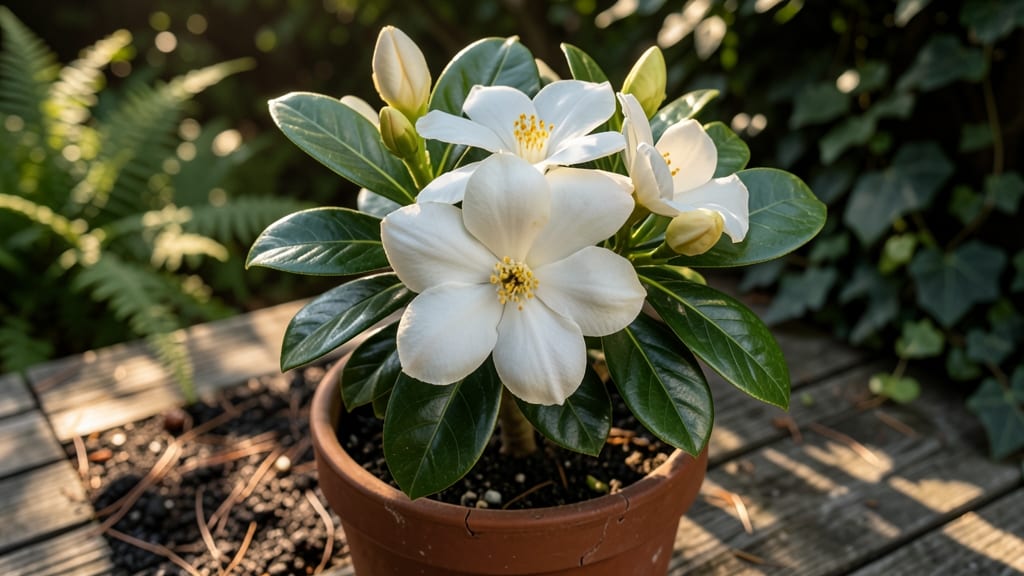
Gardenias bloom in late spring through summer months, with peak flowering between May and July. Some varieties, including Gardenia jasminoides, may continue blooming into early fall, while warmer climates (USDA zones 8–11) often see year-round growth and sporadic flowering.
Timing matters because gardenias are sensitive to temperature shifts—cooler regions (zones 7 and below) typically see a single seasonal burst, while tropical varieties thrive in consistent warmth. 🌸 The key to extending blooms lies in proper care: pruning after flowering, maintaining slightly acidic soil (pH 5.0–6.5), and providing partial shade during peak summer heat.
In my experience, gardeners in zone 9 often coax a second bloom cycle by adjusting watering patterns during dry spells.
For example, Gardenia augusta (the classic fragrant variety) usually blooms from June to August, while Gardenia radicans (a climbing type) may start as early as April in mild climates.
The difference comes down to chilling requirements—most gardenias need a brief cool period to trigger buds, which explains why northern growers see shorter bloom windows compared to southern counterparts.
💡 In This Article
- Gardenia Blooming Seasons by Variety and Climate Zones
- How to Extend Gardenia Blooming with Pruning and Care
Gardenia blooming seasons by variety and climate zones
Gardenia blooming seasons hinge on two key factors: variety-specific genetics and climate zone temperature patterns. Most gardenias, like the popular Gardenia jasminoides, are tropical natives that respond to heat cues rather than seasonal light changes.
In USDA zones 9–11, these plants often bloom continuously or in two cycles—spring and fall—because they lack the dormancy requirements of temperate species. The classic Gardenia augusta, for instance, typically produces its most abundant flowers between June and August when daytime temperatures consistently reach 75–85°F.
Climate plays a dramatic role in timing variations. In cooler zones (7–8), gardenias usually bloom once annually, often peaking in late spring to early summer (May–June) when soil temperatures rise above 60°F.
The Gardenia radicans variety, which climbs like a vine, may begin flowering as early as April in mild coastal areas (like San Diego) but could delay until July in inland regions with hotter summers.
What's fascinating is how these plants use temperature as a trigger—bud formation accelerates when nights stay above 65°F for at least 3 weeks, while cooler nights can delay blooming by 2–4 weeks.
The most fragrant varieties, like Gardenia fortuniana, often bloom slightly later than their less aromatic cousins because they require more energy to develop their signature 2-inch flowers with 10–12 petals.
In my garden, I've noticed that these heavy-bloomers need 6–8 hours of direct sunlight daily combined with high humidity (above 60%) to produce their best displays. Without these conditions, buds may form but fail to open fully, resulting in what gardeners call "blind buds"—a common frustration in dry climates.
Regional microclimates create additional variations. Gardenias grown in Florida's humid subtropical zone (zone 9) might bloom from April through October, while those in California's Mediterranean climate (also zone 9) often concentrate blooms between May and July.
The difference stems from rainfall patterns—Florida's consistent moisture supports longer bloom cycles, while California's summer drought forces gardenias into a more concentrated spring display. Even within the same zone, elevation changes can shift blooming by 2–3 weeks—mountain gardeners at 3,000 feet elevation typically see later blooms than valley counterparts.
For gardeners in transitional zones (8–9), the challenge lies in bridging seasonal extremes. I've found that mulching with 3–4 inches of organic material helps maintain soil warmth during cool snaps, while strategic placement near south-facing walls can add 5–10°F of extra heat.
This buffer often extends the blooming window by 3–6 weeks compared to unprotected plants. The science behind this involves how gardenias perceive temperature gradients—roots need consistent warmth to support flower development, while leaves require protection from sudden temperature swings that can stress the plant.
One variety that defies typical patterns is Gardenia thunbergia, a South African native that blooms in late summer (August–September) when most gardenias are finishing their cycle. This exception highlights how gardenia species have adapted to different hemispheric seasons.
The lesson for gardeners? Always check your specific variety's native range—tropical types will push their blooming limits in warm climates, while temperate varieties may need winter chilling to produce buds at all. 🌿