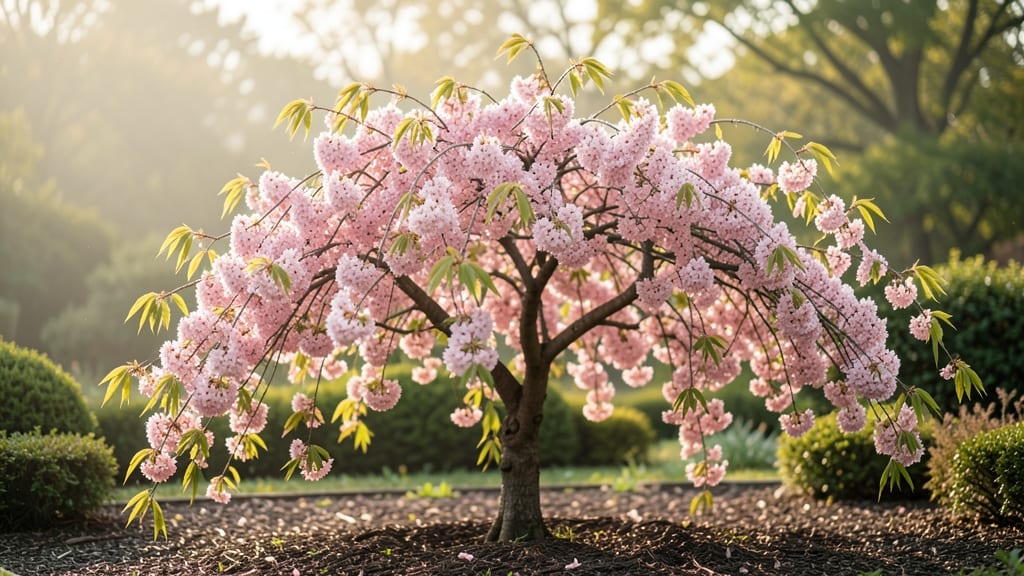
Buying guide: how to choose the perfect cherry bloom flower for your garden
1. Bloom Cycle Duration ⚡
Not all cherry bloom flowers deliver year-round color—many only bloom once per season, leaving your garden bare for months. I recommend prioritizing varieties that rebloom 3-4 times per season, especially if you want that cherry blossom magic without the tree-sized commitment.
Look for plants labeled as "reblooming" or "continuous bloom" varieties, as these are specifically bred to produce flowers multiple times. Double-blooming shrubs and hybrid roses are particularly reliable in this category. Counterintuitively, some vines and ground covers also rebloom prolifically if you deadhead spent flowers consistently.
2. Growth Habit & Space Requirements 💡
The right cherry bloom flower depends entirely on your space. For small gardens or containers, opt for dwarf shrubs (3-4 feet tall) or ground covers (12-18 inches tall).
If you're working with vertical space, fast-growing vines (15-20 feet per season) are game-changers—they create dramatic backdrops on trellises or fences for a fraction of the cost of a full-sized tree.
For cut flowers or centerpieces, prioritize varieties with long stems (18+ inches), like hybrid roses or certain reblooming shrubs. Pro tip: If you're unsure, start with a ground cover—they're the most forgiving for beginners and spread beautifully in meadow-style gardens.
3. Cold Hardiness & Climate Matching ✅
Cherry blossom aesthetics don't have to mean sacrificing winter survival. Most reblooming varieties thrive in USDA zones 5-9, but always check the specific hardiness rating before buying.
For colder climates (zones 3-4), look for cold-hardy dwarf trees or shrubs with thick canes—these can withstand temperatures down to -20°F with proper winter care. In warmer zones (10+), opt for heat-tolerant vines or roses—they’ll continue blooming when many other plants fade. A common mistake?
Assuming all "cherry blossom" plants have the same hardiness—they don’t! Always verify the zone compatibility to avoid disappointment.
4. Maintenance Requirements & Low-Effort Care 🔍
Let’s be honest—no one wants a plant that demands constant attention. The good news? Many reblooming cherry blossom look-alikes are designed for minimal fuss. Self-cleaning vines and drought-tolerant ground covers require the least maintenance, while shrubs and roses need occasional deadheading and pruning for continuous blooms.
If you're a busy gardener, prioritize varieties labeled as "low-maintenance" or "self-cleaning." For example, the cherry blossom vine in our roundup thrives with just one pruning session per year, while the ground cover reblooms after a simple shearing.
The trade-off? Some high-end roses may need more frequent care—but the payoff in cuttable stems and fragrance is worth it if you're willing to put in a little extra effort.
5. Aesthetic Pairings & Garden Placement 🎨
To create that dreamy cherry blossom effect, think beyond just the flowers. Pair pink blooms with silver foliage plants—like lavender or catmint—to enhance the delicate contrast. For a romantic touch, add climbing roses or clematis nearby.
If you're planting a dwarf tree or shrub, position it near a seating area so you can enjoy the fragrance up close. For vertical gardens, train vines along arbors or pergolas to create a canopy of blooms.
And here’s a pro tip: Plant bulbs like daffodils or tulips beneath your cherry blossom look-alikes—they’ll provide early spring color before the main blooms appear, extending your seasonal display.
Frequently asked questions
Q: Can I grow cherry bloom flowers in containers or small gardens?
Many reblooming cherry blossom look-alikes thrive in containers, making them perfect for patios, balconies, or small gardens. Opt for dwarf shrubs (3-4 feet tall) or compact ground covers—these varieties are specifically bred to flourish in pots with proper drainage. For example, the reblooming cherry blossom shrub in our roundup fits beautifully in a 15-gallon container and delivers 3-4 bloom cycles per season. Just ensure your container has enough depth for roots (at least 12 inches) and use a high-quality potting mix with added compost. If you're growing a vine, choose a vertical planter or trellis to maximize space without sacrificing blooms.
Q: How do I encourage reblooming in cherry blossom flowers?
To maximize reblooming, focus on three key practices: deadheading, balanced fertilization, and pruning. After each bloom cycle, remove spent flowers promptly to redirect the plant’s energy into new growth. Use a slow-release fertilizer (like 10-10-10) every 4-6 weeks during the growing season, and avoid heavy nitrogen—it promotes foliage over flowers. For shrubs and roses, prune lightly after each bloom to encourage bushier growth. Vines and ground covers often rebloom naturally with minimal pruning, but shearing them back by 1/3 after flowering can trigger a second flush. Pro tip: Water consistently (1-1.5 inches per week) to avoid stress, which can reduce blooming.
Q: What’s the difference between a cherry blossom shrub and a vine for reblooming?
The main difference lies in growth habit, space requirements, and maintenance. Cherry blossom shrubs are compact (3-4 feet tall) and ideal for foundation plantings or containers, offering double-pink blooms that closely mimic real cherry blossoms. They rebloom 3-4 times per season with deadheading but require occasional pruning. In contrast, cherry blossom vines grow 15-20 feet per season, making them perfect for trellises or fences. They produce light pink blooms continuously on new growth and need minimal pruning—just trim leggy stems in late winter. Vines are budget-friendly and deliver dramatic vertical coverage, while shrubs provide a more structured, ornamental look. Choose a vine if you want fast, low-maintenance coverage or a shrub for a polished, compact display.
Q: Are cherry blossom flowers fragrant, and how can I enhance their scent?
Most cherry blossom look-alikes have a light, sweet fragrance, though not as intense as traditional roses. The cherry blossom rose in our roundup is the most fragrant option, combining cherry blossom aesthetics with a delicate rose scent. To enhance fragrance, plant your cherry blossom flowers near a seating area or pathway where you can enjoy the aroma up close. Pair them with lavender, jasmine, or mock orange—these plants complement the floral scent naturally. Avoid planting near strong-scented herbs (like mint) or overpowering flowers (such as gardenias), as they can clash. For container gardens, choose varieties with long stems (like the hybrid tea rose) to bring cut blooms indoors, where their fragrance will linger longer.
Q: How long do cherry bloom flowers typically last in a vase?
With proper care, cherry blossom-inspired cut flowers last 5-7 days in a vase, though some varieties (like the cherry blossom rose) can extend to 10 days with the right techniques. To maximize vase life, trim stems at a 45-degree angle before placing them in lukewarm water with a commercial flower food (or a DIY mix of 1 tsp sugar + 1 tsp bleach per quart of water). Change the water every 2-3 days and trim stems again to prevent bacterial buildup. Keep flowers away from direct sunlight or heat sources, which cause wilting. For the longest-lasting displays, harvest blooms in the early morning when stems are fully hydrated. If you notice drooping, recut stems and place them in fresh water to revive them.
Q: What’s the best budget-friendly alternative to a full-sized cherry blossom tree?
If you love the look of cherry blossoms but want a low-cost, space-saving alternative, start with a reblooming ground cover or vine. The cherry blossom ground cover in our roundup spreads to 12-18 inches tall, creating a meadow-like effect for a fraction of the price of a tree. It’s drought-tolerant once established and reblooms after shearing, making it ideal for slopes or borders. Another great option is the cherry blossom vine, which climbs 15-20 feet per season and costs less than half as much as a shrub. Train it on a trellis or fence to create a dramatic backdrop without the upkeep of a tree. Both options deliver continuous blooms and thrive in USDA zones 5-9, so you get the cherry blossom aesthetic year after year without the commitment.
Q: Can I plant cherry bloom flowers in partial shade?
Yes! While most cherry blossom look-alikes prefer full sun (6+ hours daily), many varieties tolerate partial shade (3-6 hours of sun), especially in hotter climates. Dwarf shrubs and ground covers are the most adaptable—look for labels specifying "partial shade tolerant." For example, the reblooming cherry blossom shrub in our roundup thrives in partial shade, making it perfect for north-facing gardens or areas with afternoon sun. If you’re planting in shade, choose moist, well-draining soil and avoid heavy clay, which can suffocate roots. Vines may produce fewer blooms in deep shade, but they’ll still grow. For the best results, prioritize morning sun over afternoon light, as it reduces stress on the plant.