
Blooming
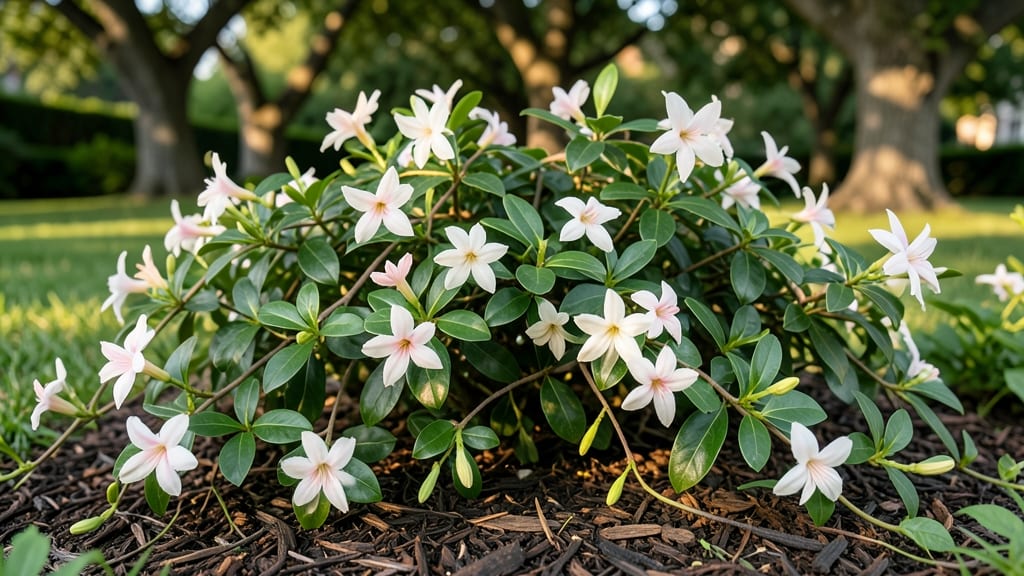
The confederate jasmine bloom time in late spring to early summer fills your garden with intoxicating fragrance that peaks at dusk.
If you’ve ever craved a vine that transforms your outdoor space into a fragrant haven, timing its bloom is everything. In Zone 6a, expect clusters of star-shaped white flowers to appear around May, while warmer climates like Zone 9 can see blooms as early as April.
The difference? A few degrees and a well-timed pruning can shift your bloom window by weeks.
But here’s the catch: sunlight, pruning, and even your soil’s fertility play a bigger role than you might think. Too much shade or a heavy hand with the shears, and your vine might skip blooming altogether.
I’ve seen thriving vines in partial shade produce fewer flowers than a properly pruned plant in full morning sun—so let’s get into the details.
Below, I’ll break down the exact months to expect blooms in your zone, how to extend the season, and the 3 biggest mistakes that kill flowering. Ready to turn your vine into a fragrant showstopper?
Confederate Jasmine bloom time by USDA Zone: month-by-month schedule
Timing your Confederate Jasmine blooms means understanding how your USDA hardiness zone influences its peak flowering season. In cooler zones like Zone 7, expect blooms to arrive in late May to June, while warmer Zone 10 gardens may see flowers as early as April.
This evergreen vine thrives on warmth, but regional microclimates—like coastal California’s mild winters—can shift bloom windows dramatically. Let’s break down the exact months for each zone to help you plan your garden’s fragrant highlights.
Your local climate plays a bigger role than you might think. For example, Texas Hill Country (Zone 8) often sees blooms stretch from April through July, thanks to its hot summers.
Meanwhile, Pacific Northwest gardens in Zone 8 might not hit peak bloom until June due to cooler, wetter springs. Even within the same zone, elevation and proximity to large water bodies can delay or advance flowering by 2-4 weeks.
Understanding these variations ensures you’re not left waiting for blooms that never arrive—or worse, missing them entirely.
| USDA Zone | Typical Bloom Window | Early Bloomers | Late Bloomers | Regional Notes |
|---|---|---|---|---|
| Zone 7 | Late May – Early June | Early May (sheltered spots) | Mid-June (cooler microclimates) | Delays in Appalachian areas |
| Zone 8 | Mid-April – June | Late March (coastal CA) | July (inland TX) | Longer bloom in desert zones |
| Zone 9 | March – May | February (southern FL) | June (high elevation) | Humidity shortens bloom in Florida |
| Zone 10 | February – April | January (coastal) | May (inland) | Year-round blooms in tropical microclimates |
If you’re in Zone 7, mark your calendar for late May—that’s when most Confederate Jasmine varieties will burst into flower. However, if your garden sits in a valley or low-lying area, expect blooms to arrive 1-2 weeks later due to cooler nighttime temperatures.
In contrast, Zone 8 gardeners can enjoy a longer bloom season, often stretching from April through June, with some varieties reblooming in fall if conditions are right. This extended window makes Zone 8 the sweet spot for continuous fragrance.
For those in Zone 9 and Zone 10, the real magic happens earlier. In southern California or Florida, you might catch the first fragrant blooms as early as February, especially in protected microclimates like courtyards or against south-facing walls.
These warmer zones also allow for year-round blooming in ideal conditions, though peak fragrance still occurs in spring. If you’re in Zone 10, don’t be surprised if your plant flowers lightly in fall or winter too!
One of the biggest mistakes gardeners make is assuming their Confederate Jasmine will bloom on schedule without considering local weather patterns. For example, a late spring frost in Zone 8 can delay blooms by 3-4 weeks, while an unusually warm winter in Zone 7 might trigger early flowering.
To stay ahead, monitor your plant’s new growth in late winter. Healthy, vibrant shoots are a strong indicator that blooms will follow soon after. If growth is slow or yellowing, your plant may need more sunlight or nutrients to support flowering.
To maximize your bloom time, pay attention to your plant’s pruning history. If you pruned heavily in late winter, expect blooms to arrive 2-3 weeks earlier than usual, as the plant focuses energy on new growth.
Conversely, minimal pruning can extend the bloom period but may reduce flower quantity. Balance is key—aim to prune in early spring to encourage both vigorous growth and abundant blooms. This timing aligns perfectly with the plant’s natural growth cycle, ensuring you get the most fragrant display possible.
Don’t overlook the power of location within your garden. A Confederate Jasmine trained along a south-facing fence will bloom 2-4 weeks earlier than one planted in a shady corner. The extra sunlight accelerates flower production, while afternoon shade in hot climates prevents stress that can delay blooming.
If your garden is partially shaded, consider moving your vine to a sunnier spot in early spring to jumpstart the blooming process. Even a 50% increase in sunlight can make a noticeable difference in bloom timing.
Finally, remember that established plants bloom more reliably than young vines. If your Confederate Jasmine is less than 3 years old, it may produce fewer flowers or bloom later
How to extend Confederate Jasmine bloom time with pruning and care
Confederate Jasmine (Trachelospermum jasminoides) thrives when you time your pruning and care just right. The key to longer bloom times lies in strategic late winter pruning—typically between February and March—when the plant is still dormant but before new growth begins.
This encourages healthier stems and more abundant flowers later in the season.
Start by removing dead or crossing branches first. These compete for nutrients and can stunt your plant’s ability to produce those fragrant white blooms. Use clean, sharp pruners to make cuts at a 45-degree angle, just above a leaf node.
This simple technique promotes faster healing and stronger regrowth.
⚠️ callout warning
Never trim more than one-third of your Confederate Jasmine at once. Cutting too aggressively removes flower buds already forming on old wood. In warmer zones (8-10), avoid heavy pruning after mid-summer—this disrupts next year’s blooms. Stick to light shaping in fall if needed.
For maximum blooms, switch to a low-nitrogen, high-phosphorus fertilizer (like 5-10-10) starting in early spring. Phosphorus fuels flower production, while nitrogen promotes leafy growth at the expense of blooms. Apply every 4-6 weeks during the growing season, but stop fertilizing by August to encourage dormancy.
Sunlight plays a crucial role too. While Confederate Jasmine tolerates partial shade, it blooms most prolifically with morning sun and afternoon shade. In hotter climates (Zone 9-10), provide dappled shade to prevent leaf scorch, which stresses the plant and reduces flowering.
A south-facing trellis with afternoon shade cloth works perfectly.
Watering matters just as much as pruning. Keep soil consistently moist but never soggy—deep watering once weekly is ideal. During peak bloom season (May-June), increase frequency to every 5-7 days if temperatures exceed 85°F.
Always water at soil level to avoid wetting leaves, which attracts fungal diseases like powdery mildew.
Finally, mulch around the base with 2-3 inches of organic matter (like shredded bark) to retain moisture and regulate soil temperature. This small step reduces stress on roots, helping your Confederate Jasmine bloom longer and more vigorously each season.
With these care tips, you’ll enjoy fragrant nighttime blooms from late spring through early summer—and possibly into fall in mild climates! 🌸