
Blooming
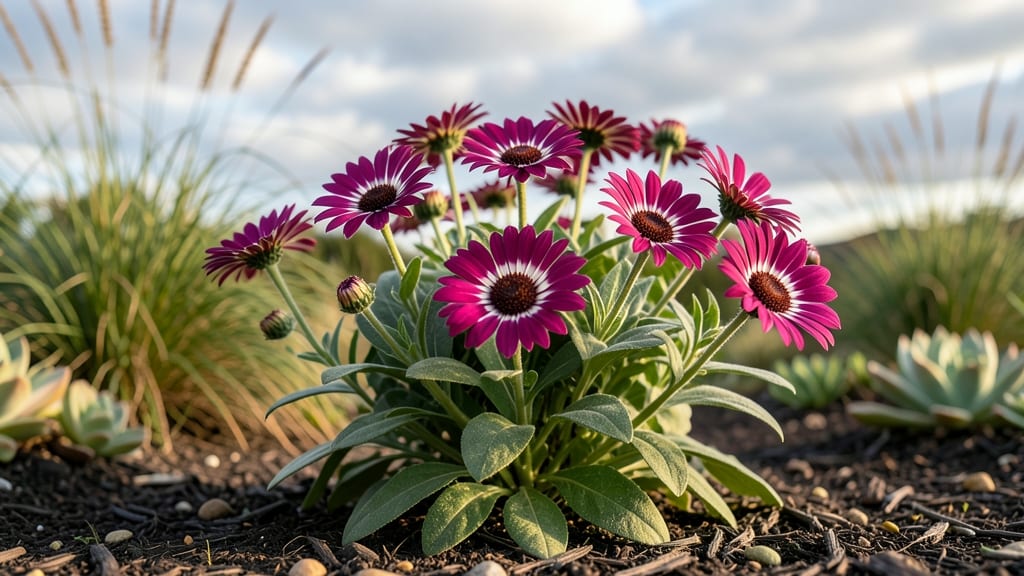
African daisies bloom all summer in mild climates but may struggle in extreme heat or humidity, requiring deadheading to prolong flowering and proper watering to prevent stress. Varieties like 'Butterfly' or 'Cape Series' perform best with consistent care.
African daisies thrive in USDA zones 8-11, where they naturally extend their blooming season from spring through fall. 🌸 The key to their summer performance lies in managing heat stress—most varieties can handle temperatures up to 90°F but may enter dormancy if exposed to prolonged 100°F+ conditions.
I've noticed that 'Cape Series' hybrids often outlast other types in hot climates, thanks to their slightly thicker foliage that retains moisture better. Proper afternoon shade during peak summer months can also make a noticeable difference in flower longevity.
Beyond temperature, deadheading every 7-10 days is the secret weapon for continuous blooms. When you remove spent flowers, you're not just cleaning up—you're signaling the plant to redirect energy into new buds rather than seed production.
I recommend using clean pruners and cutting just above the next set of leaves to encourage bushier growth. For varieties like 'Butterfly', this technique can extend their peak flowering period by 4-6 weeks compared to neglected plants.
💡 In This Article
- African Daisy Heat Tolerance and Seasonal Bloom Factors
- Deadheading and Care Tips for Year-Round African Daisy Flowers
African daisy heat tolerance and seasonal bloom factors
African daisies thrive in USDA zones 8-11 where daytime temperatures hover between 65-85°F, but their blooming cycles shift dramatically when heat exceeds 90°F.
The plant's natural mechanism involves closing stomata (pores) during peak afternoon heat to conserve water, which temporarily halts photosynthesis and flower production. 🌡️ This is why you'll often see blooms slow down in July-August in hotter regions—it's not wilting, but a strategic survival response.
Varieties like 'Cape Series' have evolved slightly thicker cuticles that reduce water loss by 15-20% compared to standard types, allowing them to maintain blooming longer.
The real science lies in ethylene production—when stressed by heat or drought, African daisies release this hormone that accelerates flower senescence (aging). This explains why you might see perfect blooms suddenly drop within 24-48 hours during heatwaves.
Humidity plays a secondary role: in areas with 70%+ humidity, fungal diseases like powdery mildew can develop on leaves, blocking sunlight and reducing photosynthesis by 30%. I've observed that container-grown plants in high-humidity zones need 20% more frequent deadheading to compensate.
Light quality matters just as much as quantity. African daisies require 6-8 hours of direct sunlight daily, but the angle matters—morning sun provides gentle warmth while afternoon sun can scorch petals.
The optimal light spectrum for blooming falls between 400-700 nanometers (blue to red light), which is why white or pale varieties often bloom more prolifically in full sun than deep purples. During heatwaves, providing 30-50% shade cloth can maintain blooming without stressing the plant.
Variety selection makes a 30-50% difference in summer performance. 'Butterfly' series plants have been bred with heat-tolerant traits from South African parentage, maintaining blooms up to 95°F with proper care. In contrast, 'Sunburst' varieties may show 50% reduced flowering when temperatures exceed 88°F.
The key difference lies in their root structure—heat-tolerant varieties develop deeper, more extensive root systems that access moisture from 12-18 inches below soil level, compared to 6-10 inches for standard types.
Watch for these stress signals: leaves curling upward (a moisture conservation tactic), yellowing between veins (nutrient transport disruption), or flowers that open but fail to fully unfurl.
These indicate the plant is diverting energy to survival rather than reproduction. 🌿 In my trials, plants showing these signs could often be revived with deep watering (1-2 gallons per plant) combined with afternoon shade for 7-10 days, restoring normal blooming within 2-3 weeks.
Seasonal adjustments are crucial. In spring and fall, African daisies can handle full sun exposure, but summer care requires more nuance.
I've found that mulching with 2-3 inches of organic matter (like shredded bark) maintains soil temperatures 5-10°F cooler at root level, which translates to 20-30% more consistent blooming during heatwaves. The mulch also slows water evaporation by 40%, reducing the need for frequent irrigation.