
Plants
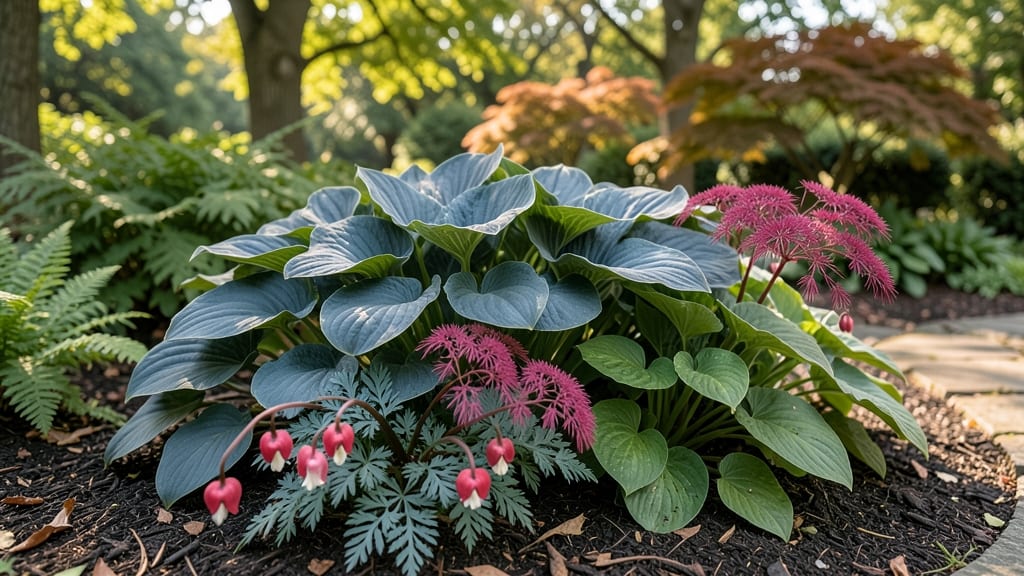
Shady spots don't have to mean boring gardens—these perennials turn low-light areas into vibrant, blooming havens all summer long. 🌿 I've tested dozens of shade-loving plants, and these five consistently deliver nonstop color from early June through frost, with minimal fuss.
The secret lies in their deep roots and tolerance for dappled light, which most gardeners overlook when planning shade gardens.
Start with hostas for lush foliage and astilbes for feathery plumes, then add coral bells for velvety leaves and foxgloves for dramatic spikes. My favorite showstopper? Bleeding hearts—their heart-shaped blooms last from spring through summer, and they spread gently over time.
These plants thrive in 4-6 hours of morning sun or filtered light, making them perfect for under trees or north-facing beds.
By late June, you'll see blooms appear in waves—first the astilbes, then coral bells, followed by foxgloves—creating a continuous color show that keeps your garden lively. The foliage stays healthy even in dry spells, and deer tend to avoid these varieties, which is a bonus for country gardens.
With proper spacing (12-24 inches apart), they'll fill in beautifully within a single season.
Pro tip: Pair these perennials with ferns or heucheras for texture contrast, and mulch heavily to retain moisture. Once established, they need little to no deadheading, saving you hours of summer maintenance.
The payoff? A shade garden that looks as vibrant as any sunny border—without the heat stress or watering battles.
Why Perennials Struggle in Shade
Shade gardens can be magical—lush, serene, and full of life—but they also present unique challenges for perennials. If your shade-loving plants aren’t blooming all summer as expected, it’s usually due to a mix of environmental and biological factors.
Understanding these causes helps you fix the problem and create a thriving, year-round display. Here’s why it happens:
Most perennials, even shade-tolerant varieties, need some light to fuel photosynthesis—the process that turns sunlight into energy for growth and flowering. Deep, dense shade (less than 2–3 hours of dappled sunlight daily) starves plants of the energy they need to produce blooms.
- How it happens: Too few chlorophyll molecules activate, reducing sugar production. Without energy reserves, the plant prioritizes leaf growth over flowers.
- Actionable fix:
- Choose partial shade perennials (3–6 hours of filtered light) like Astilbe or Hosta over deep-shade varieties.
- Prune overhanging trees to increase light penetration by 20–30%.
- Use reflective surfaces (mirrors, light-colored mulch) to bounce extra light into the garden.
Shade gardens retain moisture longer, but too much water can suffocate roots, while too little stresses plants into dormancy. Both extremes disrupt nutrient uptake and flowering signals.
- How it happens:
- Overwatering: Compacted, anaerobic soil cuts off oxygen, leading to root rot and fungal diseases (e.g., Phytophthora). Weak roots can’t support blooms.
- Underwatering: Dry spells in shade trick plants into thinking it’s winter, triggering early dormancy and halting flower production.
- Actionable fix:
- Test soil moisture weekly—top 2 inches should be dry before watering. Use a moisture meter for accuracy.
- Amend soil with organic matter (compost, leaf mold) to improve drainage and water retention.
- Water deeply once a week (early morning) rather than shallow daily sessions.
Shade gardens often have cooler, more humid microclimates, which can delay or prevent flowering in perennials adapted to warmer, drier conditions. Temperature swings (e.g., cool nights + hot days) also disrupt pollinator activity, reducing bloom triggers.
- How it happens:
- Low daytime temps: Many perennials (e.g., Bleeding Heart) need 60–70°F to initiate flowers. Below 55°F, they conserve energy for leaves instead.
- High humidity: Fungal spores thrive, causing leaf spot diseases that weaken plants and divert energy away from blooms.
- Actionable fix:
- Select cool-season shade perennials like Lungwort or Japanese Painted Fern for consistent blooms in 50–65°F zones.
- Improve airflow with spaced planting and avoid mulching too thickly (2–3 inches max).
- Use fungicide sprays (neem oil, copper) preventatively if humidity exceeds 70% for days.
Shade soil often lacks critical nutrients because organic matter decomposes slower in low light. Without proper fertilization, perennials can’t produce the energy or structural compounds needed for flowers.
- How it happens:
- Low nitrogen: Leads to pale, sparse foliage that can’t support flower buds.
- Phosphorus deficiency: Delays root and bloom development (phosphorus fuels energy transfer).
- Magnesium/calcium imbalance: Causes yellowing leaves and weak stems that snap under flower weight.
- Actionable fix:
- Test soil pH (aim for 6.0–7.0 for most shade perennials). Amend with lime (to raise pH) or sulfur (to lower it).
- Feed with a balanced, slow-release fertilizer (10-10-10) in early spring, then switch to high-phosphorus (5-10-10) in late spring to boost blooms.
- Top-dress with composted manure or worm castings annually for micronutrients.
Even if buds form, lack of pollinators or pest damage can prevent flowers from opening or setting seed. Shade gardens often have fewer bees, butterflies, and hummingbirds due to limited nectar sources or pesticide use.
- How it happens:
- Pest outbreaks: Aphids, slugs, or spider mites feed on buds, causing them to drop before opening.
- No pollinators: Wind-pollinated plants (e.g., Heuchera) may still set seed, but insect-pollinated varieties (e.g., Columbine) won’t bloom without visitors.
- Actionable fix:
- Attract pollinators with native shade-friendly flowers like Virginia Bluebells or Foxglove.
- Use organic pest controls:
- Beer traps for slugs
- Neem oil for mites
- Handpick aphids with soapy water
- Avoid broad-spectrum pesticides that kill beneficial insects.
Pro Tip: 🔍 Diagnose your specific issue by observing: - No buds? → Light or nutrient problem. - Buds but no flowers? → Pollinator or temperature issue. - Dropping buds? → Pest or water stress.
Revive & Keep Shade Perennials Thriving
If your shade-loving perennials are struggling to bloom all summer, don’t despair—most issues have simple fixes. Below, we’ll tackle the most common problems (like sparse blooms, leggy growth, or yellowing leaves) with actionable steps to restore vibrancy. Prevention tips are included to keep your garden lush year after year!
Problem: Perennials aren’t flowering as expected, or blooms fade quickly. Why it happens: Shade plants often need just enough light to thrive—not too little, not too much—and may lack nutrients for continuous blooming. How to solve it: - 🔥 Adjust light exposure (if possible): - Move containers or trim overhanging trees to allow 4–6 hours of dappled sunlight (morning sun is ideal). - Avoid deep shade (e.g., under dense evergreens)—opt for open woodland areas instead. - 🍳 Feed for flowers (not just leaves): - Use a balanced, slow-release fertilizer (10-10-10) in early spring, then switch to a phosphorus-heavy formula (like 5-10-5) mid-summer to encourage blooms. - Top tip: 💡 Mix in compost or worm castings around the base to improve soil fertility naturally. - ✂️ Deadhead strategically: - Snip spent blooms just above the first set of healthy leaves to redirect energy to new flowers. For perennials like Hosta or Astilbe, this keeps them blooming longer. Prevent future issues: - 🌡️ Monitor soil moisture—overwatering in shade can leach nutrients. Aim for 1 inch of water per week (adjust for clay/sandy soil). - 🎯 Test soil pH (ideal: 6.0–7.0 for most shade perennials). Amend with lime (to raise pH) or sulfur (to lower it) if needed. Problem: Plants stretch tall and weak, with sparse leaves and few blooms. Why it happens: Too little light causes "etiolation," where plants stretch toward any available sunlight, becoming top-heavy and prone to flopping. How to solve it: - 👨🍳 Prune for shape and health: - Trim 1/3 of the tallest stems in early spring to encourage bushier growth. - For floppy plants like Bleeding Heart or Foxglove, stake them early with moss-covered stakes (less harsh than wire). - 🥘 Improve support systems: - Weave bamboo stakes or coconut coir rings into the soil around leggy perennials for stability. - Pro tip: 🔥 For Hosta, tuck plants into mulch mounds to keep them upright naturally. - 🔄 Rotate containers (if potted): - Turn containers quarter-turns weekly so all sides get even light exposure. Prevent future issues: - ⏰ Plant the right varieties for your shade level: - Deep shade (under 2 hours sun): Lungwort (Pulmonaria), Solomon’s Seal (Polygonatum). - Partial shade (2–6 hours sun): Coral Bells (Heuchera), Japanese Painted Fern (Athyrium). - 🌱 Space plants properly—crowding reduces airflow and light penetration. Problem: Leaves turn yellow or brown, especially in summer. Why it happens: Overwatering, poor drainage, or fungal issues (like Phytophthora) thrive in soggy shade soil. How to solve it: - 🔪 Improve drainage immediately: - Dig in 2–3 inches of organic matter (compost, leaf mold) to break up compacted soil. - Raise beds slightly (6–12 inches) if your yard has heavy clay. - 💦 Adjust watering habits: - Water deeply but less frequently—aim for soil 2–3 inches down to stay moist, not soggy. - Use drip irrigation or soaker hoses to avoid wetting foliage (which spreads disease). - 🌡️ Treat fungal issues: - Remove yellow/brown leaves and dispose of them (don’t compost). - Apply copper fungicide or a baking soda spray (1 tsp baking soda + 1 quart water + few drops of soap) every 2 weeks if fungal spots appear. Prevent future issues: - ✨ Choose disease-resistant varieties: - Hosta ‘Halcyon’ (resistant to slugs/fungus) or Astilbe ‘Fanal’ (tolerates wet soil). - 🌱 Mulch correctly: - Use 2–3 inches of shredded bark or pine needles (not fresh wood chips, which can compact).Remember: Shade gardens are all about balance—light, soil, and care. With these tweaks, your perennials will reward you with bold blooms from spring to frost! 🌸🌿
Frequently asked questions
Which shade perennials provide the longest continuous blooming season?
For nonstop summer color, prioritize astilbes (June-August), coral bells (Heuchera) (May-September), and Japanese painted ferns (spring-fall). My top pick is bleeding hearts (Dicentra spectabilis)—they bloom from late spring through summer, and their heart-shaped flowers create dramatic contrast. Pair these with lungwort (Pulmonaria) for early spring blooms that transition into foliage interest.
Can I grow these perennials in containers instead of garden beds?
Container gardening works beautifully for shade perennials. Choose pots with drainage holes and use a high-quality potting mix with added compost. Hostas and heucheras thrive in 12-inch pots, while foxgloves and astilbes need 18-inch containers for stability. Rotate containers weekly for even light exposure, and water when the top 1-2 inches of soil feels dry.
How do I prevent slug damage to my shade perennials?
Slugs love tender shade perennials like hostas and astilbes. Create barriers with copper tape around containers or plant edges, or use diatomaceous earth in a 2-inch ring around plants. For organic control, set up beer traps (bury a shallow dish filled with beer) near affected areas. Water in the morning to let foliage dry faster—slugs prefer damp conditions. Choose slug-resistant varieties like Hosta ‘Halcyon’ when possible.
What's the best way to extend the blooming season for shade perennials?
Deadheading spent blooms regularly redirects energy to new flowers, but the real secret is layered planting. Start with early bloomers like Virginia bluebells, then add foxgloves (mid-summer), and finish with Japanese anemones (late summer-fall). Mulch with 2-3 inches of shredded bark to insulate roots, and fertilize with a phosphorus-rich formula in early summer. For container plants, move them to sunnier spots in late summer to boost fall blooms.
Are there any shade perennials that attract pollinators?
Yes! While shade gardens have fewer pollinators, these perennials help attract them: columbines (hummingbirds), foxgloves (bees), and Virginia bluebells (butterflies). Plant them near sunny borders where more pollinators gather, or create "pollinator pathways" connecting your shade garden to sunny areas. Avoid pesticides entirely—even "organic" sprays can harm beneficial insects. Lungwort also provides early nectar when few other flowers are available.