
Blooming
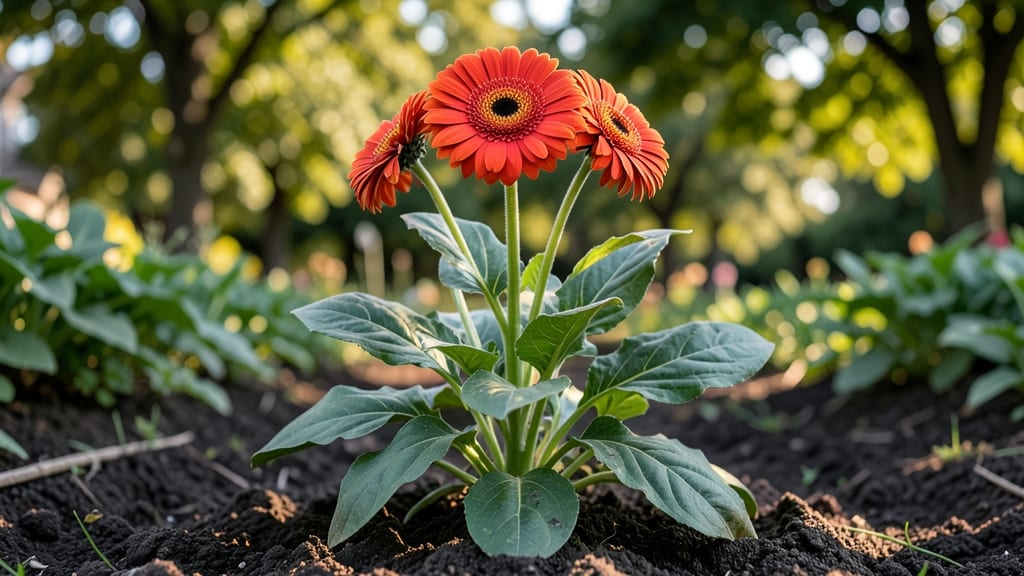
Gerber daisies bloom all summer when given consistent moisture, partial shade, and temperatures below 90°F, but they often struggle in extreme heat or drought, requiring mulching and regular watering to keep them flowering through late summer.
Gerber daisies thrive in summer's warmth but hit their limits when temperatures climb beyond 90°F. 🌞 The key to keeping them blooming lies in mimicking their natural habitat—moist, well-drained soil with afternoon shade during peak heat.
I've seen firsthand how mulching with 2-3 inches of organic matter helps retain moisture while keeping roots cool, which directly impacts their ability to produce new buds. The difference between a vibrant summer display and sparse blooms often comes down to how consistently you maintain these conditions.
What many gardeners overlook is the importance of deadheading spent blooms—this simple step encourages the plant to redirect energy into producing more flowers rather than setting seed. Pair that with a light application of balanced fertilizer every 4-6 weeks, and you'll notice a significant extension of their flowering season.
Even in hot climates, these adjustments can transform a struggling gerber daisy into a late-summer showstopper.
💡 In This Article
- Heat Stress and Gerber Daisy Flowering Patterns
- Extending Gerber Daisy Blooms Through Late Summer
Heat stress and gerber daisy flowering patterns
Gerber daisies experience physiological stress when temperatures exceed 90°F, triggering a cascade of responses that directly impact their blooming. The plant's stomata—tiny pores on leaves—close to conserve moisture, which reduces photosynthesis and energy production.
This energy deficit causes buds to drop before opening or flowers to wilt within hours of peak heat. 🔥 Studies show that prolonged exposure to temperatures above 95°F can reduce flowering by up to 40% compared to ideal conditions.
Their natural flowering cycle peaks in late spring to early summer when days are long but temperatures moderate (between 65-85°F). During these ideal conditions, gerber daisies produce vibrant blooms in shades of pink, red, and yellow through a process called photoperiodism—where they respond to daylight length.
However, as summer progresses and heat intensifies, the plants shift energy toward survival rather than reproduction, leading to fewer blooms and slower regrowth.
Humidity plays a surprising role too. In dry heat (low humidity), gerber daisies lose moisture faster through transpiration, while high humidity can trap heat near the foliage, creating a sauna effect.
The combination of these factors explains why gerber daisies often perform better in coastal climates with moderate humidity compared to arid inland areas where temperatures spike daily. 💫
What's often overlooked is how soil temperature affects root activity. When surface soil exceeds 85°F, beneficial microbes that aid nutrient uptake become less active, further stressing the plant.
This is why mulching isn't just about moisture—it also acts as an insulating layer that keeps root zones cooler by 5-10°F compared to bare soil. The cooler roots maintain better nutrient absorption, which is crucial for sustained flowering.
The visual difference between stressed and healthy gerber daisies is striking. Stressed plants develop a grayish cast to their leaves, buds shrivel before opening, and stems become brittle. In contrast, well-cared-for gerber daisies maintain glossy green foliage and produce blooms that last 5-7 days each, with new buds forming continuously.
This contrast highlights why precise care matters more than just watering frequency.
Interestingly, gerber daisies have a built-in survival mechanism: they enter a semi-dormant state during extreme heat, conserving energy until conditions improve. This explains why they often rebound quickly after a heatwave passes—if given proper care during the stress period.
Understanding this cycle helps gardeners time their interventions effectively, knowing that the plant may appear "dead" but is actually conserving resources for recovery. ✨