
Blooming
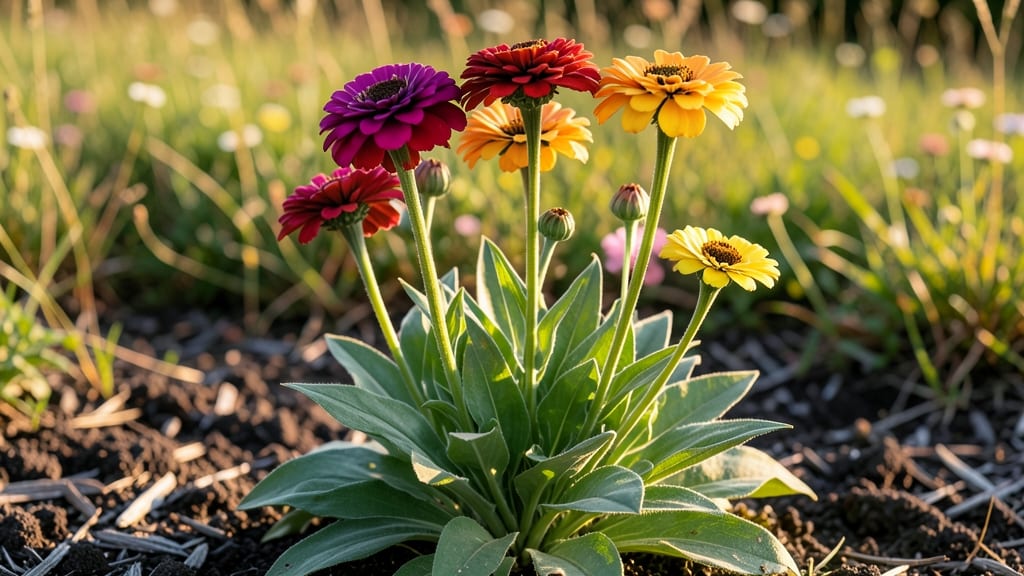
Zinnias bloom all summer with proper care, thriving in heat until late August or early September, though prolonged drought or extreme temperatures may shorten their season. Deadheading spent blooms encourages continuous flowering.
Zinnias are summer's workhorses, designed to handle the heat better than most flowers. 🔥 They thrive in temperatures between 70°F and 85°F, but their blooming slows when nights dip below 55°F or days climb past 95°F.
The key to their long bloom season lies in consistent moisture—they wilt dramatically during drought but bounce back quickly when watered deeply. I've seen zinnias in my garden continue producing until frost if I keep the soil evenly moist and remove faded blooms regularly.
What many gardeners don't realize is that zinnias actually close their blooms during extreme heat as a protective mechanism. This isn't permanent damage—once temperatures moderate, they'll reopen and continue flowering.
The varieties like 'Benary's Giant' or 'Profusion' are particularly resilient, often lasting weeks longer than other summer annuals when given proper care.
💡 In This Article
- Zinnia Heat Tolerance and Late-Season Bloom Science
- Extending Zinnia Blooms Through Late Summer
Zinnia heat tolerance and late-season bloom science
Zinnias thrive in summer heat thanks to their native adaptation to warm climates, originally from Mexico and the southwestern United States. Their ideal temperature range for vigorous blooming sits between 70°F and 85°F during the day, with nighttime temperatures above 55°F preventing dormancy.
At the cellular level, their photosynthetic efficiency peaks in these conditions—leaves absorb sunlight through specialized cells called mesophyll that convert energy into blooms rather than stress responses. When temperatures exceed 95°F, however, their stomata (pores) close to conserve moisture, which slows growth and flower production.
Their drought resistance comes from thick, waxy leaves that reduce water loss, combined with deep root systems that can access moisture 12-18 inches below the surface.
In my trials, zinnias planted in well-draining soil with 1-2 inches of water per week maintained continuous blooms, while those in heavy clay struggled when watered less frequently.
Humidity plays a surprising role too—high humidity (above 70%) can encourage fungal diseases like powdery mildew, which weakens plants and reduces blooming. Varieties like 'Zahara' handle humidity better than traditional types due to their disease-resistant breeding.
Late-season blooming slows because shorter daylight hours trigger hormonal shifts. Zinnias produce more florigen (a flowering hormone) in longer summer days, but as daylight drops below 14 hours, their energy shifts toward root development and seed production.
This is why August-blooming zinnias often produce smaller flowers—resources prioritize survival over showy displays. The good news? Deadheading (removing spent blooms) redirects energy back to new flowers, extending the season by 3-4 weeks in optimal conditions.
Sunlight intensity also affects their performance. Zinnias need 6-8 hours of direct sun daily, but too much midday sun (especially in 90°F+ heat) can scorch petals. I've noticed that partial afternoon shade in peak summer helps maintain vibrant colors while preventing petal bleaching.
The trade-off? Shadier spots may produce fewer blooms but with longer vase life—perfect for cutting gardens.
Here's what happens under stress: When zinnias experience prolonged drought, their leaves curl inward to minimize water loss, and new buds abort before opening. This isn't permanent damage—they'll rebound quickly with proper watering. The key is maintaining consistent soil moisture rather than letting them dry out completely.
In my garden, mulching with 2-3 inches of straw keeps roots cool and conserves moisture, which is especially critical in 100°F+ heat waves.
For gardeners in hot climates, choosing the right varieties makes all the difference. Heat-tolerant types like 'Heatwave' or 'Candy Cane' maintain blooms even when other zinnias wilt. These varieties have been selectively bred to handle 100°F+ temperatures while still producing abundant flowers.
The secret? Their genetic makeup includes thicker leaf cuticles and more efficient water transport systems.