
Blooming
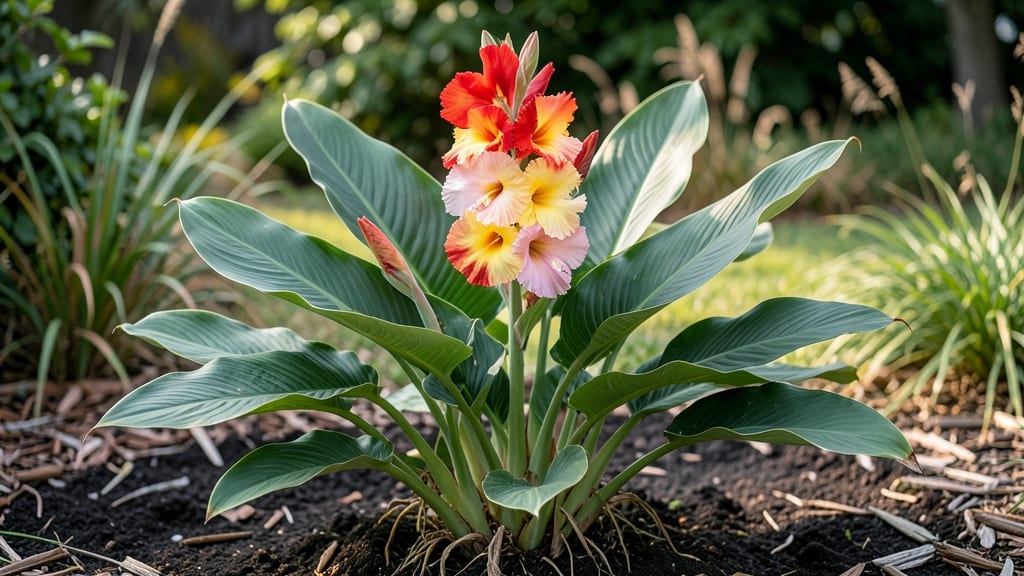
Cannas bloom all summer when given proper care, typically flowering from late June through September, though cooler climates or improper maintenance can shorten their bloom period significantly.
Cannas are summer's showstoppers, but their performance depends heavily on your growing conditions. 🌸 Varieties like 'Black Knight' often bloom longer in warm climates, while 'Striped' types may need consistent heat to maintain their vibrant displays.
The key to extending their summer show lies in deadheading spent blooms weekly—this encourages new flower production and prevents energy from going to seed. I've found that mulching around the base helps retain moisture, which is especially critical during dry spells when cannas might drop buds prematurely.
Don't overlook sunlight requirements—most cannas crave full sun (6+ hours daily), though some varieties tolerate partial shade. In cooler regions, consider planting heat-loving types like 'Australia' or 'Tropicanna' for extended blooming. The secret weapon?
A balanced fertilizer with higher phosphorus content (like 5-10-5) applied every 4-6 weeks to fuel continuous flowering. With these adjustments, you can transform your garden into a non-stop summer floral spectacle.
💡 In This Article
- Canna Bloom Duration by Variety and Climate
- Maximizing Summer Blooms: Deadheading and Care Tips
Canna bloom duration by variety and climate
Canna blooms vary dramatically by variety, with some types like 'Black Knight' producing bold, deep red flowers that thrive in USDA Zones 8-11 for up to 12 weeks of continuous blooming.
These heat-loving varieties rely on consistent temperatures above 75°F to maintain their flowering cycles, while cooler climates (Zones 6-7) may see blooms taper off by late August. The science behind this involves photoperiodism—daylight length triggers flowering, and shorter days in fall signal cannas to prepare for dormancy.
Dwarf varieties like 'Purple Haze' often bloom for 8-10 weeks but require at least 6 hours of direct sunlight daily to sustain their compact, vibrant flowers. In contrast, tropical types such as 'Tropicanna' can extend blooming into early fall if protected from early frosts (below 32°F).
The key difference lies in their genetic adaptations: tropical cannas evolved in regions with longer growing seasons, while temperate varieties have developed shorter bloom cycles to match cooler climates.
Climate plays a critical role in bloom duration. In Southern California or Florida, cannas may bloom from June through October with minimal care, while in New England, they might only flower for 6-8 weeks before dormancy sets in.
The 10-hour daylight threshold is crucial—once days shorten below this, cannas shift energy from blooms to root development. This is why gardeners in cooler zones often use row covers or grow cannas in containers to extend the season.
Color intensity also varies by climate. In hot, dry conditions, flowers like 'Striped' varieties may develop more vibrant stripes due to increased sugar concentration in the petals. Conversely, in humid climates, blooms might appear slightly paler but last longer because the plants conserve water more efficiently.
The trade-off? Humid environments can encourage fungal issues, so proper spacing (2-3 feet apart) is essential to maintain airflow and prevent disease.
For gardeners in transitional zones (Zones 7-8), selecting mid-season bloomers like 'Cleopatra' can help bridge the gap between early and late varieties. These types often produce 2-3 flushes of blooms over summer, with each flush lasting 3-4 weeks.
The secret to maximizing their potential lies in consistent moisture—allowing the soil to dry 1-2 inches deep between waterings prevents stress-induced bud drop.
One often-overlooked factor is soil temperature. Cannas prefer soil that stays above 60°F—cooler soils slow root activity, which directly impacts nutrient uptake and flower production. In cooler climates, planting in black plastic mulch can raise soil temperatures by 5-10°F, giving cannas a head start.
This simple adjustment can extend blooming by 2-3 weeks in marginal zones.