
Blooming
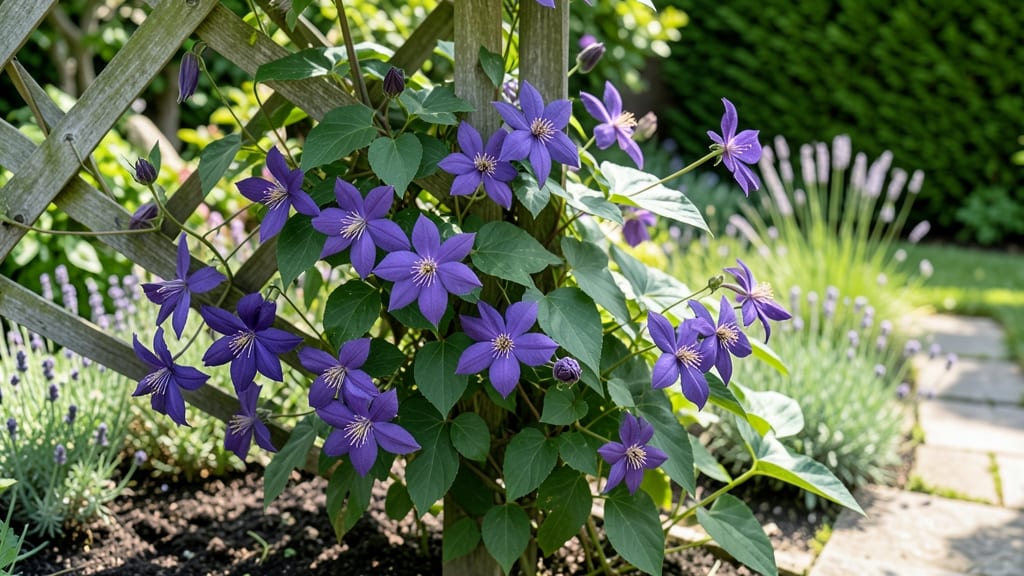
Clematis do not bloom all summer—reblooming varieties produce two distinct flowering periods (spring and late summer), while single-flush types bloom only once in spring. Even with ideal care, all clematis require rest periods between blooms.
The reason behind this natural cycle lies in clematis biology. 🌸 Reblooming varieties (Groups 2-3) need 6-8 weeks of dormancy between their spring and late-summer blooms to reset their energy reserves. Single-flush types (Group 1) complete their entire blooming cycle in spring, then enter full dormancy until next year.
What many gardeners don't realize is that forcing continuous blooms actually weakens the plant—it's like trying to run a marathon without rest periods. The key to maximizing your clematis display is understanding these natural rhythms and working with them through proper pruning and seasonal care adjustments.
For rebloomers, the secret to extending their late-summer display lies in strategic pruning right after the first flush fades. This stimulates new growth that will produce those beautiful second blooms. Meanwhile, single-flush varieties should be pruned immediately after their spring show to maintain plant health for next season.
The difference in care between these types is why some gardeners see continuous blooms while others struggle—it all comes down to matching your pruning approach to the specific variety's natural cycle.
💡 In This Article
- Clematis Flowering Cycles: Reblooming vs Single-Flush Varieties
- How to Maximize Clematis Blooms Year-Round
Clematis flowering cycles: Reblooming vs single-flush varieties
Clematis flowering behavior hinges on their botanical classification into three pruning groups, each with distinct energy cycles. Group 1 varieties (early-spring bloomers like 'Jackmanii') produce all their flowers on previous year's growth, then enter full dormancy after their single 4-6 week bloom period.
Groups 2-3 (rebloomers like 'Nelly Moser') develop flower buds on both old and new wood, allowing two blooming cycles when given proper care.
The key difference lies in their hormonal triggers: spring blooms are triggered by winter chilling (32-40°F for 6-8 weeks), while late-summer blooms require warm temperatures (70°F+) to stimulate new growth.
The dormancy requirement isn't just about rest—it's a biological necessity. During dormancy, clematis store energy in their roots as starches, which get converted to sugars when new growth begins.
Forcing continuous blooms depletes these reserves, leading to weak stems and smaller flowers. 🌿 What's fascinating is how light exposure affects this cycle: rebloomers need 6+ hours of sunlight daily for their second flush, while single-flush types thrive in partial shade.
This explains why some gardeners see summer blooms while others don't—it's not just about the variety but also the growing conditions.
Pruning plays a crucial role in this cycle by controlling when energy gets allocated. For rebloomers, cutting back after the first flush removes spent blooms but leaves dormant buds on last year's stems. These buds need 4-6 weeks of warm weather to mature before producing late-summer flowers.
The timing is precise: prune too early and you miss the first bloom; too late and you risk winter damage. Single-flush types should be pruned immediately after blooming to maintain plant health, as they won't produce a second flush regardless of care.
What most gardeners overlook is how soil nutrition affects these cycles. Rebloomers need phosphorus-rich soil (ratio 10-10-10) to support flower production, while single-flush types benefit more from potassium (ratio 5-10-10) for root development.
The difference in fertilizer requirements reflects their distinct energy needs: rebloomers must replenish reserves twice yearly, while single-flush types only need to prepare for next year's bloom.
Seasonal temperature shifts also influence blooming patterns. Spring blooms typically appear when daytime temperatures reach 55-60°F consistently, while late-summer blooms often wait until 75-80°F ranges. This explains why northern climates may see only spring blooms from rebloomers—the second flush simply doesn't get triggered.
The plant's internal clock is remarkably sensitive to these temperature cues, making microclimate considerations crucial for maximizing blooms.
Understanding these cycles reveals why clematis never bloom continuously—they're following an ancient survival strategy. The trade-off between bloom quantity and plant health is built into their DNA. Even with perfect care, the biological need for dormancy creates natural breaks in flowering.
This is why the most spectacular clematis displays often come from rebloomers with 10+ years of established roots—they've built up sufficient energy reserves to support two full bloom cycles annually.