
Blooming
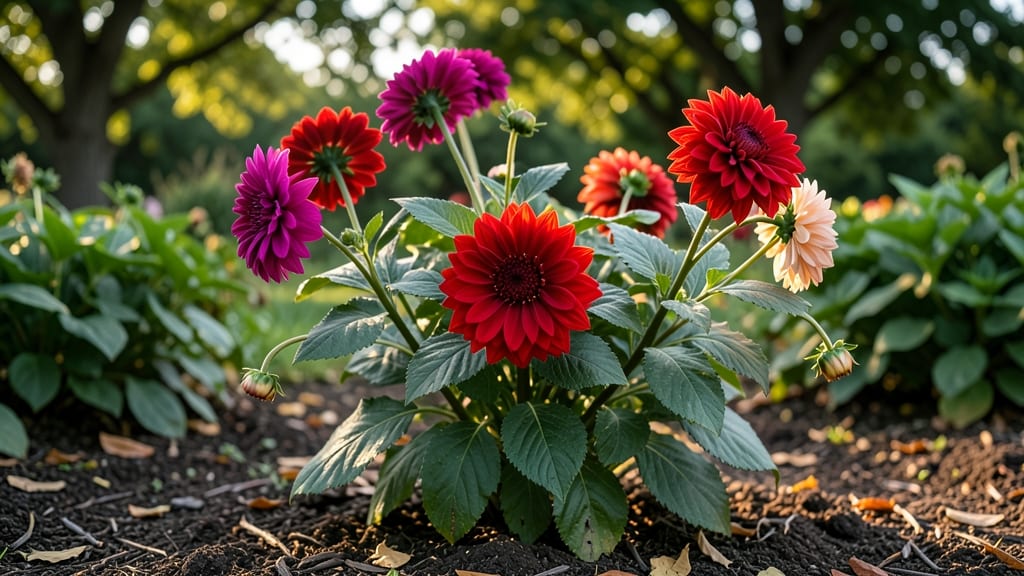
Dahlias bloom all summer with proper care, producing vibrant flowers from mid-summer through frost, especially when deadheaded regularly and given full sun. Varieties like dinnerplate and cactus types extend blooming seasons longest.
This continuous flowering happens because dahlias are day-neutral plants, meaning they bloom regardless of daylight length. 🌿 Unlike spring-blooming perennials, their tuberous roots store energy to fuel multiple bloom cycles throughout the growing season.
The key is maintaining consistent moisture and nutrients—dahlias are heavy feeders that reward proper care with weeks of vibrant blooms.
For the longest displays, focus on dinnerplate varieties (like 'Karma Choc' or 'Café au Lait'), which produce large, showy blooms, and cactus types (such as 'Galaxy' series), known for their spiky, long-lasting flowers.
These types thrive in full sun (6+ hours daily) and well-draining soil, while regular deadheading (removing spent blooms) encourages new flower production.
💡 In This Article
- Why Dahlias Continue Flowering Through Summer Heat
- Maximizing Summer Blooms: Deadheading and Care Tips
Why dahlias continue flowering through summer heat
Dahlias defy seasonal norms because they're day-neutral plants, meaning their blooming isn't triggered by specific daylight hours like spring ephemerals. Their tuberous roots store carbohydrates throughout winter, creating an energy reserve that fuels continuous growth.
Unlike annuals that bloom once then fade, dahlias produce new flowers from lateral buds along their stems, a process called sympodial branching. This system allows them to generate multiple bloom cycles when given consistent care.
The magic happens through a complex interplay of temperature and light. Dahlias thrive in 60-85°F ranges, where metabolic processes optimize photosynthesis and nutrient transport. Their deep root systems (extending 2-3 feet down) tap into moisture reserves, while their broad leaves capture sunlight efficiently.
Varieties like dinnerplate dahlias (with 10-inch+ blooms) and cactus types (with spiky petals) have evolved to handle summer's intensity better than delicate varieties, producing flowers that last 7-10 days on the stem.
What most gardeners miss is how photoperiod neutrality works: dahlias bloom when they reach physiological maturity, not when days shorten. This explains why they continue flowering even as summer transitions to fall. The trade-off?
Their tuber dormancy cycle kicks in with frost, forcing them to shut down. But with proper care, they'll regrow next season from the same roots—unlike annuals that must be replanted yearly. 🌞
Temperature extremes can disrupt this cycle. When nights dip below 50°F or days exceed 90°F, dahlias may drop buds or produce smaller flowers. This is why morning watering (before 10 AM) and afternoon shade cloth help maintain optimal conditions.
The cactus varieties handle heat best due to their compact growth habit, while pompon types (small, rounded blooms) often struggle in extreme heat.
Soil moisture plays a surprising role too. Dahlias need 1-2 inches of water weekly during bloom season, but overwatering in heat causes stress. Their tuberous roots are prone to rot if soil stays soggy, yet underwatering triggers bud drop.
The solution? Mulch with 3-4 inches of organic matter to retain moisture while preventing soil temperature spikes. This balance is what keeps dahlias flowering through summer's peak.
Consider this comparison: a well-cared-for dinnerplate dahlia might produce 50+ blooms over its season, while a neglected one may yield only 10-15. The difference comes down to understanding these botanical mechanisms and translating them into garden practices.
The reward? Weeks of vibrant color that most summer flowers can't match. 💫