
Blooming
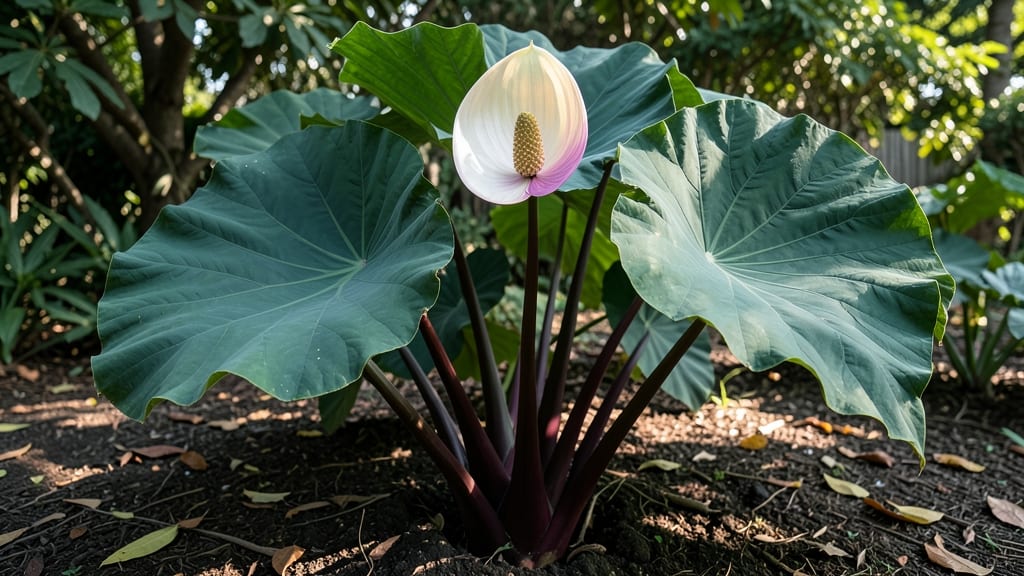
Elephant ears rarely bloom flowers in typical home gardens, though mature plants in tropical climates may occasionally produce brief, showy blooms. These striking plants prioritize lush foliage over flowers, with blooms appearing only under ideal heat and humidity.
This focus on leaves isn't just coincidence—it's biology. 🌿 Most elephant ears (both Colocasia and Alocasia varieties) evolved to thrive in warm, humid environments where energy conservation matters more than reproduction. In cooler climates or less-than-ideal conditions, these plants redirect their resources to growing those signature heart-shaped leaves instead.
Even when blooms do appear, they're often short-lived—lasting just a few days to a week—so gardeners rarely get to enjoy them. The real star here is always the foliage, which comes in an incredible range of colors and textures.
For those curious about seeing flowers, creating a microclimate with consistent warmth and moisture can sometimes trigger blooming. I've found that Alocasia varieties like 'Polly' are slightly more likely to flower than Colocasia types, but don't expect miracles—even with perfect care, blooms remain unpredictable.
The trade-off? Those stunning leaves make fantastic cut flowers or container plants, offering year-round interest even without the occasional bloom surprise.
💡 In This Article
- Why Most Elephant Ears Skip Flowering in Home Gardens
- Encouraging Blooms in Elephant Ears: Expert Tips for Gardeners
Why most elephant ears skip flowering in home gardens
Elephant ears prioritize foliage growth because their botanical energy budget favors leaf production over reproduction. These tropical plants evolved in warm, humid environments where survival depends on rapid leaf expansion to capture sunlight for photosynthesis.
In cooler climates or standard home gardens, the plants sense environmental stress and allocate nearly all their resources to developing those signature heart-shaped leaves—often reaching 2-3 feet wide—rather than producing flowers.
The foliage serves as their primary survival tool, storing nutrients in thick, starchy rhizomes that can sustain the plant through seasonal changes.
The flowering process itself demands significant energy, requiring temperatures consistently above 75°F for extended periods. Most home gardeners in temperate zones never reach this threshold, especially during cooler months. Even when conditions are ideal, the flowers—if they appear—are typically short-lived, lasting just 3-7 days before wilting.
This brief bloom window explains why gardeners rarely see them, despite the plants' maturity. The flowers also serve a secondary purpose: they attract pollinators in their native habitats, but this function becomes irrelevant in controlled garden settings where reproduction isn't the priority.
Light intensity plays a critical role too. Elephant ears thrive in partial shade, which limits their exposure to the high-light conditions needed to trigger flowering. In their native tropical forests, these plants grow under canopy cover where dappled sunlight is the norm.
Too much direct sun can actually stress the plant, causing it to focus even more on protective leaf growth.
This is why you'll often see Alocasia varieties (like 'Frydek' or 'Zebrina') produce slightly more flowers than Colocasia types—they're marginally more adaptable to varied light conditions, though still not guaranteed to bloom.
Another key factor is the plant's maturity. Most elephant ears take 2-3 years to reach full maturity, and even then, flowering isn't automatic. The rhizomes must store sufficient energy reserves before diverting any resources to flower production.
In home gardens, many plants are dug up or divided before reaching this stage, further reducing the chance of seeing blooms.
The trade-off is clear: these plants have evolved to invest in foliage that's both visually stunning and functionally efficient, making flowers a secondary (and often unnecessary) priority in non-tropical settings.
For those curious about the rare exceptions, greenhouse-grown specimens or plants in USDA zones 9-11 occasionally produce blooms. These flowers typically emerge on tall, slender spikes that can reach 3-5 feet tall, topped with unusual, almost alien-looking blooms that resemble calla lilies.
The blooms often have a faint, sweet fragrance—though not strong enough to be noticeable from more than a few feet away. The real spectacle, however, remains the foliage, which can display colors ranging from deep purple-black ('Black Stem') to vibrant green with metallic sheens ('Green Goddess').
What most gardeners don't realize is that even when flowers do appear, they're often sterile or produce non-viable seeds. This is another evolutionary adaptation—since these plants are typically propagated vegetatively (via rhizome division), there's little need for successful seed production.
The energy saved by skipping fertile flowers can instead go toward growing larger, more vibrant leaves, which is why these plants remain so popular in ornamental gardening.