
Blooming
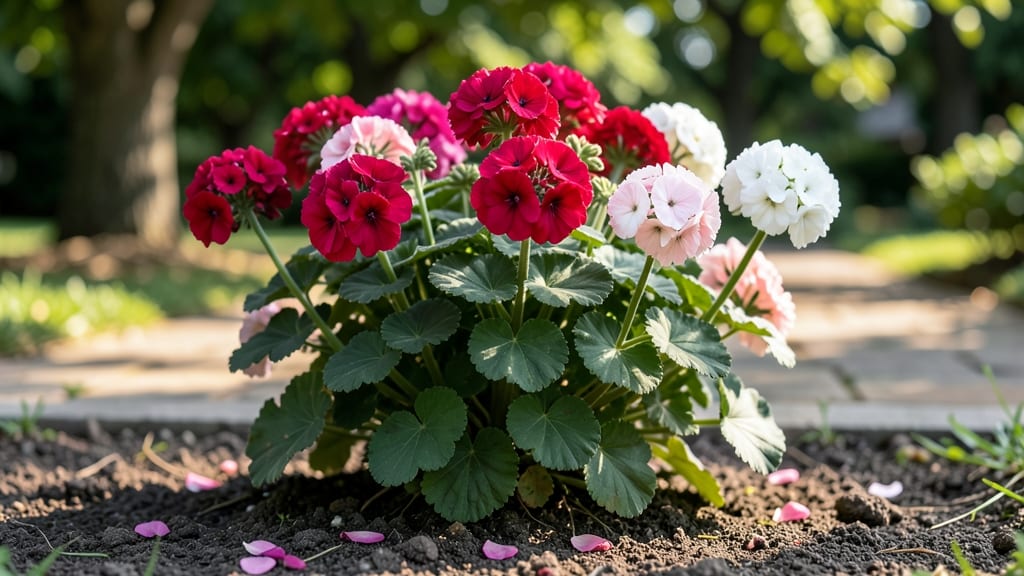
Geraniums don't bloom all summer continuously, but with the right care—full sun exposure, regular pruning, and consistent watering—they produce vibrant flowers from early summer through fall, often reblooming after deadheading or light trimming.
Geraniums follow natural seasonal rhythms, where blooming patterns depend on sunlight, temperature, and variety. 🌸 Most types—like zonal or ivy geraniums—enter dormancy in winter but thrive with 6+ hours of direct sun daily during growing months.
Deadheading spent blooms encourages new flowers, while overwatering or poor drainage can stress plants, reducing their flowering potential. The key is balancing care with their natural cycles rather than forcing year-round blooms.
For example, scented geraniums often bloom less prolifically than their zonal cousins but reward you with fragrant leaves. 🌿 Pruning back leggy stems in early spring stimulates bushier growth, while a light fertilizer (like 10-10-10) every 4-6 weeks supports continuous blooming.
Container geraniums may need more frequent watering than those in garden beds, as soil dries out faster.
💡 In This Article
- Why Geraniums Bloom Seasonally: Light, Variety, and Growth Cycles
- How to Extend Geranium Blooms: Pruning, Fertilizing, and Care Tips
Why geraniums bloom seasonally: light, variety, and growth cycles
Geraniums follow a natural blooming cycle influenced by sunlight and temperature. These plants rely on 6-8 hours of direct sunlight daily to trigger flower production, but their blooming peaks during summer when days are longest. 🌞 The key mechanism is photoperiodism—the plant's response to daylight length.
As days shorten in late summer, geraniums naturally prepare for dormancy, which is why continuous blooming isn't typical without intervention.
Different varieties exhibit unique patterns: zonal geraniums (like 'Annual Wave') produce abundant flowers from early summer until frost, while ivy geraniums (such as 'Ivy Regal') bloom slightly later but with more delicate foliage.
Scented geraniums, prized for their aromatic leaves, often prioritize leaf growth over flowers, blooming less prolifically but rewarding you with fragrance. 🌿 The average zonal geranium can produce 20-50 flowers per stem during peak season, but this declines without proper care.
Temperature also plays a critical role. Geraniums thrive in 60-75°F ranges, but heatwaves above 90°F can stress plants, causing buds to drop. This is why consistent watering (letting soil dry slightly between waterings) prevents stress-induced dormancy.
The plant's natural cycle includes a 4-6 week rest period in late summer, where it focuses on root and stem growth rather than flowering.
What many gardeners don't realize is that geraniums can be tricked into reblooming through deadheading—removing spent flowers—which stimulates new growth.
This works because the plant perceives the removal of seeds as a signal to produce more flowers rather than setting seed. 🌸 The process mimics natural conditions where pollinators would remove flowers, encouraging continuous blooming.
Day length sensitivity varies by type: zonal geraniums respond more aggressively to pruning, while scented varieties may require more frequent deadheading.
The best time to prune for reblooming is in early spring or after the first flush of flowers, cutting back 1/3 of the plant's height to encourage bushier, more productive growth.
Consider this example: a zonal geranium planted in full sun with weekly deadheading can produce flowers for 3-4 months continuously, while one neglected in partial shade may bloom for only 6-8 weeks. The difference comes down to managing the plant's natural rhythms rather than fighting them.