
Blooming
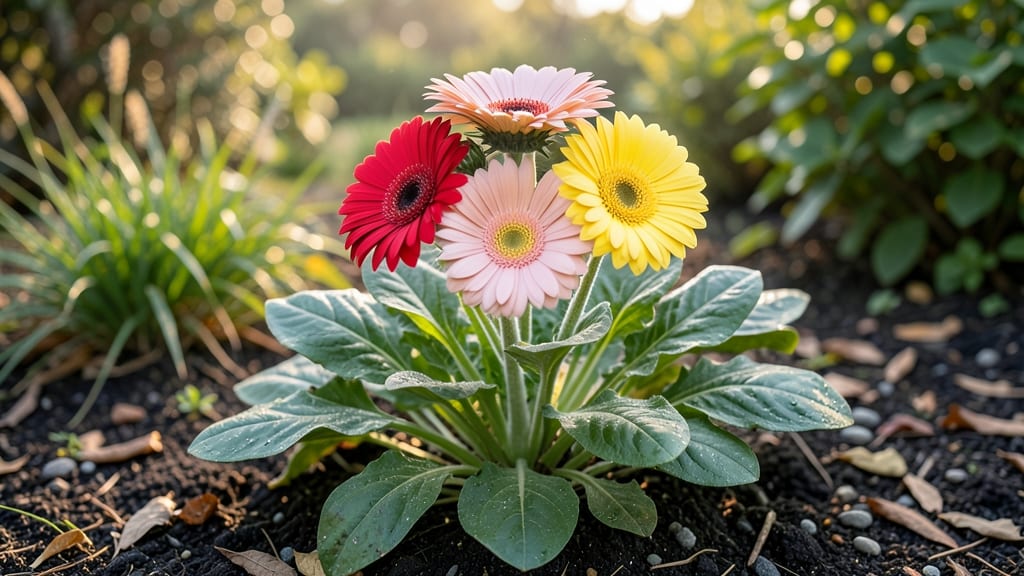
Gerbera daisies do not bloom all summer continuously; most varieties produce vibrant flowers in spring and fall but struggle with extreme heat, often pausing blooms during peak summer months unless provided shade or consistent moisture. Cool-season types may revive in late summer with proper care.
Gerbera daisies are seasonal bloomers, thriving in cooler temperatures that trigger their natural flowering cycles.
When summer heat exceeds 85°F, many varieties go dormant to conserve energy, with some even dropping buds entirely. 🌞 The key is understanding their heat thresholds—most hybrids need afternoon shade and 1-2 inches of water per week to prevent stress.
I’ve seen heat-tolerant varieties like 'Terracotta' or 'Marmalade' extend blooming into late summer, but even they need consistent care to avoid wilting.
What’s interesting is how humidity plays a role—dry heat stresses gerberas faster than muggy conditions. If you’re in a hot climate, morning watering and mulch can make all the difference. The good news? With the right adjustments, you can coax blooms back in late summer when temperatures dip slightly.
💡 In This Article
- Why Gerbera Daisies Skip Summer Blooming
- Extending Gerbera Blooms Through Summer Care
Why gerbera daisies skip summer blooming
Gerbera daisies are native to South Africa's cooler, high-altitude regions where summer temperatures rarely exceed 75°F. When exposed to prolonged heat above 85°F, their metabolic processes shift from blooming to survival mode.
The plant's energy diverts from flower production to root and leaf development, causing buds to drop or fail to open. This response is triggered by a combination of heat stress and reduced photosynthesis efficiency in hot conditions.
The photoperiod (day length) also plays a role—gerberas are short-day plants, meaning they bloom best when daylight hours are 12-14 hours. During summer solstice, days can stretch to 14-16 hours in many regions, confusing the plant's internal clock. 🌡️ The result?
Buds either abort or remain closed. Even humidity matters: dry heat accelerates water loss through transpiration, while high humidity (above 70%) can promote fungal stress, both of which inhibit blooming.
What's fascinating is how gerberas handle temperature fluctuations. Most varieties enter a semi-dormant state when nighttime temperatures stay above 65°F—a threshold that prevents proper metabolic recovery. This explains why they often bloom sporadically in late summer when cooler evenings return.
The plant's natural defense mechanism is to conserve water and energy until conditions improve.
Scientifically, this heat response involves ethylene gas production—a plant hormone that accelerates senescence (aging) in flowers. When gerberas experience three consecutive days above 90°F, ethylene levels spike, causing petal drop within 24-48 hours.
This is why you might see vibrant buds suddenly wilt even with proper watering. The plant prioritizes root health over floral display during extreme heat.
Not all gerbera varieties react the same way. Cool-season types like 'White Lady' may completely halt blooming, while heat-tolerant hybrids like 'Marmalade' produce fewer but more resilient flowers.
The difference lies in their genetic adaptation—some have thicker wax coatings on leaves to reduce water loss, while others develop deeper root systems to access moisture during drought.
One visual clue to watch for is leaf color. Healthy gerbera leaves are deep green with a slight waxy sheen.
When stressed by heat, they turn dull gray-green and may curl at the edges—a clear sign the plant is conserving water. 💧 This physiological response is your first warning that blooming will pause until conditions improve.