
Blooming
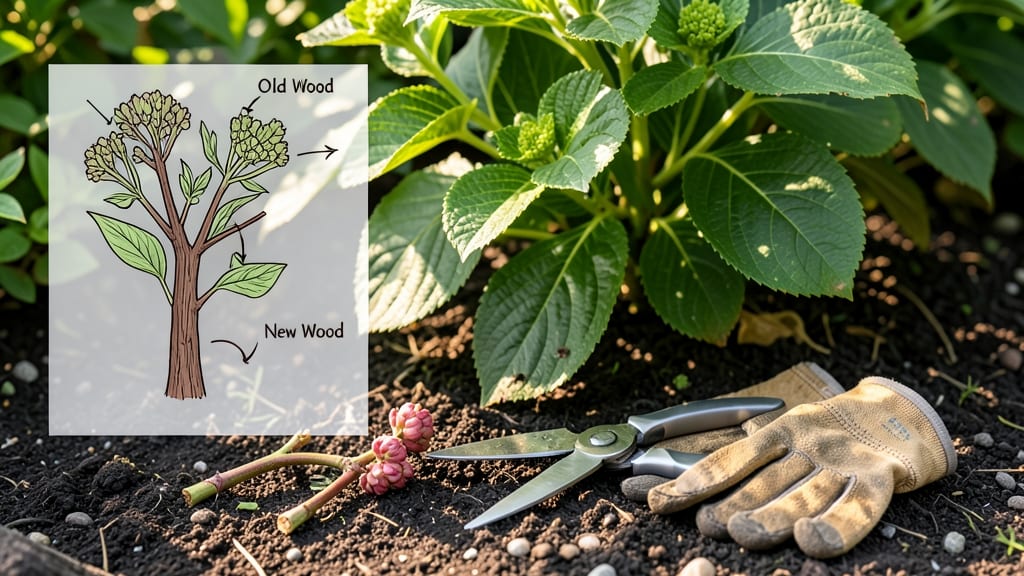
Limelight hydrangeas bloom on old wood, meaning their flowers develop on previous season’s growth rather than new shoots. Prune after blooming to preserve buds for next year’s vibrant lime-green flowers, avoiding cuts that remove last year’s stems entirely.
This means their flower buds form during the dormant season on last year's stems, not the fresh growth you see in spring.
Unlike some hydrangeas that bloom on new wood, Limelight varieties rely entirely on those mature branches for their signature lime-green blooms. 🌿 Cutting back too early or too aggressively can leave your plant with no flowers the following year, since the buds are already set by late summer.
I always wait until after the blooms fade completely before touching my pruners, giving the plant time to prepare for next season's display.
Think of it like saving seeds for a garden—you wouldn't dig up your tomato plants right after harvest, even if they look spent. The same principle applies here: those seemingly dead stems are actually holding the promise of next year's stunning blooms.
This is why Limelight hydrangeas often produce their most dramatic displays when given proper care and timing.
💡 In This Article
- Why Limelight Hydrangeas Rely on Old Wood for Blooms
- Step-by-Step Pruning Guide for Limelight Hydrangeas
Why Limelight hydrangeas rely on old wood for blooms
The secret behind Limelight hydrangeas' stunning lime-green blooms lies in their unique flowering cycle. Unlike many plants that produce flowers on new growth, these hydrangeas form their flower buds during the plant's dormant period—typically between late summer and early fall.
These buds develop on the previous year's stems (called "old wood"), which is why aggressive pruning in early spring can eliminate next year's blooms entirely. 🌱 The buds remain dormant through winter, then burst into color when temperatures rise in spring.
This process differs dramatically from new-wood bloomers like panicle hydrangeas, which produce flowers on current season's growth. For Limelight varieties, the flower buds are already set by mid-August, meaning any pruning before then risks removing those critical buds.
The plant's energy focuses on developing these buds during dormancy, a process that requires 60-90 days of cool temperatures to complete properly. If you prune too early, you're essentially cutting off the plant's future blooms before they've even formed.
What makes this even more fascinating is how the plant's growth hormones work. During dormancy, the plant produces auxins that signal the development of flower buds on mature stems.
These hormones are most active in late summer, which is why waiting until after blooming (typically September or October in most climates) gives the plant time to complete this critical process.
The old wood isn't just "last year's growth"—it's actively preparing for next year's display while appearing completely dormant to the untrained eye.
Here's a visual way to think about it: Imagine a tree where the fruit forms on last year's branches rather than new shoots. If you pruned those branches too early, you'd have no fruit next season.
The same principle applies to Limelight hydrangeas, where the "fruit" is their spectacular lime-green blooms. This is why you'll often see these hydrangeas producing their most abundant flowers when given proper care and pruning timing.
The plant's survival strategy makes perfect sense when you consider its natural habitat. In the wild, Limelight hydrangeas (originally from Japan) grow in forests where they compete for sunlight.
By developing buds on old wood, the plant can quickly produce flowers when conditions are optimal, rather than waiting for new growth to mature. This adaptation gives them a competitive edge in their native environment—and explains why they reward patient gardeners with such dramatic displays each year. ✨
One common misconception is that old wood is "dead" or unproductive. In reality, those woody stems are packed with stored nutrients and the potential for next year's blooms.
The key is to recognize that what appears to be dead growth is actually the plant's hidden treasure—its future flowers waiting to emerge. This understanding changes how you approach pruning entirely, shifting from aggressive cutting to careful shaping that preserves these vital stems.
For gardeners new to Limelight hydrangeas, this botanical quirk might seem counterintuitive. After all, why wouldn't you prune back all that "dead" wood? The answer lies in the plant's remarkable ability to produce flowers from mature stems while still maintaining healthy new growth for leaves and structural support.
This dual capability is what makes Limelight hydrangeas such versatile and rewarding plants in the garden. 🌿