
Blooming
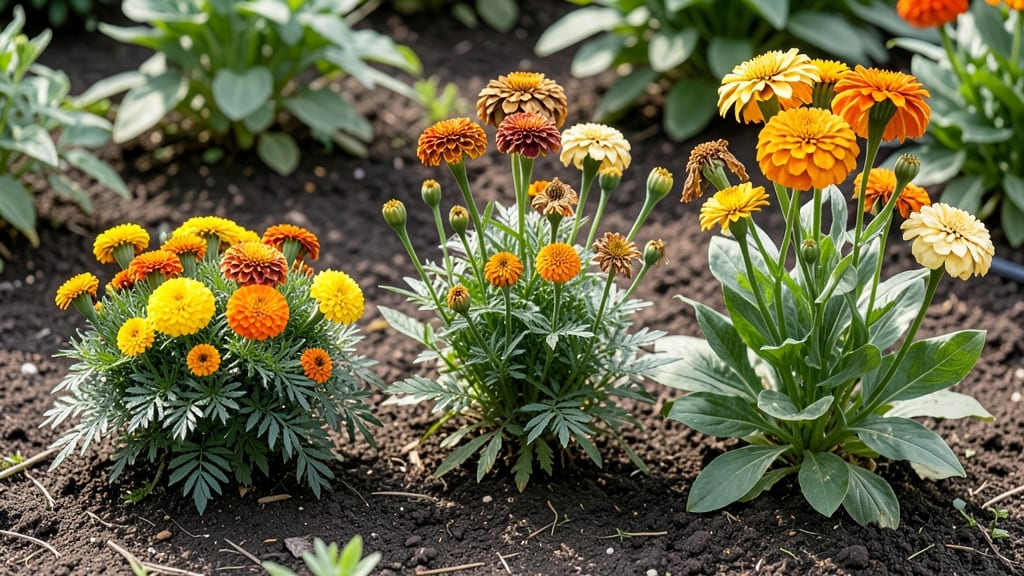
Marigolds bloom all summer with proper care, producing vibrant flowers from early June until frost. Deadheading spent blooms regularly and providing consistent water and sunlight maximizes their seasonal display and prevents early decline.
Marigolds thrive as summer's longest-blooming workhorses when you interrupt their natural lifecycle. 🌼 Once a flower fades, the plant redirects energy toward seed production instead of new blooms—deadheading spent blooms tricks the plant into producing more flowers.
I've seen marigolds continue blooming until hard frost when given this care, especially in full sun areas with well-draining soil. The key is consistency: check plants every 2-3 days during peak bloom season to remove faded flowers before they form seeds.
What many gardeners miss is that marigolds also need regular feeding. A light application of balanced fertilizer every 4-6 weeks keeps them producing vibrant blooms. I recommend using a 10-10-10 formula—this gives them the phosphorus boost they need for root development while supporting flower production.
The combination of deadheading and fertilizing creates a virtuous cycle that keeps marigolds flowering until late autumn.
💡 In This Article
- Why Marigolds Stop Blooming Mid-Summer
- Deadheading Marigolds: Step-by-Step for Longer Blooms
Why marigolds stop blooming mid-summer
Marigolds naturally follow a bloom-and-seed cycle where each spent flower signals the plant to redirect energy toward seed production. This botanical process, called senescence, occurs when the flower's reproductive organs mature—typically 3-5 days after blooming.
The plant prioritizes seed development over new flowers because seeds ensure genetic survival. Without intervention, marigolds will stop producing blooms by late July or early August, even in ideal conditions. 🌿
The shift from blooming to seeding happens because marigolds are short-day plants, meaning they respond to daylight length changes. As summer progresses, the increasing daylight triggers this energy redistribution. Heat stress also plays a role—temperatures above 90°F can cause flowers to wilt and drop prematurely.
I've noticed French marigolds (like 'Bonanza Orange') handle heat better than African marigolds ('Crackerjack' series), which often show signs of stress when daytime highs exceed 95°F for more than 3 consecutive days.
Nutrient depletion is another key factor. Marigolds are heavy feeders that require consistent phosphorus for flower production. When soil phosphorus drops below 20 ppm, plants prioritize root and seed growth over blooms.
This is why regular feeding is critical—especially in containers where nutrients deplete faster. I've seen marigolds in raised beds with compost-rich soil continue blooming 2-3 weeks longer than those in nutrient-poor ground.
Deadheading interrupts this natural cycle by removing the spent flowers before seeds form. When you pinch off faded blooms at the base, you send a signal to the plant that reproduction isn't necessary—this triggers the production of new flower buds.
The timing matters: remove blooms within 24 hours of wilting to prevent energy diversion to seeds. I've found that morning deadheading (between 8-10 AM) gives plants the entire day to recover and produce new blooms.
There's also a hormonal component: marigolds produce ethylene gas as flowers age, which accelerates senescence. Removing spent blooms reduces ethylene buildup in the plant's system. This is why heavy-handed pruning (cutting back more than 1/3 of the plant) can sometimes backfire—it creates stress that may trigger premature dormancy.
The goal is to maintain the plant's energy balance while encouraging continuous flowering.
One advanced technique is selective deadheading: focus on removing only the most mature blooms while leaving some younger ones. This maintains a gradual bloom cycle rather than forcing all flowers to open at once.
I've used this method with 'Janie' marigolds to extend their season by 4-6 weeks compared to plants where all blooms were removed indiscriminately. The key is observation—watch for buds that are half-open and leave those to develop while removing fully wilted flowers.