
Blooming
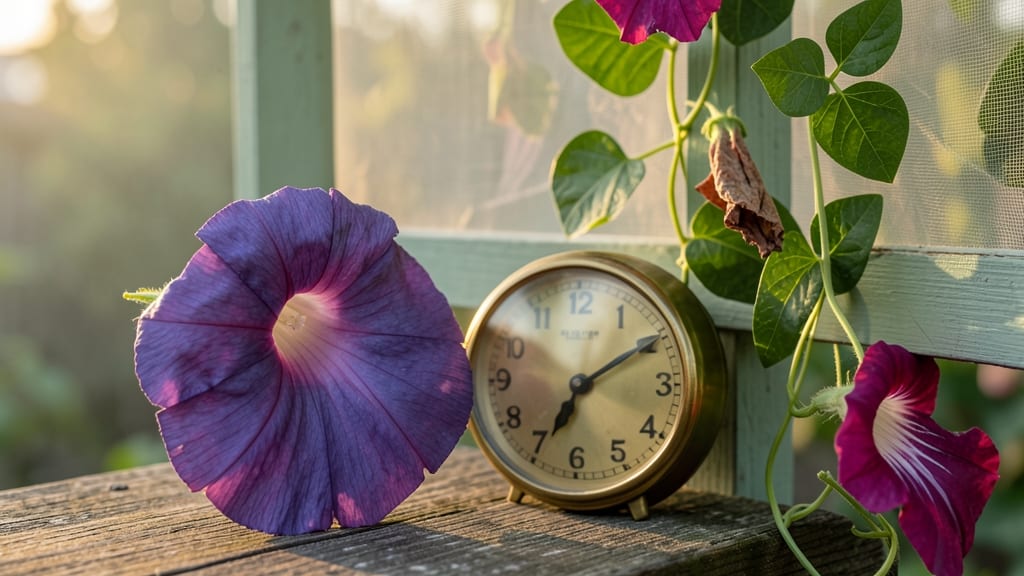
Do morning glories only bloom in the morning? Not exactly—most varieties open at dawn and wilt by midday, but tropical and heat-resistant types like Ipomoea quamoclit may stay open longer or rebloom later in warm conditions. Environmental factors like sunlight and temperature play a key role in their bloom patterns.
While the name suggests they only bloom in the morning, most morning glory species follow a strict photoperiodic schedule: they open with sunrise and close by noon. Tropical varieties break this rule by staying open longer or even reblooming in hot climates, thanks to their ability to handle higher temperatures. 🌞 The key difference lies in their genetic adaptation—some types evolved to thrive in shorter daylight cycles, while others developed heat tolerance that extends their bloom window.
If you're growing morning glories in a warm region, choosing heat-tolerant varieties can give you flowers that last well into the afternoon.
Light exposure also plays a crucial role. Morning glories need full sun to trigger their blooming cycle, but too much direct afternoon heat can cause them to close early. Pruning can encourage more blooms by redirecting energy, while consistent watering helps maintain their vigor.
For gardeners in cooler climates, selecting early-blooming varieties ensures you get the most vibrant flowers before the heat sets in.
💡 In This Article
- How Light and Temperature Affect Morning Glory Bloom Timing
- Best Morning Glory Varieties for Extended or Repeated Blooms
How light and temperature affect morning glory bloom timing
Morning glories rely on a biological process called photoperiodism, where their blooms respond directly to sunlight duration.
Most temperate varieties open their flowers at dawn because their internal clock triggers a rapid increase in ethylene gas production when exposed to morning light—this gas causes the bud to expand within 1-2 hours.
However, by 10 AM to noon, the flowers begin to wilt as temperatures rise and light intensity peaks, signaling the plant to close them.
This cycle repeats daily, but tropical varieties like Ipomoea quamoclit have adapted to handle longer daylight exposure, often staying open until 2 PM or later in warm climates.
The temperature threshold for bloom closure sits around 75-80°F—once exceeded, most morning glories will shut their flowers to conserve moisture and prevent heat damage.
This is why gardeners in hot regions notice their morning glories closing earlier than expected. 🌡️ The plant’s stomata (pores) also respond to heat by closing, which reduces water loss but accelerates the wilting process.
Tropical varieties, however, have evolved thicker cell walls that resist wilting longer, allowing them to maintain bloom structure even as temperatures climb.
Light quality matters too. Morning glories prefer direct sunlight for 6-8 hours daily, but the spectrum of light changes as the sun rises and sets. Blue light in morning sunlight triggers bloom opening, while the redder wavelengths of afternoon light accelerate closure.
This is why shaded morning glories may open later or stay closed longer—they lack the blue light stimulus needed to kickstart their blooming cycle. For gardeners in cloudy regions, supplementing with grow lights can help regulate bloom timing more predictably.
Thermoregulation plays a hidden role too. Morning glories grown in cooler climates (60-70°F) often bloom for longer periods because their metabolic rate slows, delaying the wilting process.
In contrast, heat-tolerant varieties like Ipomoea tricolor have a faster metabolic turnover, allowing them to rebloom within 24-48 hours under ideal conditions. This adaptation explains why tropical morning glories can produce multiple blooms per season, while temperate types may only flower once.
Consider this comparison: A standard morning glory in New England (cool summers) will open at 6 AM and close by 11 AM, while the same variety in Florida (hot summers) might open at 7 AM but wilt by 1 PM due to higher temperatures.
The key takeaway? Selecting heat-resistant varieties and providing afternoon shade can extend bloom duration by 2-4 hours in warm climates.
For gardeners experimenting with bloom timing, try these adjustments: Prune back leggy vines to encourage bushier growth (which produces more buds), mulch to keep root zones cooler, and water deeply in the morning to reduce afternoon heat stress.
These small changes can make a noticeable difference in how long your morning glories stay vibrant. 🌸