
Blooming
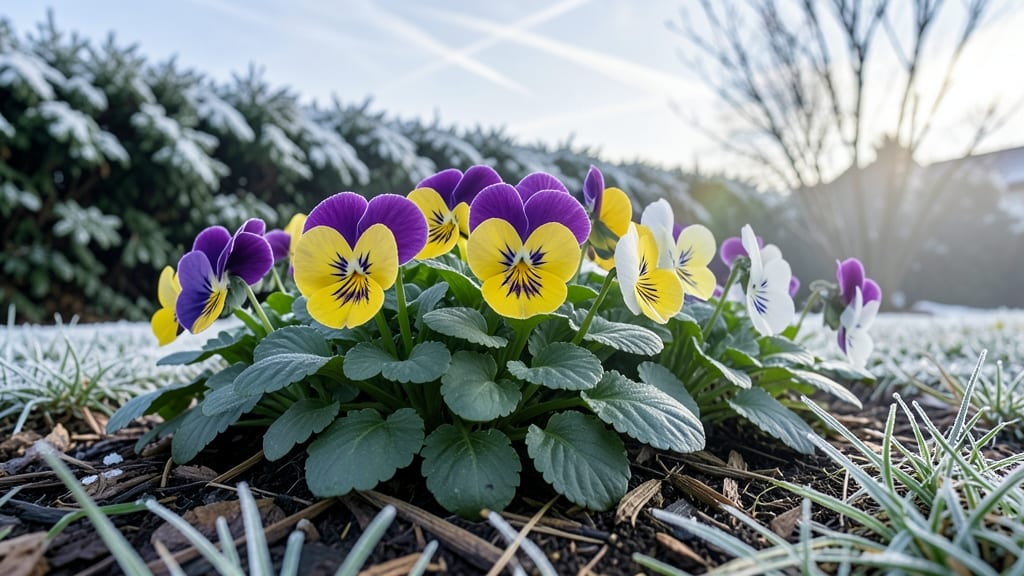
Pansies bloom in winter and thrive in cold weather, making them perfect for frost-resistant gardens. Many varieties keep flowering through light freezes, adding bright color to winter landscapes.
These hardy flowers actually prefer cooler temperatures—they bloom best between 40°F and 60°F, and some varieties even handle 20°F without damage. 🌨️ The secret lies in their cold-hardy genetics, which pause summer dormancy and restart growth when temperatures drop.
Unlike spring-blooming flowers, pansies store energy differently, allowing them to push through frost while others retreat.
For gardeners, this means you can enjoy year-round color with minimal effort. Just plant them in well-draining soil with morning sun and afternoon shade, and they'll reward you with nonstop blooms from fall through spring.
The key is choosing cold-hardy cultivars like 'Ice Dance' or 'Matrix'—these varieties are bred specifically to handle winter's chill.
💡 In This Article
- Why Pansies Flourish in Cold Weather
- Best Winter-Blooming Pansy Varieties for Cold Climates
Why pansies flourish in cold weather
Pansies thrive in winter thanks to their unique botanical adaptations, particularly their ability to regulate growth through temperature changes. Unlike many flowers that enter dormancy during cold months, pansies have a built-in mechanism called vernalization—a process where exposure to cold temperatures actually triggers or accelerates flowering.
This is why they bloom prolifically when most other garden flowers are dormant. Their optimal temperature range for growth and flowering is between 40°F and 60°F, which perfectly aligns with winter and early spring conditions in many regions.
The key to their cold hardiness lies in their cell structure. Pansies produce special proteins called antifreeze proteins, which prevent ice crystals from forming in their cells during light freezes.
These proteins bind to ice nuclei, lowering the freezing point of water within plant tissues—similar to how antifreeze works in car engines. This allows pansies to survive temperatures as low as 20°F without permanent damage, while many other flowers would suffer frost damage at just 30°F.
Their leaves also contain higher levels of soluble sugars, which act as natural cryoprotectants, further protecting cellular structures from cold-induced damage.
Another fascinating adaptation is their ability to photosynthesize efficiently in low light conditions. During winter, pansies can still produce energy through C3 photosynthesis, which operates well in cooler temperatures and lower light intensity.
This means they don't require the intense sunlight that summer flowers need, allowing them to continue blooming even when days are short.
Their deep root systems also help anchor them in place and access moisture from deeper soil layers, which remains more stable in temperature than surface soil during winter fluctuations.
What sets pansies apart from other winter flowers is their extended blooming window.
While many winter-blooming flowers like hellebores or winter jasmine produce flowers in late winter or early spring, pansies begin flowering in fall and continue through spring, providing nonstop color for up to 8-10 months in ideal conditions.
This continuous blooming is possible because pansies don't rely on a single flush of flowers like many spring-blooming plants—they produce flowers along their stems in a staggered pattern, ensuring fresh blooms throughout the season.
For gardeners, this cold tolerance translates to low-maintenance winter color. Unlike tender annuals that must be replaced each season, pansies often return year after year, especially in mild winter climates.
Their ability to withstand light frosts means you can plant them in fall and enjoy their vibrant displays without worrying about winter damage. The trade-off is that pansies may become leggy or produce fewer blooms if summer temperatures exceed 75°F, as they prefer cooler conditions year-round.
Consider this comparison: While petunias (which share the same family) typically require removal in winter, pansies continue to thrive.
Their cold tolerance is so well-developed that some gardeners in Zone 5 and above can leave pansies planted in the ground year-round, using them as living mulch that protects soil from erosion while providing beauty.
This hardiness makes pansies one of the most reliable winter-blooming flowers for gardeners seeking color during the coldest months.