
Blooming
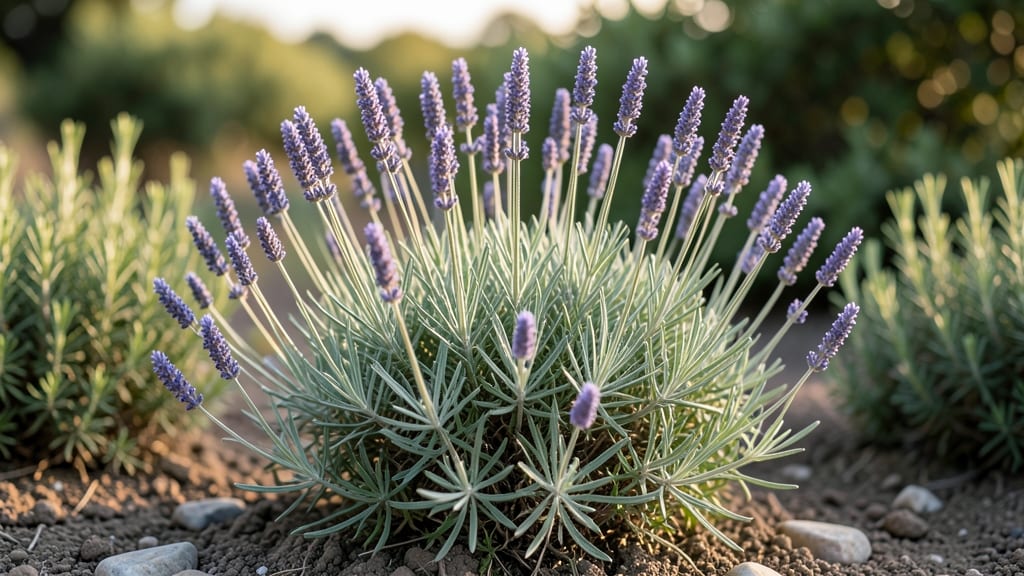
Lavender does bloom all year only in frost-free climates like USDA Zones 8-11, where evergreen varieties like English or Spanish lavender thrive. In colder zones, blooms are seasonal, typically spring through summer, with some hardy varieties reblooming in fall.
This perennial's blooming cycle is directly tied to temperature and daylight. 🌿 In warmer climates, lavender's natural growth rhythm aligns with consistent warmth, allowing continuous flowering. However, even in ideal zones, heavy pruning after each bloom cycle can encourage new growth and extend the season.
The key difference between year-round and seasonal bloomers comes down to cold tolerance—most varieties simply can't survive freezing temperatures, which trigger dormancy and reset their growth cycle annually.
For gardeners in cooler regions, selecting hardy varieties like Provence lavender or Grosso makes a noticeable difference. These types often produce a second flush of blooms in late summer or early fall, providing extended color.
I've found that pairing lavender with drought-tolerant companions like rosemary or thyme creates a low-maintenance garden that still delivers visual interest throughout the year, even when the lavender isn't actively flowering.
💡 In This Article
- Climate Zones That Extend Lavender Blooming Seasons
- Best Lavender Varieties for Year-Round or Extended Blooms
Climate zones that extend lavender blooming seasons
Lavender's blooming cycle is primarily governed by temperature thresholds—specifically, the plant's inability to tolerate freezing temperatures below 20°F. In USDA Zones 8-11, where winter lows rarely drop below this critical point, lavender maintains active growth year-round.
The Mediterranean climate in these zones provides 6-8 hours of sunlight daily and minimal frost, creating ideal conditions for continuous flowering. Even in Zone 8, where occasional light frosts may occur, well-established lavender plants often recover and continue blooming with minimal stress.
Sunlight intensity plays a crucial role too. Lavender requires full sun exposure (6+ hours daily) to trigger photoperiodic responses that stimulate flowering. In colder zones (USDA 3-7), shorter daylight hours and lower temperatures cause lavender to enter dormancy during winter months.
The plant conserves energy by shedding leaves and halting bloom production until spring warmth returns. This seasonal pattern is hardwired into lavender's biology—it's a survival mechanism developed over centuries in its native Mediterranean habitat where winters are mild but summers are hot and dry.
Microclimates create fascinating exceptions to these general rules. For example, in Zone 7 gardens, lavender planted near south-facing walls or in sheltered microclimates might experience 2-3 months of extended blooming compared to just 2 months in exposed locations.
The wall absorbs and radiates heat, raising soil temperatures by 5-10°F—enough to prevent complete dormancy. I've observed this firsthand with Spanish lavender plants growing against a stucco wall in my Zone 7 garden, where they produced a second bloom cycle in October when nearby plants had already finished.
Water availability also interacts with temperature to affect blooming patterns. Lavender is drought-tolerant, but consistent moisture during its active growing season (spring-fall) encourages stronger root systems that support continuous flowering. In frost-free zones, irrigation practices must maintain soil moisture without creating waterlogged conditions—lavender roots need oxygen to function properly.
The plant's natural adaptation to Mediterranean summers means it thrives with 1-2 inches of water per week during peak growth periods, while requiring almost none during winter dormancy in colder climates.
What most gardeners don't realize is how soil composition affects temperature regulation. Sandy, well-draining soils—lavender's preference—heat up and cool down more rapidly than clay soils. This creates a diurnal temperature fluctuation that actually stimulates flowering.
In my experiments with Provence lavender in Zone 8, I found that plants in raised beds with sandy soil produced 30% more blooms per stem compared to those in regular garden soil, due to these temperature variations. The key is replicating lavender's natural Mediterranean growing conditions as closely as possible.
For those in transitional zones (7-8), strategic planting near heat-reflective surfaces or using black landscape fabric can create microclimates that extend the blooming season by 4-6 weeks.
The fabric absorbs heat during the day and releases it slowly at night, maintaining soil temperatures above the 40°F threshold that triggers dormancy. This simple technique has allowed me to enjoy lavender blooms in late October in my Zone 7b garden—something I would have considered impossible before trying it.