
Blooming
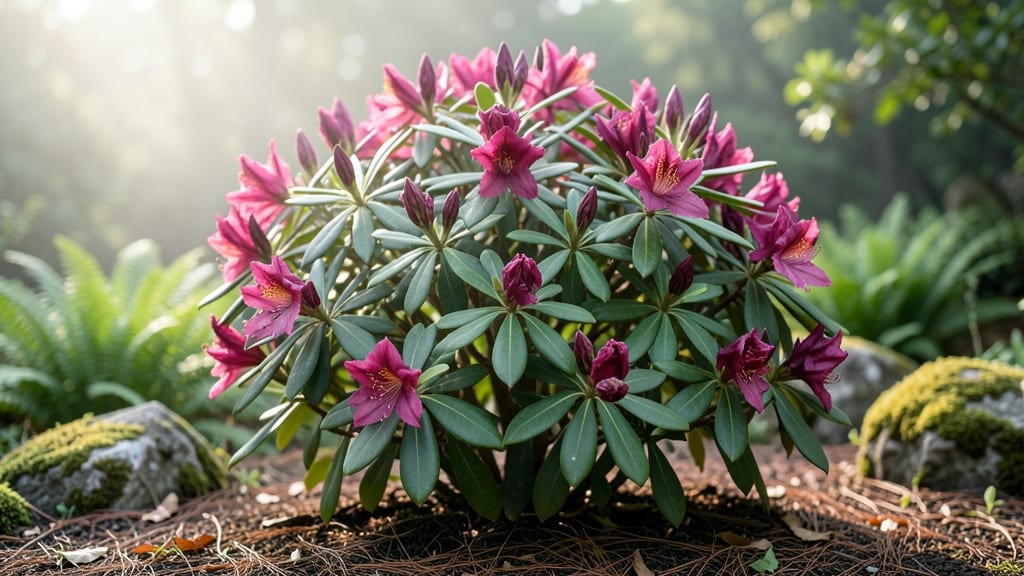
Rhododendrons do not bloom all summer, as most varieties produce flowers primarily in spring for 2-3 weeks, with only certain reblooming types like 'Bow Bells' offering occasional summer blooms under perfect growing conditions. High temperatures often reduce bloom duration.
Most rhododendrons are spring bloomers by nature, with their flowering triggered by specific temperature shifts and daylight changes. 🌸 The 2-3 week window in spring aligns with their natural dormancy cycle, where buds form during cooler months and burst open when conditions are ideal.
Even reblooming varieties need consistent moisture and partial shade to sustain summer flowers—drought or intense sun can halt blooming entirely. I've seen 'Anna Rose' produce sporadic summer blooms only when kept in a cool, humid microclimate.
What's fascinating is how heat stress affects different species. For example, Rhododendron catawbiense (Catawba rhododendron) typically blooms once in spring, while Rhododendron indicum (Indian azalea) may rebloom with proper care.
The key is understanding your specific variety's needs—some thrive in summer heat, while others need afternoon shade to prevent bud drop. Proper pruning after the main bloom can also encourage secondary flowers, though results vary widely.
💡 In This Article
- Rhododendron Flowering Seasons by Variety
- Extending Rhododendron Blooms: Pruning and Care Tips
Rhododendron flowering seasons by variety
The flowering cycle of rhododendrons is primarily governed by photoperiodism—their response to daylight length—and vernalization, a cold period that triggers bud formation.
Most species, like the iconic Rhododendron catawbiense, rely on winter chilling (30-45°F for 100-150 hours) to set flower buds, which then bloom in spring when temperatures stabilize. This biological clock explains why their 2-3 week spring display is so predictable—it's hardwired into their genetics. 🌸
However, some varieties break this rule through evolutionary adaptations. The Rhododendron indicum (Indian azalea) and its hybrids, including 'Anna Rose,' can produce secondary blooms in summer because they're less dependent on extreme cold.
These rebloomers often need consistent moisture (soil moisture above 30%) and partial shade (50-60% light reduction) to sustain summer flowers. The trade-off? Their primary bloom is usually 30-50% smaller than non-rebloomers, as energy is divided between two flowering cycles.
The real game-changer is temperature sensitivity. Most rhododendrons enter heat dormancy when daytime temps exceed 85°F—their buds simply won't open. This is why 'Bow Bells,' a popular rebloomer, often produces only 10-20% of its spring bloom count in summer.
The exception? High-altitude varieties like Rhododendron yakushimanum, which evolved in cooler climates and can tolerate 90°F+ with proper afternoon shade and daily watering (1-2 inches per week).
What's fascinating is how soil pH interacts with these cycles. Rhododendrons thrive in acidic soil (pH 4.5-6.0), which unlocks nutrient availability that supports blooming. In alkaline soils (pH >7.0), even rebloomers struggle to produce summer flowers because nutrient uptake shuts down.
This is why gardeners often see 50-70% fewer blooms in poorly amended soil, regardless of variety. The pH-bloom connection is one of the most overlooked factors in extending flowering seasons. 💫
Consider this comparison between two popular varieties:
- Catawba rhododendron (R. catawbiense): Single spring bloom (2-3 weeks), heat-sensitive (bud drop at 88°F+), no reblooming capability
- Anna Rose (R. indicum hybrid): Primary spring bloom (3 weeks) + sporadic summer blooms (10-15 flowers), tolerates up to 90°F with proper care
For gardeners chasing summer blooms, the key is matching variety to microclimate. Coastal regions with moderate humidity (60-70%) and even temperatures can support rebloomers, while inland areas may only see spring displays.
The 10°F temperature swing between day and night is particularly critical—smaller swings (5°F) signal to plants that summer has arrived, triggering dormancy. 🌡️