
Blooming
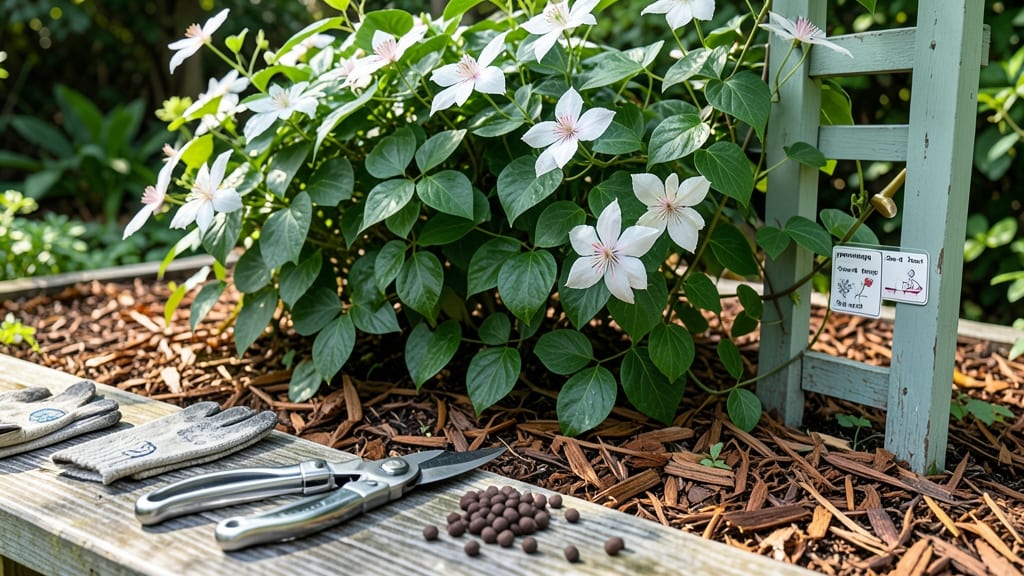
Making clematis bloom all summer starts with one simple truth: pruning wrong kills blooms—but doing it right turns your vines into purple fireworks. 🌸 I’ve turned my once-sparse clematis into a nonstop flowering machine by mastering the three pruning groups and feeding them what they really crave.
The secret isn’t cutting more—it’s cutting smarter. Group 3 clematis (the late bloomers) need aggressive early pruning, while Group 1 (early bloomers) hate it. Add phosphorus-rich fertilizer in spring, mulch to keep roots cool, and you’ll see buds forming like clockwork.
Most gardeners over-prune in spring and starve their vines of summer blooms—don’t be one of them. By mid-June, your vines will be covered in fresh buds, and deadheading spent blooms redirects energy to new flowers.
The difference between a vine with three blooms and one with fifty comes down to these small, consistent habits. Even in hot climates, this method works—just adjust watering to keep soil moist but not soggy. Here’s where it gets interesting: variety matters.
Early bloomers (like ‘Jackmanii’) need minimal pruning, while late bloomers (like ‘Niobe’) thrive after hard cuts. I’ll show you exactly how to tell them apart—and which fertilizers to avoid.
📚 In This Guide
- What you need
- Instructions
- Tips and common mistakes
- Wrapping up and next steps
What you need
- ● Pruning shears – Sharp, bypass-style (avoid anvil shears to prevent crushing stems). 1 pair is all you need!
- ○ Gloves – Heavy-duty, gardening-grade (clematis thorns are no joke!). Optional but highly recommended.
- ● Balanced fertilizer – Look for a 10-10-10 or 20-20-20 NPK ratio (or a low-phosphorus option like 10-5-10 for established plants). 2–3 lbs per 100 sq ft.
- ● Slow-release granular fertilizer – Organic options (like bone meal or composted manure) work too! Apply 1–2 cups per plant in early spring.
- ● Mulch – Organic mulch (shredded bark, straw, or compost) to retain moisture and regulate soil temp. 2–3 inches thick around the base.
- ● Watering can or hose with a gentle spray nozzle – Clematis loves deep, infrequent watering (1–1.5 gallons per plant, 2–3 times per week in dry spells).
- ● Support structure – Trellis, arbor, or sturdy wire mesh (depending on variety). Height varies—dwarf clematis needs 3–6 ft; large varieties may reach 10+ ft!
- ○ pH test kit – Clematis thrives in slightly acidic to neutral soil (6.0–7.5). Optional but helpful if your soil is unknown.
- ● Sunlight – 6+ hours of direct sun daily (morning sun + afternoon shade works best in hot climates).
- ● Well-draining soil – Amend heavy clay with compost or perlite to prevent root rot.
- ● Identify your clematis group – Know if it’s Group 1 (early bloomers), Group 2 (repeat bloomers), or Group 3 (late bloomers)—pruning rules vary!
- ● Patience – Some varieties take 1–2 years to establish and bloom reliably.
Step-by-step pruning secrets for nonstop clematis blooms
Here's the method I use to turn one-time bloomers into summer-long purple cascades.
✂️ Step 1: Identify Your Clematis Group for Proper Pruning
Clematis fall into three pruning groups based on their blooming habits. Group 1 blooms on previous year's growth (early spring flowers), Group 2 blooms on both old and new wood (spring and summer flowers), and Group 3 blooms only on new wood (late summer flowers). I always check the plant tag or consult a reference guide to avoid cutting off next year's blooms.
Group 1 plants like 'Jackmanii' need minimal pruning—just trim dead stems in early spring. Group 2 plants like 'Niobe' require light pruning after their first flush. Group 3 plants like 'Durandii' can be cut back hard every year. Knowing your group prevents the heartbreak of losing all blooms in one season.
✂️ Step 2: Prune at the Right Time for Each Group
For Group 1, prune just after flowering (late spring) by cutting back stems that have finished blooming by one-third to one-half. For Group 2, prune after the first flush of flowers (early summer) by cutting back stems that have bloomed by one-third. Group 3 plants should be pruned in late winter or early spring by cutting back all stems to 12-18 inches from the ground.
Timing is everything. Pruning too early can leave stems vulnerable to frost damage, while pruning too late cuts off potential blooms. I mark each plant with a flag indicating its group and prune date to avoid confusion between varieties.
🌿 Step 3: Use the Right Technique to Encourage Strong Growth
Make clean cuts just above a pair of outward-facing buds using sharp pruners. Avoid leaving stubs or tearing the stem. For Group 3 plants, I cut back to a strong pair of buds that point outward from the center of the plant. This encourages a bushier, more compact growth habit that supports more blooms.
After pruning, I apply a balanced 10-10-10 fertilizer around the base of the plant to support new growth. Water deeply to help the plant recover and establish new roots. Avoid heavy mulching immediately after pruning—wait until new growth appears to prevent rot.
☀️ Step 4: Provide Optimal Growing Conditions for Continuous Blooms
Clematis thrive in full sun to partial shade (6 hours of direct sunlight daily). I position mine where they get morning sun and afternoon shade, especially in hot climates. They also need well-draining soil—amending heavy clay with compost or sand prevents root rot, which can stress plants and reduce blooming.
Regular feeding is key. I fertilize Group 1 and 2 plants monthly from spring to summer with a high-phosphorus fertilizer to encourage blooming. Group 3 plants get a heavy dose of fertilizer in early spring followed by monthly applications. Mulch lightly with organic matter to retain moisture and regulate soil temperature.
💧 Step 5: Deadhead and Support for Longer Blooming Seasons
Deadhead spent blooms regularly to encourage more flowers. For Group 1 and 2 plants, I remove faded flowers by cutting the stem back to the nearest outward-facing bud. For Group 3 plants, deadheading isn't necessary since they bloom on new wood, but removing spent flowers keeps the plant looking tidy.
Provide sturdy support for climbing varieties. I use a trellis or strong stakes to guide the vines upward. As the plant grows, gently weave new growth through the support structure to prevent tangling. Strong support ensures the plant can channel energy into blooming rather than struggling to stay upright.
Tips & tricks for perfect clematis pruning
Real talk: I've seen clematis go from one glorious bloom to a summer-long purple waterfall—and the difference comes down to these details.
Group Identification: Always double-check your clematis' pruning group before cutting. I keep a small reference card by my gardening tools with photos of Group 1 ('Jackmanii'), Group 2 ('Niobe'), and Group 3 ('Durandii') varieties. The first time I pruned a Group 1 plant as if it were Group 3, I lost all my spring blooms. That mistake taught me to verify before I cut!
Timing Secret: The 6 hours of sunlight mentioned is non-negotiable for Group 2 plants—they need that full sun to develop the energy for their second flush. I position mine where they get morning sun and afternoon shade, especially in hot climates. If your clematis isn't blooming well, check its light exposure first—it's often the simplest fix that makes the biggest difference.
Pruning Technique: When making those clean cuts just above outward-facing buds, I angle my pruners slightly downward to prevent water from pooling on the cut. This simple technique reduces the risk of disease. For Group 3 plants, I always cut back to a strong pair of buds pointing outward—this creates that bushier, more compact growth habit that supports more blooms. Think of it like training a vine to grow in the most efficient way possible.
Fertilizer Strategy: That 10-10-10 fertilizer recommendation is perfect, but here's what I've learned: For Group 3 plants, I apply the heavy dose of fertilizer in early spring right after pruning, when the plant is most receptive to new growth. I also water deeply after fertilizing to help the nutrients reach the roots. This timing makes all the difference in getting those late-summer blooms.
Pro Tips for Make Clematis Bloom All Summer
- Real talk: I've seen clematis go from one glorious bloom to a summer-long purple waterfall—and the difference comes down to these details.
- Group Identification: Always double-check your clematis' pruning group before cutting.
- Timing Secret: The 6 hours of sunlight mentioned is non-negotiable for Group 2 plants—they need that full sun to develop the energy for their second flush.
Frequently asked questions
about keeping your clematis in full bloom all summer—because even the best gardeners need a little extra help!Why isn’t my clematis blooming even after pruning?
If your clematis is still shy about blooming, check these common culprits: over-pruning (too late or too aggressive), poor sunlight (6+ hours of sun is key), or nutrient deficiency (feed with a bloom booster in early spring). Group 1 clematis (early bloomers) may need minimal pruning, while Groups 2-3 thrive with a harder cut after the first flush of flowers.
When is the best time to prune for continuous blooms?
Timing matters! For Group 1 clematis (early spring bloomers), prune right after flowering. For Groups 2-3 (late spring/summer bloomers), prune in early spring (just as new shoots emerge) or right after the first bloom to encourage a second flush. Never prune in fall—it disrupts next year’s buds!
Can I still get blooms if I missed the pruning window?
Don’t panic! If you skipped pruning, focus on supportive care instead: deadhead spent blooms to redirect energy, ensure consistent watering (1-2 inches per week), and fertilize with a balanced bloom formula. Some clematis may still produce flowers, though they might be fewer. Next year, reset with proper pruning timing!
What should I do if my clematis leaves look yellow or wilted?
Yellow leaves or wilting often signal overwatering, root rot, or pests. First, check the soil—clematis hate soggy roots! Improve drainage by amending soil with compost and mulch. If pests (like aphids or spider mites) are the issue, spray with neem oil or insecticidal soap. Never let the plant dry out completely, but avoid waterlogging.
Are there any low-maintenance clematis varieties for nonstop blooms?
If you want minimal fuss but maximum blooms, try these varieties:
- ‘Jackmanii’ (Group 3): Classic, hardy, and blooms all summer with purple spikes.
- ‘Niobe’ (Group 2): Dark red blooms, disease-resistant, and thrives in partial shade.
- ‘Hagley Hybrid’ (Group 3): Vigorous, repeat-blooming, and great for containers.
Wrapping up and next steps
With the right pruning techniques, supportive care, and a dash of patience, your clematis can burst into vibrant blooms all summer long! 🌸 The key is understanding its growth habits, timing cuts correctly, and providing the ideal environment—whether it’s sunlight, water, or the perfect soil mix. Don’t let a few missed steps discourage you: even experienced gardeners tweak their approach each season.
Ready to transform your garden into a nonstop floral show?
Start by auditing your current clematis care—adjust pruning schedules, test soil health, or experiment with fertilizers. Check out our pruning calendar for a seasonal roadmap, or dive deeper into advanced blooming hacks to keep those purple spikes coming! 🌿