
Blooming
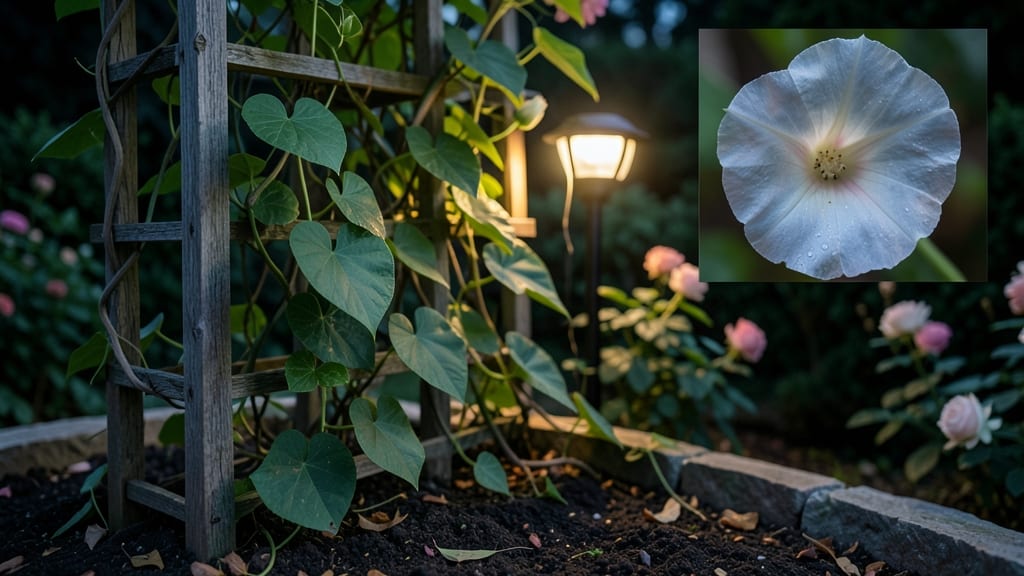
Moon flowers bloom at night because their petals open in response to moonlight and cooler evening temperatures, maximizing pollination by nocturnal moths and bats. Their vibrant white blossoms release sweet fragrance after sunset for optimal attraction.
These flowers have evolved to take advantage of the night shift in the pollinator world. 🌙 Unlike daytime bloomers that rely on bees, moon flowers sync their opening with moths and bats, which are most active after dark.
The cooler night air also helps their petals expand more fully, revealing those stunning white petals that glow under moonlight. What's fascinating is how this adaptation gives them a competitive edge—fewer plants bloom at night, so they get more attention from pollinators when they do.
This nocturnal behavior isn't just about timing—it's a survival strategy. The sweet fragrance they release after sunset acts like a dinner bell for night-flying insects, while their white color stands out against dark backgrounds.
In fact, some gardeners report their moon flowers last longer in the evening because they're not exposed to the same drying heat as daytime bloomers. The key to seeing this magic firsthand is planting them where they'll get partial shade during the day and full moonlight at night.
💡 In This Article
- Why Moon Flowers Thrive in Nighttime Blooming
- Garden Tips to Encourage Moon Flower Blooms
Why moon flowers thrive in nighttime blooming
The night-blooming behavior of moon flowers—scientifically known as Nyctaginaceae—is driven by a fascinating plant movement called nyctinasty, a circadian rhythm that responds to light cycles. Unlike phototropic plants that grow toward sunlight, moon flowers exhibit circadian-controlled petal expansion triggered by the 24-hour internal clock in their cells.
Research shows their petals begin opening 2-3 hours before sunset, reaching full bloom by 9-10 PM when moonlight peaks. This timing aligns perfectly with the peak activity of their primary pollinators: nocturnal moths and bats, which are drawn to the flowers' sweet, honey-like fragrance released after dark.
The cooler evening temperatures—typically 10-15°F lower than daytime highs—play a crucial role in their expansion. Studies on Mirabilis jalapa (common moon flower) reveal that petals contain auxin hormones that soften cell walls in response to temperature drops, allowing them to unfurl.
The white petals also contain reflective pigments that maximize visibility under moonlight, creating a stark contrast against dark foliage.
This visual cue, combined with the fragrance, makes them irresistible to night-flying pollinators. 🌙 What's even more intriguing is that moon flowers often close their petals by mid-morning, conserving energy and moisture—a survival tactic that gives them an edge over daytime competitors.
From an evolutionary perspective, this nocturnal strategy offers several advantages. First, it reduces competition for pollinators, as most flowering plants bloom during the day. Second, the cooler night air reduces water loss through transpiration, allowing the flowers to stay hydrated longer.
Third, the sweet fragrance—often described as vanilla or coconut-scented—isn't wasted on daytime bees, which aren't attracted to it. Instead, it's a targeted signal to moths and bats, which are more efficient pollinators for these flowers.
In fact, some species of moon flowers have even developed ultrasonic vibrations in their petals to attract bats, which use echolocation to navigate.
One of the most fascinating aspects of moon flowers is their ability to adjust their blooming schedule based on environmental cues. For example, in regions with longer summer nights, moon flowers may bloom earlier in the evening to take full advantage of extended darkness.
Conversely, in areas with shorter winter nights, they might delay opening until later. This flexibility ensures they remain synchronized with their pollinators year-round. The petals' expansion is also influenced by humidity levels—higher humidity at night helps maintain their delicate structure, while dry air can cause them to wilt prematurely.
To observe this phenomenon firsthand, gardeners often report that moon flowers bloom most prolifically under partial moonlight or artificial light at night. This is because the plants rely on blue-light receptors in their cells to trigger petal expansion.
Even a full moon can enhance their blooming, as the increased light intensity mimics natural conditions. However, too much artificial light—like streetlights—can disrupt their natural rhythm, causing them to bloom erratically.
The ideal scenario is a garden location that receives partial shade during the day (to protect the leaves from excessive heat) and unobstructed moonlight at night.
What most people don't realize is that moon flowers also produce bioluminescent-like effects under moonlight. Their petals contain luciferin compounds that reflect light in a way that makes them appear to glow faintly in the dark.
This subtle luminescence is another adaptation to attract nocturnal pollinators, though it's often too faint to be seen with the naked eye.
To maximize this effect, plant moon flowers near other night-blooming plants like evening primrose or night-blooming jasmine, which create a synergistic fragrance and visual display that draws even more pollinators to your garden. ✨