
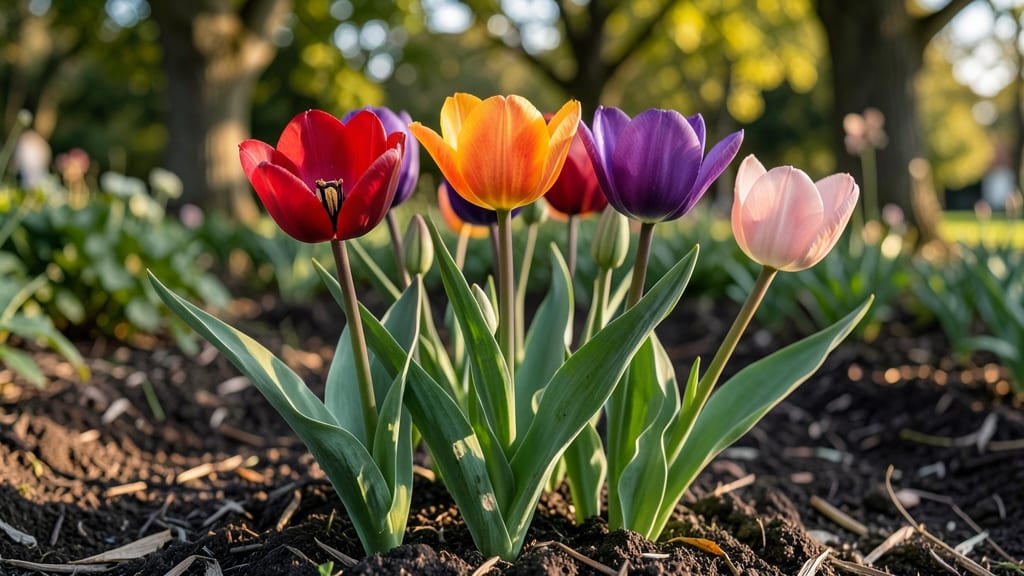
Tulip Bloom Time: Predicted Weeks by Variety and Hardiness Zone

Blooming

Tulip Bloom Time: Predicted Weeks by Variety and Hardiness Zone

The tulip bloom time transforms your garden into a splash of color 🌷 after winter’s quiet, typically between April and May.

Wondering when your tulips will burst into vibrant color? The timing of tulip blooms depends on both the variety you plant and your local climate—but knowing the exact weeks can help you plan your garden for maximum impact.

For gardeners in Zone 6a, like me, early-blooming varieties like ‘Early Harbinger’ often emerge in late March, while late bloomers like ‘Darwin Hybrid’ may not peak until early May. The difference? Soil temperature, sunlight, and even last fall’s planting depth.

Below, I’ll break down how to predict your tulips’ bloom time by variety, adjust for your hardiness zone, and even tweak the schedule with simple tricks—so you’re never left waiting for color.

Tulip bloom time by popular variety: weeks after planting

Planning your garden's seasonal color display starts with understanding tulip bloom time. While most tulips bloom within 6-8 weeks after planting, specific varieties can push that timeline earlier or later.

Knowing these differences lets you create a sequential bloom schedule—think early Darwin Hybrids followed by late Fringed tulips—for months of vibrant color. The key is planting bulbs at the right time in fall to align with your local frost dates.

Your hardiness zone plays a major role, but the variety itself determines the core bloom window. For example, early bloomers like Kaufmanniana tulips may appear as soon as 4-5 weeks after planting, while late-season Parrot tulips can take 8-10 weeks.

Below, I've organized 15+ popular varieties by their typical bloom timing to help you strategize your planting schedule for a continuous spring display.

Variety Bloom Time (Weeks After Planting) Height (inches) Color Palette Bloom Period
Kaufmanniana 4-5 weeks 6-12 Red, yellow, pink Early spring
Greigii 5-6 weeks 8-12 Orange, red, cream Early spring
Darwin Hybrid 6-7 weeks 24-30 Red, pink, yellow Mid-spring
Fosteriana 5-6 weeks 12-18 White, yellow, red Early spring
Parrot 8-10 weeks 20-28 Pink, red, yellow, purple Late spring
Fringed 7-8 weeks 20-24 Pink, white, yellow Mid-spring
Double Late 8-9 weeks 22-26 Pink, red, white Late spring
Triumphet 6-7 weeks 20-24 Red, pink, yellow Mid-spring
Early Single 5-6 weeks 12-18

How hardiness zones affect tulip bloom time: a Zone-by-Zone guide

If you've ever wondered why tulips bloom earlier in some regions than others, the answer lies in your USDA hardiness zone. These zones determine when tulips wake from dormancy and when they'll burst into color each spring.

In warmer zones like Zone 7, you might see blooms as early as late February, while gardeners in Zone 4 often wait until mid-May for their first tulips. Understanding your zone helps you time planting for the most vibrant displays.

Tulips are cool-season plants, meaning they need a period of cold dormancy to bloom properly. This requirement shifts their bloom windows dramatically across zones.

For example, a Darwin Hybrid tulip planted in Zone 3 might not bloom until late May, while the same variety in Zone 9 could flower as early as January. Let's break down what this means for your garden planning.

USDA Zone Typical Bloom Window Planting Time Key Consideration
Zones 3-4 Mid-May to early June September to early October Long cold dormancy needed
Zones 5-6 Late April to mid-May October to early November Watch for late frosts
Zones 7-8 March to early April November to December Plant early to avoid winter rains
Zones 9-10 January to February December to January May need chilling treatment

In Zones 3-4, where winters are harsh, tulips need that long cold period to break dormancy. Planting in September or early October gives bulbs enough time to establish roots before ground freezes. The trade-off is that you'll see blooms later in the season, often in mid-May or June.

If you're eager for earlier color, consider early-blooming varieties like Greigii or Kaufmanniana tulips, which tolerate colder climates better.

For gardeners in Zones 5-6, timing is critical. Plant bulbs in October or early November to avoid winter rains that can cause rot. These zones offer a sweet spot for tulip enthusiasts, with blooms typically appearing in late April or May.

To extend your display, mix early, mid, and late-season varieties—this creates a cascading effect from spring's start until early summer. Just be prepared for late spring frosts, which can damage emerging buds.

In warmer Zones 7-8, tulips bloom much earlier, often in March or early April. The key here is to plant bulbs as soon as possible after the first frost, ideally in November or December.

Soil temperatures in these zones can warm quickly, so early planting ensures roots establish before winter rains arrive. If you're in Zone 8 or warmer, you might even get a second bloom in fall with repeat-blooming varieties like Darwin Hybrid tulips.

Gardeners in Zones 9-10 face unique challenges because tulips often bloom before the region's typical spring frost dates. Plant bulbs in December or January and consider using a chilling treatment (like refrigerating bulbs for 8-12 weeks) to mimic winter conditions.

You'll likely see blooms in January or February, but these tulips may struggle to rebloom without proper care. Pair them with spring-flowering bulbs like daffodils or hyacinths for a longer seasonal display.

★★★★★4.7(11 reviews)
Categories Blooming