
Blooming
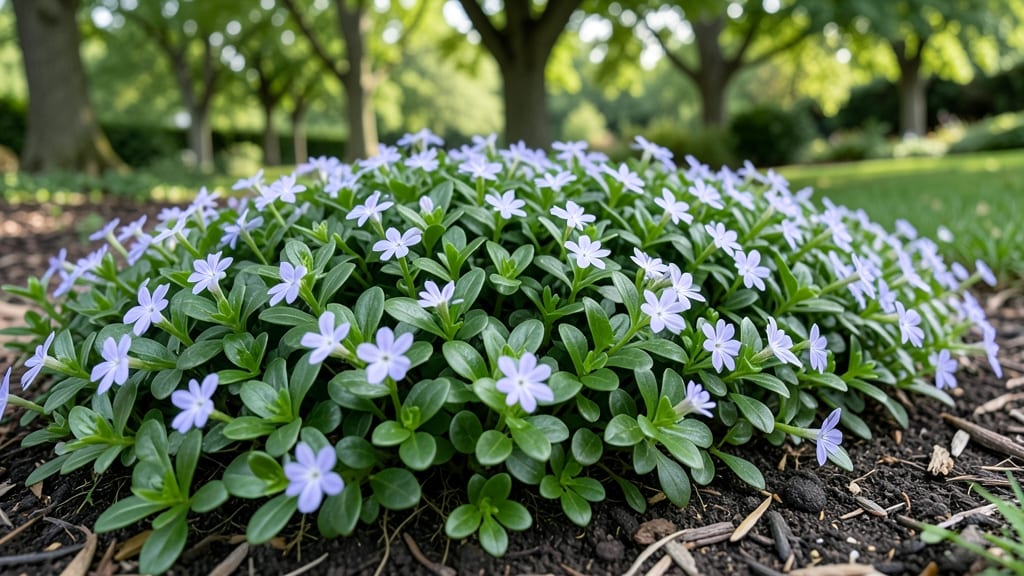
The Vinca minor bloom time spans from late spring until frost, offering gardeners a long, low-maintenance display of blue-purple flowers that brighten shady corners.
If you’ve ever planted this cold-hardy perennial hoping for quick color, you might be surprised to learn it takes patience—first-year plants often focus on root growth before blooming, but once established, they reward you with months of effortless beauty.
In USDA Zone 6a, where I garden, Vinca Minor 🌸 typically kicks off its show in May, stretching into October unless an early frost cuts it short. The secret to maximizing those blooms? Understanding how sunlight, soil, and pruning work together to extend the season.
Below, I’ll break down the exact timing by region, share my go-to tricks for coaxing extra flowers, and reveal the one pruning mistake that kills blooms faster than drought.
When does vinca minor bloom? Exact timing by US hardiness zones
Vinca minor—the evergreen groundcover with those dreamy blue-purple flowers—has one of the longest bloom windows in the perennial world. But the exact timing depends heavily on your USDA hardiness zone and whether your plant is in its first year or established. In cooler zones like Zone 4, blooms arrive later and may fade with early frost, while Zone 9 gardens enjoy near year-round color. Let’s break down the precise bloom windows so you can plan your garden for maximum impact.
The key to predicting Vinca minor bloom time lies in understanding its two-phase flowering cycle. Most varieties produce their first flush of flowers in late spring (May-June), followed by sporadic blooms through fall (until frost). However, first-year plants often bloom later or more sparsely than established ones.
For example, a Zone 5 plant might start flowering in early June but won’t reach peak performance until its second year. This delay happens because young plants prioritize root growth over flowering.
Here’s the most critical factor: frost sensitivity. While Vinca minor is hardy down to -30°F (Zone 4), its flowers are far more delicate. A light frost (28°F) can damage buds, while a hard freeze (<20°F) will kill blooms outright.
In Zones 6-7, you’ll typically see blooms until October or November, while Zones 8-9 may enjoy flowers well into December if temperatures stay mild. Always monitor your local first frost dates to time pruning and deadheading for next year’s blooms.
If you’re wondering why your first-year vinca minor isn’t blooming yet, don’t panic. These plants often take 12-18 months to establish strong roots before producing flowers. During this time, focus on soil health—amend with compost and ensure well-draining soil to encourage root development.
In my Zone 6 garden, I planted vinca in early spring and saw only a handful of blooms the first year, but by year two, it became a non-stop flowering machine from May to November.
For gardeners in warmer zones (8-9), Vinca minor can be a year-round performer with the right care. In these regions, you’ll often see two bloom cycles: one in spring (March-April) and another in fall (September-October)
To maximize blooms, I deadhead spent flowers every 2-3 weeks and avoid heavy fertilization in late summer, which can encourage leafy growth over blooms. In cooler zones (4-6), prioritize spring pruning to remove any frost-damaged stems and stimulate new growth for next year’s flowers. Light exposure plays a surprisingly big role in bloom timing. While Vinca minor thrives in partial shade (3-6 hours of sun), too much direct sunlight—especially in <
How to extend vinca minor’s bloom season naturally (without chemicals)
Want your Vinca minor to keep blooming longer? This hardy perennial naturally extends its flowering season with the right care—no chemicals needed. The key lies in understanding its growth habits and creating ideal conditions that encourage continuous blue-purple flower production from late spring through fall.
Let’s explore how to maximize those stunning blooms without shortcuts.
First, focus on pruning techniques that stimulate new growth while maintaining plant health. Vinca minor responds well to strategic trims, but timing matters. Pair this with soil amendments that provide essential nutrients without overwhelming the plant. Together, these methods create an environment where your vinca thrives and blooms abundantly.
🌸 5 Proven Ways to Extend Vinca Minor’s Bloom Season
- 1. Deadhead Regularly – Remove spent blooms every 2-3 weeks to redirect energy to new flowers.
- 2. Prune After Blooming – Trim back 1/3 of growth in early summer to encourage a second flush.
- 3. Amend Soil with Compost – Add 2-3 inches of compost in spring to boost nutrient availability.
- 4. Water Deeply in Morning – Provide 1 inch of water weekly to prevent stress and promote root growth.
- 5. Plant Near Ferns or Hostas – Companion plants create shade and moisture retention for longer blooms.
Let’s start with pruning strategies. Vinca minor blooms on new wood, meaning it produces flowers from current season’s growth. To extend the season, prune lightly after the first flush of blooms in late spring.
This encourages a second wave of flowers in early summer. Avoid heavy pruning in fall, as this can reduce next year’s blooms.
Next, focus on soil health. Vinca minor thrives in well-draining, slightly acidic soil with a pH of 6.0–7.0. Amend your soil with compost or aged manure in early spring to provide slow-release nutrients.
Avoid heavy fertilizers, which can lead to excessive foliage at the expense of flowers. A light application of balanced fertilizer (5-10-10) in early spring is often enough.
Watering plays a crucial role too. While vinca minor is drought-tolerant once established, consistent moisture during the growing season keeps it blooming longer. Water deeply in the morning to reduce evaporation and fungal risks.
Mulch around the base with 2-3 inches of organic mulch to retain moisture and regulate soil temperature. This simple step can extend your vinca’s bloom time by weeks.
Finally, consider companion planting. Pair vinca minor with ferns, hostas, or ajuga to create a microclimate that retains moisture and provides shade. These companions also deter pests, ensuring your vinca stays healthy and continues producing those vibrant blooms.
With these natural methods, you’ll enjoy a longer, more abundant flowering season without relying on chemicals.