
Blooming
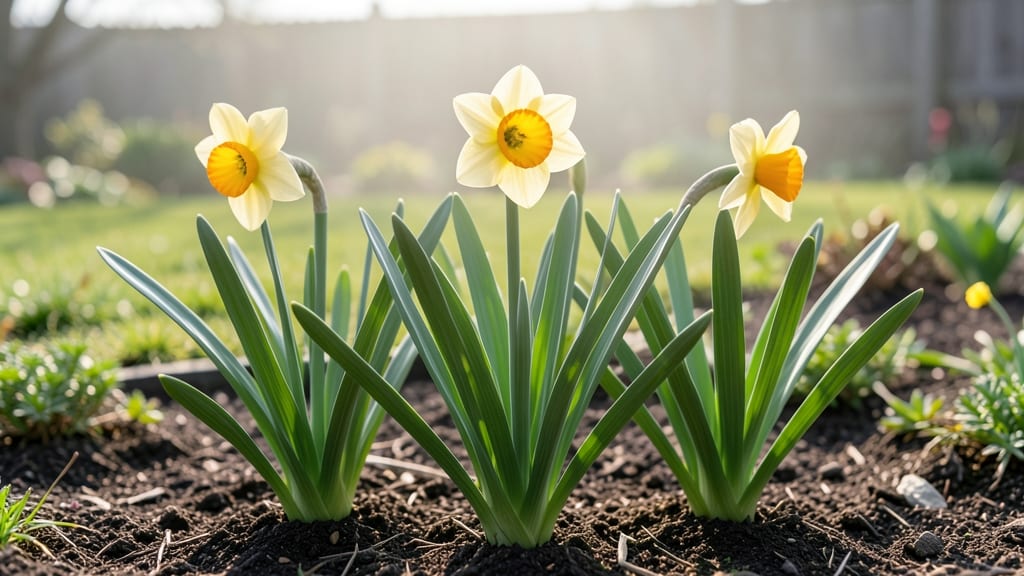
Daffodils bloom in Georgia between late January and early April, with timing determined by chill-hour needs and regional microclimates.
Georgia's mild winters mean daffodils often push through soil as early as January, especially in mountain regions where chill hours accumulate faster. Coastal areas may see blooms delayed until March due to warmer temperatures. 🌱 Varieties like 'Ice Follies' thrive in these conditions, while others need 400+ chill hours—a key factor for gardeners.
Planting in well-draining soil and choosing early-blooming types can help extend your seasonal display.
For maximum impact, consider layered planting—pairing early bloomers with later varieties to create a continuous floral show. Southern Exposure plant trials show that 'February Gold' consistently outperforms in Georgia's climate, offering vibrant color when many other spring flowers are still dormant.
💡 In This Article
- How Georgia’s Climate Affects Daffodil Bloom Times
- Best Daffodil Varieties for Georgia Gardens
How Georgia’s climate affects daffodil bloom times
Daffodils bloom in Georgia primarily because of a biological trigger called chill hours—the cumulative time plants spend below 45°F during winter. Most varieties need between 300-600 chill hours to break dormancy, with hardy types like 'Ice Follies' thriving at the lower end (300-400 hours).
Georgia's mild winters often provide 200-500 chill hours, which explains why daffodils can bloom as early as late January in mountain regions where cold snaps are more frequent.
The state’s diverse microclimates create dramatic timing differences. In the Blue Ridge Mountains, where elevations exceed 3,000 feet, chill hours accumulate faster due to colder nights, often triggering blooms by mid-February.
Meanwhile, coastal areas like Savannah may see delayed blooms until March or April because warmer temperatures reduce chill hour accumulation. This variation is why gardeners in North Georgia might enjoy daffodils 4-6 weeks earlier than those in South Georgia. 🌿
Temperature fluctuations during bloom season also play a critical role. Daffodils prefer daytime highs between 60-70°F for optimal flowering, but sudden cold snaps (32°F or below) can damage buds.
In 2021, a late March freeze in Atlanta caused many early bloomers like 'Jonquil' to wilt prematurely—a stark reminder of how sensitive these flowers are to late-season temperature swings. Gardeners in warmer zones often choose late-blooming varieties (like 'Tête-à-Tête') to avoid this risk entirely.
Another key factor is soil temperature. Daffodil bulbs need soil to warm to 50-55°F before emerging, which typically happens in late January to early February in Georgia. However, heavy rainfall or compacted soil can delay this process by 1-2 weeks, pushing back bloom times.
Well-draining soil with sandy loam texture (like what’s common in middle Georgia) helps bulbs wake up faster, while clay-heavy soils in South Georgia often cause delays.
For gardeners looking to extend their daffodil season, strategic planting works wonders. By layering early bloomers (like 'February Gold') with late varieties (such as 'Salome'), you can create a 6-8 week bloom window—from late January through April.
This technique leverages Georgia’s gradual warming trend, ensuring continuous color even as temperatures rise. Studies from the University of Georgia Extension show that bulbs planted in October-November (when soil temps drop below 60°F) establish stronger roots, giving them a head start in spring.
The science behind this involves plant hormones called florigen, which are produced in response to chill hours. Once triggered, florigen travels to the bulb’s growing tip, signaling it to form flowers.
In Georgia’s climate, this process often aligns perfectly with the state’s winter-to-spring transition, but even small temperature variations can shift bloom windows by 2-3 weeks. That’s why tracking local chill hours (available through NOAA climate data) is a game-changer for precise planting.