
Blooming
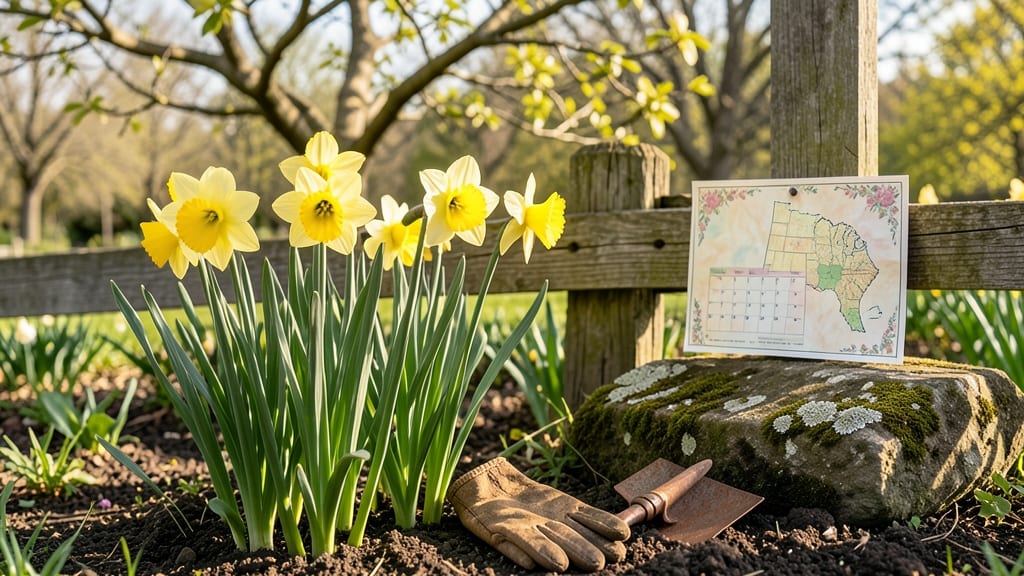
Daffodils in Michigan bloom between late March and early May, but the exact timing depends on your hardiness zone and the variety you plant.
Michigan gardeners know the thrill of daffodils piercing through snow—these hardy blooms are the first sign spring is coming. But timing varies dramatically across the state’s hardiness zones, from late winter in southern Michigan to early spring in the Upper Peninsula.
If you’ve ever wondered why your neighbor’s 🌼 daffodils bloom weeks before yours, it’s likely due to climate differences, bulb selection, or planting depth. The right preparation—like planting in fall and choosing early-blooming varieties—can shift your bloom window by weeks.
Below, I’ll break down the exact bloom windows by zone, the best daffodil varieties for Michigan’s climate, and how to time your planting for the earliest possible flowers.
Michigan daffodil bloom timeline by hardiness Zone (USDA 4a-6b)
Michigan’s diverse hardiness zones create a stunning daffodil bloom parade from late winter to early spring. In USDA Zone 6b (southern Michigan), expect Tete-a-Tete daffodils to push through snow as early as late February.
Meanwhile, Zone 4a gardeners in the Upper Peninsula may not see their first blooms until late April or early May. Understanding these monthly bloom windows helps you select the perfect varieties for your yard.
Early bloomers like Ice Follies and Minnow thrive in Michigan’s coldest zones (4a-5a), often flowering within 60-75 days after planting. Late varieties such as Dutch Master and Paperwhite hybrids prefer warmer zones (6a-6b) and bloom 2-3 weeks later.
The key is matching your zone-specific timing with the right daffodil cultivars for reliable spring color.
For Zone 6b gardeners, Tete-a-Tete daffodils often bloom in late February, sometimes even through light snow cover. These compact varieties (6-8 inches tall) are perfect for early spring containers or woodland gardens.
In contrast, Zone 4a gardeners should focus on Ice Follies, a cold-hardy variety that thrives in sub-zero temperatures and blooms reliably by mid-April.
Mid-season bloomers like Carlton and February Gold bridge the gap between early and late varieties. In Zone 5b, these daffodils typically bloom in late March to early April, offering bright yellow and orange color when crocuses are fading.
Their medium height (12-18 inches) makes them ideal for border plantings or cut flower gardens.
Late bloomers such as Dutch Master and Paperwhite hybrids shine in warmer zones (6a-6b), often gracing gardens in April. These varieties prefer well-drained soil and full sun to produce their large, showy flowers.
In Zone 6b, they may even rebloom in fall if given proper care. For northern Michigan, these varieties may bloom 2-3 weeks later.
To extend your daffodil season, plant a mix of
How Michigan’s climate affects daffodil blooming (chill hours vs warmth)
Michigan’s diverse climate creates a dramatic 3-4 week difference in daffodil blooming between southern and northern regions. Southern Michigan’s warmer winters trigger earlier blooms, while northern areas need more chill hours to break dormancy.
This shift happens because daffodils rely on cold stratification—a process where bulbs need consistent cold temperatures to bloom reliably.
In USDA Zone 6b (southern Michigan), like Detroit or Ann Arbor, daffodils often bloom as early as late March. Meanwhile, in Zone 4a (Upper Peninsula), blooms may not appear until mid-April or May.
The difference comes down to chill hours—the total hours below 40°F—which southern Michigan accumulates faster due to milder winters.
🌼 Michigan Daffodil Bloom Key Factors
- Chill Hours: Southern MI (1,200-1,500 hrs) vs Northern MI (1,500-2,000 hrs)
- Bloom Window: 3-4 weeks earlier in Zone 6b than Zone 4a
- Planting Depth: 4-6" in south, 6-8" in north for insulation
- Early Varieties: Tête-à-Tête, Ice Follies (Zone 4a-6b)
- Late Varieties: Dutch Master, Paperwhite (Zone 6a+)
💡 Pro Tip: Plant deeper in northern zones (6-8") to protect bulbs from extreme cold and shallower in southern zones (4-6") for earlier blooms.
To push blooms earlier in northern Michigan, choose early-blooming varieties like Tête-à-Tête or Ice Follies, which thrive in Zone 4a and bloom in late April. These varieties require fewer chill hours than traditional daffodils.
For southern Michigan, Dutch Master or Paperwhite hybrids may bloom too late—opt for Jonquil or Minnow instead for March blooms.
Adjusting planting depth also helps control bloom time. In southern Michigan, plant bulbs 4-6 inches deep to encourage earlier blooms by exposing them to warmer soil temperatures.
In northern regions, bury bulbs 6-8 inches deep for insulation, which may delay blooms by 2-3 weeks but ensures survival through harsh winters.
Another trick is to plant in fall (September-October) when soil temperatures are 50-60°F. Cooler fall soils help bulbs establish roots before winter, ensuring they’re ready to bloom as soon as conditions warm. Avoid planting in late fall, as bulbs may not root before freezing, delaying next year’s blooms.
Finally, mulch heavily in northern zones (3-4 inches of straw or leaves) to retain soil warmth and reduce temperature fluctuations. In southern zones, use light mulch (1-2 inches) to prevent overheating. This simple adjustment can shift bloom times by 1-2 weeks in either direction.