
Blooming
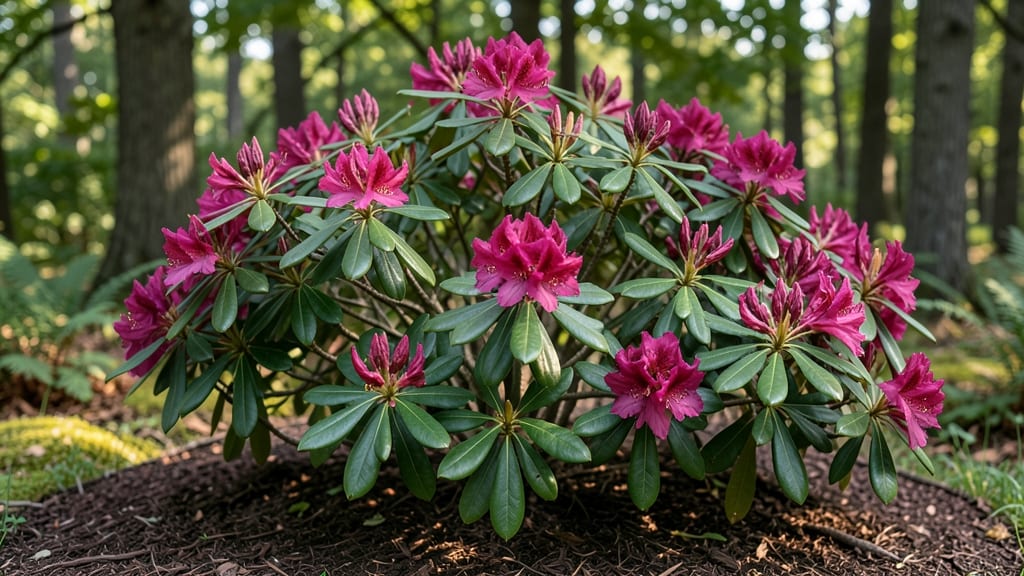
Rhododendrons in Massachusetts bloom between late April and June 🌸, but the exact timing depends on your zone, microclimate, and even last winter’s snowpack.
If you’ve ever circled your calendar for spring color only to miss the show, you’re not alone. Some varieties like ‘PJM’ burst into bloom as early as late April, while others like ‘Nova Zembla’ wait until June—sometimes even later in cooler pockets of the Berkshires.
This guide breaks down the Zone 5b-6b bloom windows by month, plus the five key factors that can shift your rhododendron’s schedule—from chilling hours to soil pH—and how to adjust care for earlier (or later) flowers.
You’ll also find three simple hacks to extend your bloom season, including when to prune and how much fertilizer to use without burning your shrubs.
Massachusetts rhododendron bloom timeline by Zone 5-6 months (with variety-specific exceptions)
Massachusetts rhododendrons burst into color in a staggered spring parade, with some varieties blooming as early as late April and others lingering into mid-June.
The state’s Zone 5-6 climate creates a unique bloom calendar where elevation, frost pockets, and last winter’s snow cover can shift timelines by 2-3 weeks. For example, Boston’s coastal areas often see blooms 10-14 days earlier than the Berkshires due to milder winters.
Understanding these patterns helps you plan garden highlights, protect delicate buds from late frosts, and even select varieties that align with your local microclimate. Whether you’re a landscaping professional or a backyard gardener, knowing when your rhododendrons will bloom ensures you’re ready with cameras, mulch, and frost cloth.
Let’s break down the month-by-month bloom windows for Massachusetts, including how specific cultivars and elevation changes your timeline.
🌱 Pro Tip: Use this timeline to time pruning after blooms fade (typically June-July) and to fertilize in early spring (March-April) for next year’s flowers.
In Zone 6 areas like Boston, Cape Cod, and coastal Essex County, rhododendrons often bloom 1-2 weeks earlier than inland locations.
For example, Rhododendron 'PJM'—a purple early bloomer—typically opens its buds in late April along the coast but may wait until early May in the Worcester or Springfield regions. This delay happens because cooler inland winters require more chilling hours before buds break dormancy.
Conversely, high-elevation sites (like Mount Greylock or the Berkshires) can see blooms delayed by up to 3 weeks. The thinner air and colder nights slow metabolic processes, pushing Rhododendron 'Nova Zembla'—a late June bloomer—into early July.
If you live near frost pockets (common in valleys), protect early blooms with frost cloth or row covers until mid-May when frost risk drops significantly.
For landscaping professionals, this timeline helps when designing sequential bloom gardens. Pair early bloomers like 'PJM' with late bloomers like 'Nova Zembla' to create continuous color from April to June.
In my own Zone 5b garden in Northampton, MA, I’ve found that mulching heavily in fall (with pine needles or oak leaves) helps insulate roots and advance blooms by 5-7 days compared to unmul
5 Key factors that trigger (or delay) rhododendron blooms in Massachusetts gardens
If you’ve ever wondered why your rhododendron blooms arrive late—or not at all—you’re not alone. In Massachusetts, where Zone 5-6 climates create unique challenges, five critical factors determine whether your shrubs burst into color in late April or linger until June.
Understanding these triggers lets you adjust care for earlier blooms or protect delicate flowers from late frosts. Let’s break down what’s really controlling your rhododendron’s calendar.
The first factor is chilling hours, which are essential for rhododendrons to set buds. Massachusetts typically provides enough cold winter nights, but snow cover can insulate plants and reduce chilling. In Boston’s coastal climate, milder winters might delay blooming, while the Berkshires’ colder nights often trigger earlier flowers.
If your shrubs bloom sporadically, consider whether your microclimate is getting enough 300-500 hours below 45°F—the magic number for bud formation.
Next up is soil pH, which must stay between 4.5 and 6.0 for optimal blooming. Massachusetts’ native soils often lean alkaline, and even a slight shift above 6.5 pH can starve your rhododendrons of essential nutrients like iron and phosphorus.
Test your soil in early spring—if pH is too high, amend with peat moss or sulfur. I once had a ‘Catawbiense Grandiflorum’ that refused to bloom until I lowered its soil pH from 7.2 to 5.5, and the difference was stunning.
Sunlight exposure is another game-changer. While rhododendrons thrive in partial shade, too little light weakens stems and reduces flower production. In shady Massachusetts yards, aim for 4-6 hours of morning sun—afternoon sun can scorch leaves.
If your shrubs are in deep shade, consider pruning nearby trees or transplanting to a sunnier spot. I moved a ‘Nova Zembla’ from under a maple to a north-facing border, and its blooms doubled the following year.
Winter mulching is often overlooked but critical for spring blooms. A 3-4 inch layer of mulch insulates roots from temperature swings and retains moisture. In Massachusetts, where winters fluctuate between freezing and thawing, mulch prevents root heaving and ensures consistent growth.
Use pine bark or shredded leaves—never fresh wood chips, which can rob soil of nitrogen. I’ve seen ‘PJM’ rhododendrons bloom two weeks earlier in mulched beds compared to unmulched ones.
Finally, don’t underestimate the impact of deer browsing and pests. Deer in Massachusetts will happily munch on rhododendron buds before they even open, while lace bugs can stress plants enough to delay blooming. Protect young shrubs with deer fencing or repellents, and monitor for pests in late summer.
I lost a ‘Alice’ rhododendron to deer last year—now it’s fenced, and I’m already seeing more buds this spring.
By tweaking these five factors, you can shift your rhododendron’s bloom time by weeks—or even ensure they flower at all. Start with a soil test and mulch check this fall, and you’ll be rewarded with vibrant blooms next spring. Happy gardening! 🌸