
Blooming
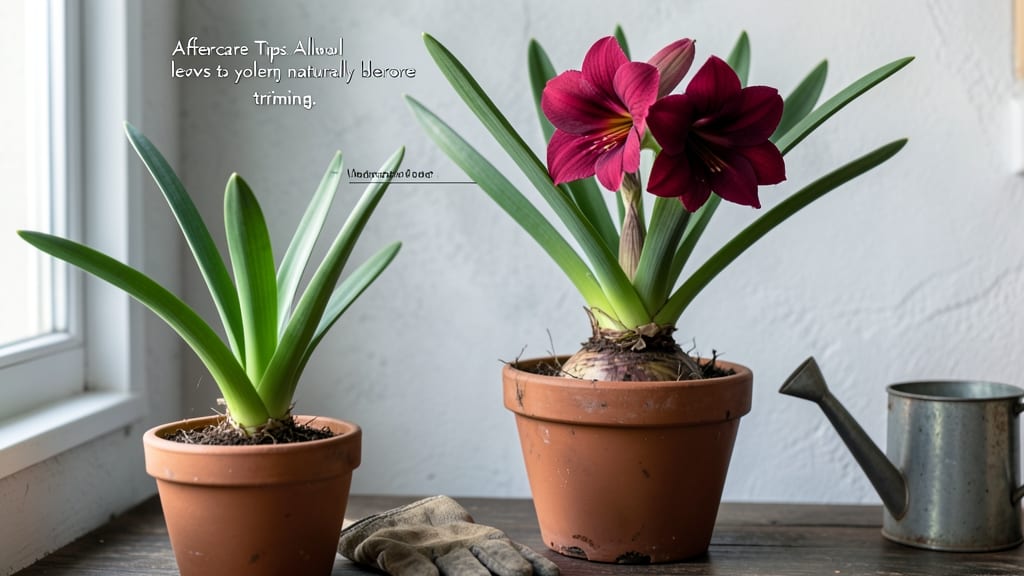
Your amaryllis will bloom again if you follow these key care steps: provide bright indirect light, keep watering consistent but not excessive, and let the leaves yellow completely before entering dormancy. A proper rest period is what triggers the next round of stunning flowers.
Most amaryllis owners assume the plant's blooming cycle ends after the first showy display, but with the right approach, you can coax multiple seasons of flowers from the same bulb. 🌸 The secret lies in mimicking natural conditions—think of it like training a plant athlete.
When you give your amaryllis a 6-8 week dormancy period at 50-55°F with minimal water, the bulb stores energy for its next performance.
I've found that bulbs treated this way often reward me with even bigger blooms the following year, especially if I repot them in fresh soil during this rest phase.
What's fascinating is how light affects this process. While your amaryllis needs bright indirect light during active growth (think east or west-facing windows), too much direct sun can scorch the leaves.
This plant is actually quite forgiving—it'll bloom again even if you skip a season of dormancy, though the flowers may be smaller.
The key is consistency in watering: let the top inch of soil dry out between waterings during the growing season, but never let the bulb sit in soggy soil.
💡 In This Article
- Amaryllis Blooming Cycle: Light and Heat Requirements
- Step-by-Step Guide to Encouraging Repeat Amaryllis Blooms
Amaryllis blooming cycle: light and heat requirements
The amaryllis blooming cycle begins with a 12+ hour light exposure—this triggers photoperiodism, a biological process where the plant detects increasing daylight and begins flower bud formation.
Think of it like a plant's internal clock: when your amaryllis receives bright indirect light (similar to what it'd get under a canopy in its native South American habitat), it starts converting stored energy into flower production.
The ideal light spectrum includes blue wavelengths (600-700 nm) which stimulate photosynthesis and red wavelengths (400-500 nm) that trigger blooming hormones. 🌿
Temperature plays an equally crucial role—amaryllis bulbs thrive in 65-75°F ranges during active growth, mimicking their tropical origins. When nights dip below 60°F, the plant senses seasonal change and begins preparing for dormancy.
This temperature drop signals the bulb to stop producing foliage and redirect energy toward flower bud development.
What's fascinating is how heat affects flower size: bulbs kept consistently warm (above 75°F) may produce smaller blooms, while those with cooler nights (down to 55°F) often develop larger, more vibrant flowers through a process called "vernalization."
The dormancy phase is where the magic happens. When your amaryllis's foliage turns completely yellow (usually 8-12 weeks after blooming), it's time to reduce watering to just enough to keep the bulb from shriveling.
During this 6-8 week rest period at 50-55°F, the bulb stores carbohydrates and nutrients in its scales—like a plant version of hibernation. This stored energy becomes the fuel for next year's blooms. The cooler temperature also breaks down growth inhibitors in the bulb, priming it for reblooming. 💫
Seasonal changes create this natural rhythm: as daylight increases in spring, the bulb wakes from dormancy and begins producing leaves, which photosynthesize to build energy reserves. Then, as days lengthen further in summer, the plant shifts focus to flower production.
This cycle explains why amaryllis often bloom in winter—it's their natural response to the decreasing daylight of autumn, a survival adaptation from their wild ancestors in the Andes mountains.
What most people don't realize is how light intensity affects reblooming success. While your amaryllis can tolerate lower light conditions, it won't bloom again without proper light exposure. The leaves act as solar panels—when they're healthy and green, they're efficiently converting sunlight into energy that gets stored in the bulb.
I've seen bulbs kept in dim conditions produce weak stems and tiny blooms, while those in bright light (but not direct sun) develop strong 2-3 foot tall flower spikes with 6-12 vibrant blooms per stem.
Here's the science behind the temperature sensitivity: amaryllis bulbs contain temperature-sensitive proteins that regulate growth hormones. When nights stay above 65°F year-round, these proteins remain active, preventing dormancy and flower bud formation. The ideal temperature range creates a natural diurnal rhythm that the plant recognizes as a seasonal cue.
This is why indoor amaryllis often need artificial light supplementation during winter months when natural light is scarce. 🌡️