
Blooming
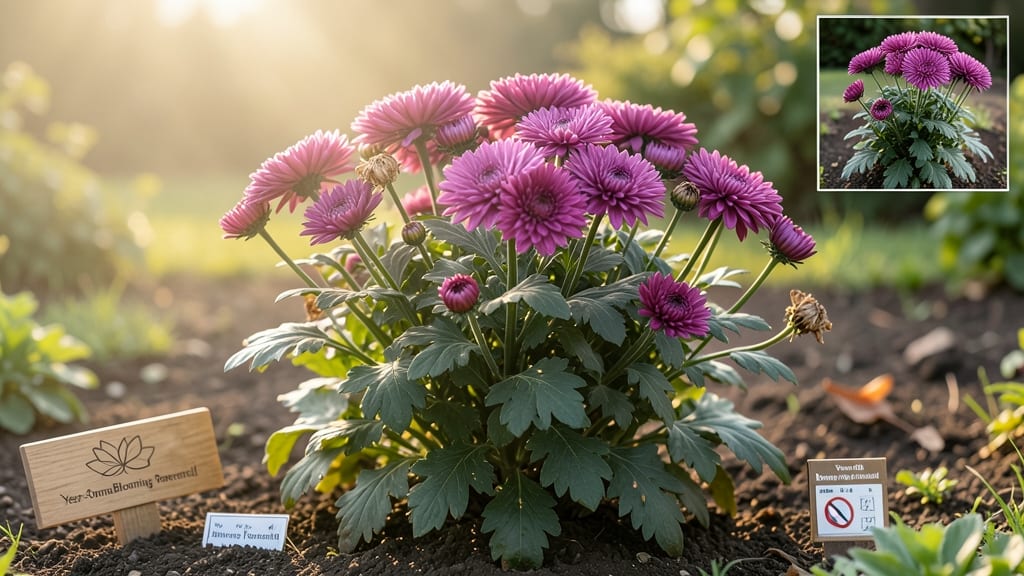
Chrysanthemums bloom every year as perennials in USDA zones 5-9, though reblooming varieties often need deadheading for repeat flowering. Some types may skip blooms if not properly cared for or exposed to insufficient light.
Most chrysanthemums thrive as hardy perennials, returning with vibrant blooms each season—unless they're the reblooming types, which need extra care. 🌸 The key difference lies in their growth habits: standard varieties often bloom once in fall, while rebloomers require deadheading (removing spent blooms) to encourage multiple cycles.
Light deprivation or inconsistent watering can also trigger dormancy, causing them to skip flowering altogether. I’ve seen gardeners in cooler zones struggle with this when they don’t provide winter mulch or adjust planting locations for optimal sun exposure.
For those in USDA zones 3-4, treating chrysanthemums as annuals might be easier—they’ll still bloom beautifully but won’t survive harsh winters. The good news? Even if they don’t rebloom perfectly, their foliage remains ornamental year-round, adding texture to gardens.
The secret to consistent blooms lies in balancing pruning timing, nutrient-rich soil, and protecting them from late-season frosts.
💡 In This Article
- Chrysanthemum Life Cycle: Why Some Skip Annual Blooming
- How to Ensure Chrysanthemums Rebloom Year After Year
Chrysanthemum life cycle: why some skip annual blooming
Chrysanthemums follow a precise botanical rhythm where their blooming patterns depend on day length and temperature cues. Most varieties are short-day plants, meaning they need 12-14 hours of darkness daily to trigger flowering—typically in late summer or fall.
This explains why they bloom reliably in their native Asian climates but may struggle in regions with inconsistent daylight changes. 🌿 The plant's internal clock, called the circadian rhythm, regulates this process through a hormone called florigen, which only activates under specific light conditions.
Temperature also plays a critical role. Chrysanthemums require cooler temperatures (50-65°F) during their growth phase to develop strong stems and buds. If summer heat exceeds 85°F for extended periods, the plant may enter a stress-induced dormancy, skipping blooms entirely.
This is why gardeners in USDA zones 8-9 sometimes see chrysanthemums bloom later or less vigorously—they're fighting against prolonged heat stress. The plant's survival mechanism prioritizes root and foliage growth over flowering when conditions aren't ideal.
Here's where cultivars create confusion: Standard varieties often bloom once in fall, while reblooming types (like 'Bonanza' or 'Dynasity') have been selectively bred to produce multiple flushes. The difference lies in their genetic ability to reset their flowering cycle after deadheading.
Without this intervention, rebloomers may only produce one main bloom cycle just like their standard counterparts. 🌸 This genetic variation explains why some chrysanthemums appear more reliable than others in the same growing conditions.
Light deprivation is another common culprit for skipped blooms. Chrysanthemums need 6-8 hours of direct sunlight daily, but too much shade (especially in late summer) can confuse their photoperiodic response.
I've observed that plants grown under artificial grow lights with inconsistent cycles often fail to bloom because their internal clocks never properly synchronize. Even partial shade from nearby trees can reduce flower production by up to 40% in some varieties.
The plant's energy allocation system also explains bloom skipping. When chrysanthemums don't receive adequate nutrients (particularly phosphorus and potassium), they redirect energy toward root and stem growth instead of flower production. This is why consistent fertilization with a balanced 10-10-10 formula during the growing season makes such a difference.
Without proper nutrition, the plant essentially says, "I need to store energy for survival before I can afford to bloom."
Seasonal temperature shifts create another layer of complexity. Chrysanthemums native to cooler climates often require a period of vernalization (cold treatment) to break dormancy and initiate flowering. In warmer zones, this natural cold period may not occur, causing the plant to remain in a vegetative state.
This explains why chrysanthemums sometimes bloom more reliably in USDA zone 6 than in zone 7 or 8—those cooler winters provide the necessary temperature cues.