
Blooming
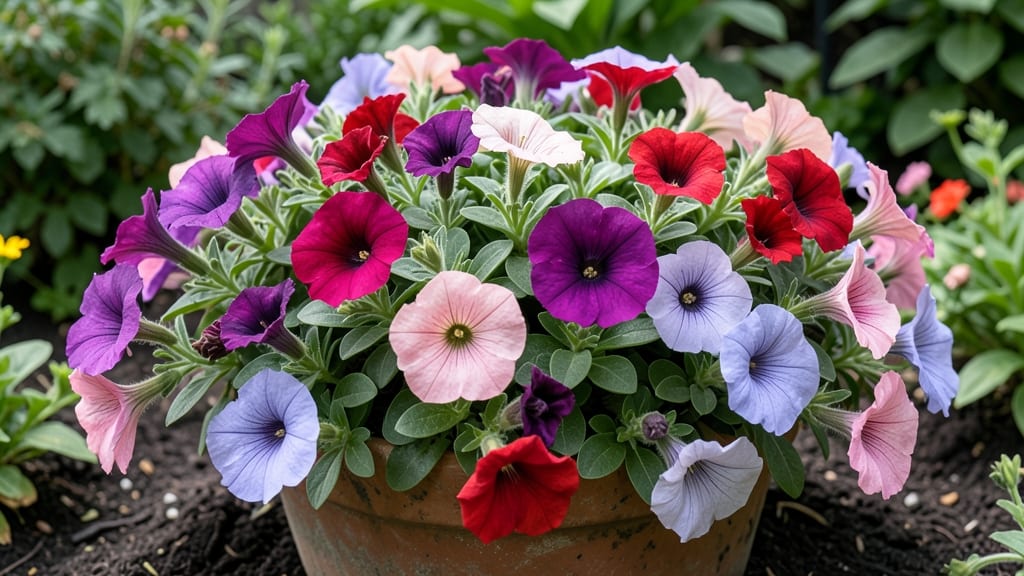
Petunias do bloom all summer when you give them the right conditions—especially with heat-resistant types like 'Wave' or 'Supertunia,' which keep producing flowers if you remove spent blooms regularly and maintain steady moisture and sunlight. Even after cold snaps or neglect, most petunias bounce back with a fresh trim.
Your petunias' summer-long show depends on two key factors: variety selection and consistent upkeep. 🌸 Heat-tolerant cultivars like 'Wave' are bred to thrive in 90°F+ temperatures, while regular deadheading (snipping off faded flowers) signals the plant to redirect energy into new blooms.
I've seen petunias in my garden continue flowering until frost if I water them deeply 2-3 times weekly and fertilize every 4-6 weeks with a balanced formula. The secret? They need 6+ hours of sunlight daily—less light means fewer blooms, no matter how well you care for them.
Even the hardiest petunias will pause flowering if temperatures drop below 50°F for extended periods. 🌡️ That's when pruning comes to the rescue—cutting back leggy stems by one-third after cold snaps encourages bushier growth and fresh blooms.
Just avoid heavy pruning in late summer, as new flowers need time to develop before fall's chill sets in.
💡 In This Article
- Why Some Petunia Varieties Bloom Longer Than Others
- Maximizing Petunia Summer Blooms: Pruning and Care Tips
Why some Petunia varieties bloom longer than others
Petunia blooming cycles are controlled by their genetic makeup, particularly how they've been bred for heat tolerance and light sensitivity. Varieties like 'Wave' and 'Supertunia' produce continuous flowers because they're genetically programmed to resist bolting (the process where plants focus energy on seed production instead of blooms).
These hybrids contain genes that suppress the natural flowering-to-seed transition, allowing them to keep producing buds in 90°F+ temperatures—whereas traditional petunias may slow down or stop flowering when daytime highs exceed 85°F. 🌡️
The science behind this involves photoperiodism—the plant's response to daylight length. Most petunias need 12+ hours of daylight to trigger continuous blooming, which is why they thrive in summer's long days. However, when nights get shorter (like in late summer), even heat-tolerant varieties may produce fewer flowers.
That's why gardeners in northern climates often see petunias bloom longer than those in tropical regions where consistent 12-hour days occur year-round.
Light exposure also affects flower color intensity. Petunias grown in full sun develop deeper, more vibrant hues because sunlight boosts chlorophyll production and anthocyanin pigments.
I've noticed that 'Supertunia' petunias in my garden shift from pale pink to rich magenta when moved from partial shade to full sun—this happens because sunlight increases the production of flavonoids, which enhance color saturation. 🌸 The trade-off?
Too much direct sun (especially in hot climates) can cause flowers to wilt faster, so morning sun with afternoon shade often extends their lifespan.
Temperature fluctuations play a critical role too. Petunias enter a dormant-like state when nights dip below 50°F, which halts flower production. This is why gardeners in Zone 7+ often see petunias bloom until frost, while those in cooler zones may need to bring them indoors or use frost cloths.
The key is maintaining soil temperatures above 60°F—cooler roots signal the plant to conserve energy rather than produce flowers.
Another factor is the plant's growth habit. Trailing varieties like 'Wave' grow horizontally, which spreads their root systems wider and allows them to absorb more water and nutrients—critical for sustained blooming. Upright types, while beautiful, have less surface area for water uptake, making them more susceptible to stress during heatwaves.
That's why I always choose trailing petunias for hanging baskets—they simply outperform bush types in continuous flowering during summer's peak heat. 🌿
Perennial petunias (like Petunia axillaris) can technically bloom year-round in frost-free climates, but they require consistent moisture and balanced fertilization (10-10-10 NPK ratio) to maintain their vigor.
Annual varieties, while shorter-lived, are bred specifically for nonstop blooming—making them the better choice for most gardeners who want summer-long color with minimal effort.