
Blooming
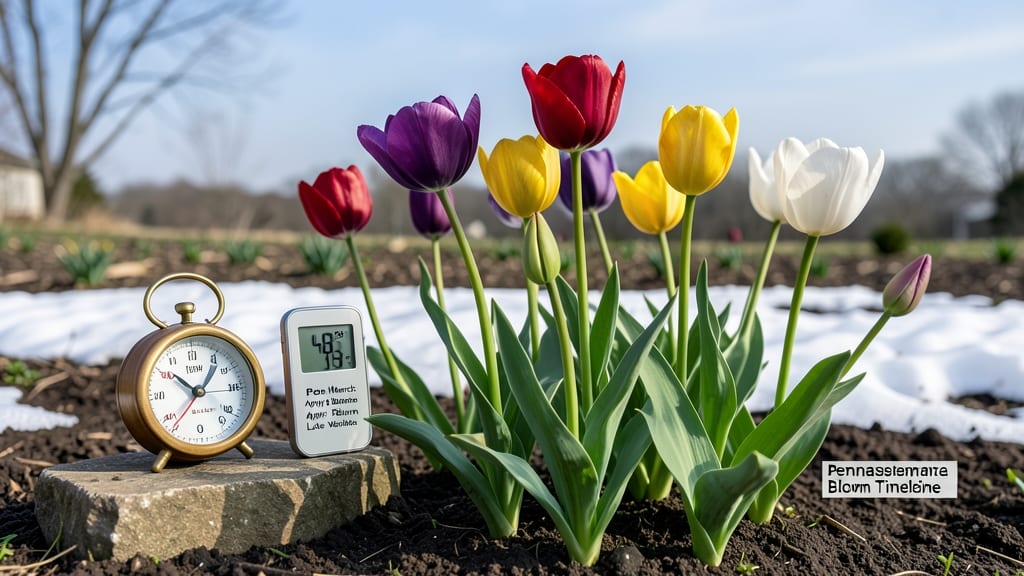
Tulips in Pennsylvania bloom between late March and early May, with exact weeks shifting by zone and variety—so timing your garden’s color explosion means knowing the right bulbs for your yard.
If you’ve ever wondered why your neighbor’s tulips pop in April while yours wait until May, it’s not just luck—it’s about hardiness zones, soil warmth, and the varieties you’ve planted.
In Zone 6a, where most of PA falls, early bloomers like ‘Early Promise’ might greet you by Week 14, while latecomers like ‘Queen of Night’ hold off until Week 17.
Beyond the calendar, soil temperature and last-frost dates play a bigger role than you’d think. A deep, well-draining bed can shave weeks off bloom time, while heavy clay might delay them until the heat arrives.
I’ll break down how to read your yard’s signals and pick the perfect mix of early, mid, and late tulips to stretch your season from spring’s first thaw to Memorial Day.
You’ll also learn how to extend blooms longer—whether by tweaking planting depth, layering varieties, or avoiding the one mistake that kills tulips after just one year. Let’s get your garden popping on schedule.
Pennsylvania tulip bloom schedule by hardiness zones (exact weeks)
Pennsylvania’s tulip bloom times vary dramatically across its USDA hardiness zones 5a-7a, with cooler northern regions blooming 2-3 weeks later than southern areas. Understanding these exact weekly ranges helps you select varieties that align with your local climate and extend your garden’s spring color show.
In Zone 5a (e.g., Erie, Altoona), tulips typically bloom between weeks 15-18 (late April to early May), while Zone 7a (e.g., Philadelphia, Pittsburgh) sees blooms as early as weeks 12-15 (mid-April). These differences stem from frost dates, soil warmth, and temperature trends—factors we’ll break down for each zone.
Key factors influencing bloom timing include:
- Last frost date (earlier in Zone 7a than 5a)
- Soil temperature (warmer soils in southern PA speed up growth)
- Variety selection (early bloomers vs. late-season types)
- Microclimates (urban heat islands vs. rural areas)
Here’s a zone-by-zone breakdown of when to expect tulip blooms, including early, mid, and late-season varieties that thrive in Pennsylvania’s climate. Use this as your garden planning guide to layer blooms for a continuous spring display.
| USDA Zone | Early Varieties (Weeks) | Mid-Season (Weeks) | Late Varieties (Weeks) | Last Frost Date | Climate Notes |
|---|---|---|---|---|---|
| Zone 5a | 15–16 ('Early Promise') | 17–18 ('Apeldoorn', 'Darwin Hybrid') | 19–20 ('Queen of Night') | April 15–May 1 | Cooler soils delay blooms; plant in full sun for warmth. |
| Zone 6a | 14–15 ('White Dream') | 16–17 ('Parrot', 'Fosteriana') | 18–19 ('Black Hero') | April 1–April 15 | Moderate climate; ideal for layered planting. |
| Zone 7a | 12–13 ('Red Emperor') | 14–15 ('Queen of Sheba') | 16–17 ('Angelique') | March 15–April 1 | Warmer soils; early bloomers thrive here. |
For Zone 5a gardeners, focus on late-season varieties like 'Queen of Night' to extend blooms into May, when frost risks diminish. In Zone 7a, prioritize early bloomers such as 'Red Emperor' to take advantage of warmer spring temperatures and avoid late frost damage.
Temperature trends also play a critical role. Tulips need consistent daytime temps above 50°F to bloom. In northern PA, a late frost after Week 15 can delay blooms by 1-2 weeks, while southern PA’s milder climate allows for earlier, more predictable blooming.
Pro tip: Use mulch in Zone 5a-6a to insulate bulbs and speed up soil warming in spring. A 3-inch layer of straw can advance bloom times by 5-7 days by protecting roots from temperature fluctuations.
If you’re in Zone 7a, consider interplanting tulips with early spring ephemerals like crocuses or snowdrops to create a sequential bloom effect. This layering technique ensures your garden stays vibrant from late March through May.
For accurate planning, track your local last frost date and adjust planting
Best early, mid, and late-blooming tulip varieties for Pennsylvania gardens
Pennsylvania’s diverse climate means tulips can bloom anywhere from late March to early May, depending on the variety and your specific zone.
To create a long-lasting spring display, I’ve selected 12+ varieties that thrive in PA’s USDA Zones 5a–7a, with precise bloom timing and resistance to common diseases like tulip fire and gray mold.
Whether you crave bold reds for early impact or delicate whites for late-season elegance, these picks will keep your garden vibrant.
One of my favorite strategies is layering bloom times by planting early, mid, and late varieties together. For example, ‘Early Promise’ (a red parrot tulip) often blooms in Week 14 (late March), while ‘Queen of Night’ (deep purple) typically appears in Week 17 (mid-April).
This creates a staggered visual effect that feels intentional, not random. Plus, disease-resistant varieties like ‘Apeldoorn’ (yellow) and ‘Darwin Hybrid ‘Red Riding Hood’ need less maintenance, saving you time and effort.
- 🔴 Week 14 (Late March): ‘Early Promise’ (Red Parrot) – Bold, fringed petals; disease-resistant.
- 🟡 Week 15 (Early April): ‘Apeldoorn’ (Yellow) – Classic cup shape; long stems for cutting.
- 🌼 Week 16 (Mid-April): ‘Darwin Hybrid ‘Red Riding Hood’ (Red) – Extra-large blooms; low-maintenance.
- 💜 Week 17 (Mid-April): ‘Queen of Night’ (Deep Purple) – Dramatic contrast against greenery.
- 🟢 Week 18 (Late April): ‘Greigii ‘Red Emperor’ (Red with yellow edges) – Striped foliage adds texture.
- ⚪ Week 19 (Early May): ‘White Dream’ (Pure White) – Late-season brightness; fragrant.
For early-season color, I recommend ‘Early Promise’ and ‘West Point’ (a white-and-red striped variety). These hardy tulips often push through snow in Zone 5a and bloom by Week 14, giving you a head start on spring.
Their vibrant hues also attract pollinators early in the season. If you’re in Zone 7a, you might see blooms as early as Week 12, so plan accordingly to avoid missed opportunities.
Mid-season varieties like ‘Darwin Hybrid ‘Red Riding Hood’ and ‘Fosteriana ‘Red Emperor’ are workhorses of the garden. They’re larger, more robust, and often rebloom if given proper care. These tulips peak in Weeks 16–17, aligning perfectly with PA’s peak spring temperatures (50–65°F).
Their bold colors—like crimson reds and fiery oranges—create a stunning focal point in borders or containers.
Don’t overlook late-blooming varieties like ‘White Dream’ or ‘Black Parrot’ (a dark purple-black with ruffled edges). These extend your tulip season into early May, just as other spring bloomers (like daffodils) may be fading.
Their delicate petals and unique shapes add elegance to summer weddings or cut-flower arrangements. Pair them with alliums or peonies for a long-lasting combination.
To ensure your tulips bloom on time every year, I swear by planting in layers: deeper for late bloomers (6–8 inches) and shallower for early ones (4–6 inches). This mimics their natural dormancy cycles and helps them sync with PA’s climate.
Plus, mulching with straw in fall retains soil warmth, nudging bulbs to wake up earlier. With these varieties and tips, your garden will be a tulip lover’s paradise from March to May! 🌷